Republican strategists are adjusting their midterm approach to capture former President Donald Trump’s turnout advantage while avoiding making him the central figure in competitive races. Rising gas prices (around $4/gal), Trump’s 36% approval rating and a stalemate with Iran have prompted a shift toward emphasizing local issues and Republican policy achievements. Party leaders still view Trump as an important turnout driver, but many operatives now favor localized messaging to protect vulnerable House and Senate contests.
GOP Recalibrates Midterm Playbook: Use Trump’s Turnout Power, Downplay His Image
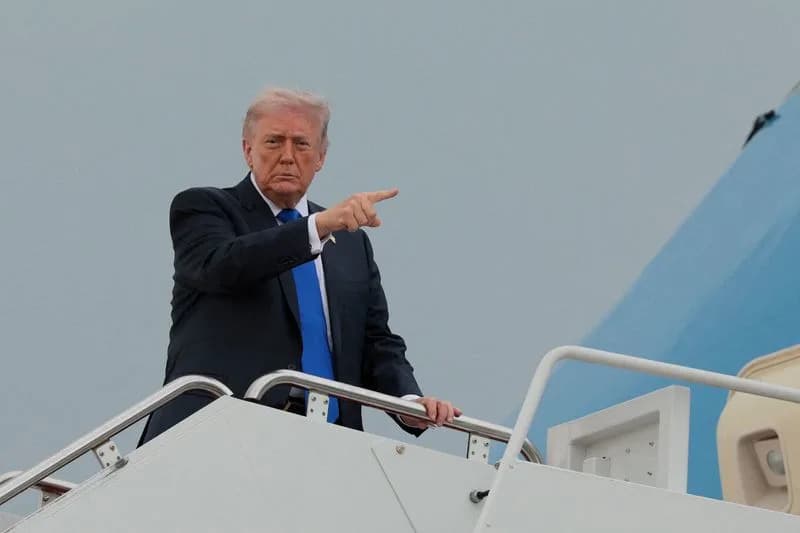
FILE PHOTO: U.S. President Donald Trump boards Air Force One en route to Palm Beach International Airport, at Joint Base Andrews, Maryland, U.S., April 24, 2026. REUTERS/Kylie Cooper/File Photo
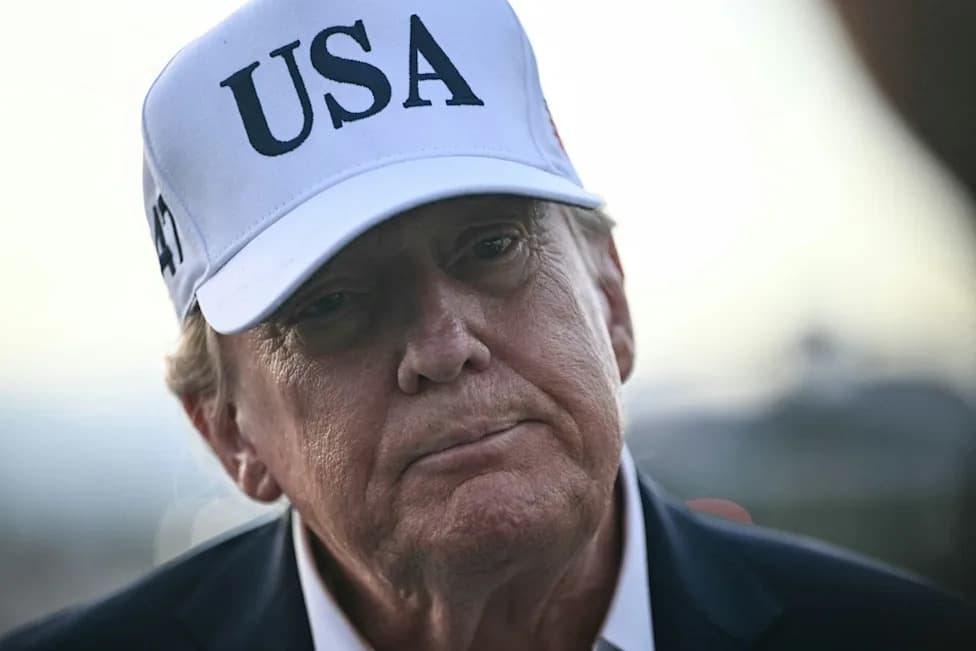
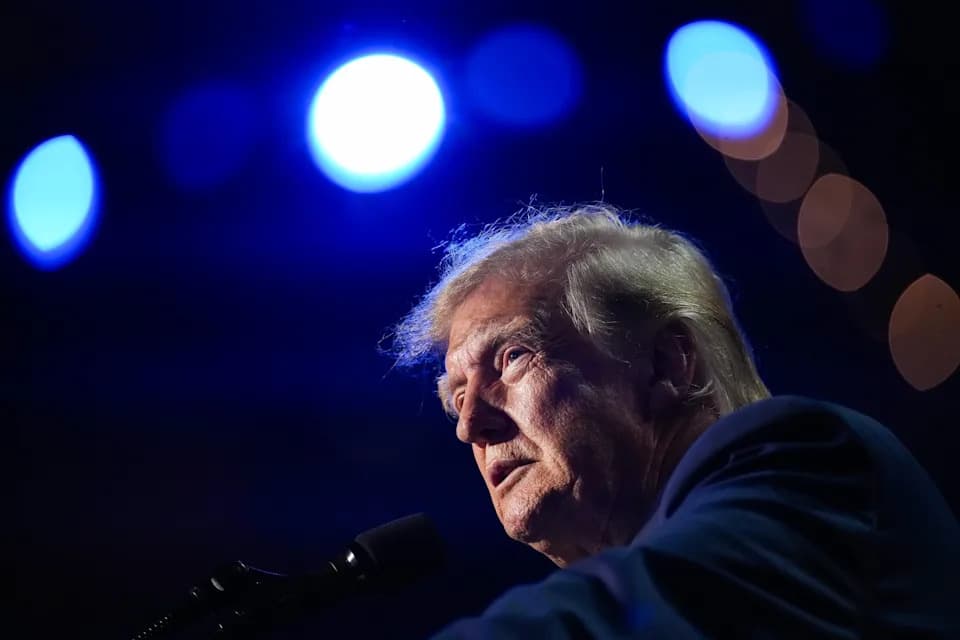
Facing rising gasoline prices, slipping approval ratings for President Donald Trump and a protracted stalemate with Iran, Republican strategists are revising their midterm playbook for November’s elections.
Their goal is clear: harness Trump’s ability to mobilize conservative voters while avoiding turning competitive races into a referendum on a president whose personal ratings have weakened.
Private strategy session
In a closed-door meeting at the former Trump luxury hotel in Washington, now the Waldorf Astoria, senior political aides — including White House Chief of Staff Susie Wiles, political director James Blair and longtime pollster Tony Fabrizio — urged candidates to emphasize Republican tax cuts and proposals aimed at curbing inflation, according to multiple people familiar with the discussion. Attendees were reportedly asked to sign non-disclosure agreements.
But party strategists stressed distancing campaigns from Trump personally, worried that his sagging approval could harm prospects in tight House and Senate races.
Economic and geopolitical headwinds
Republicans face several political challenges: the national average for gasoline is near $4 per gallon, according to AAA; a Reuters/Ipsos poll shows Trump with a 36% approval rating — the lowest of his current term; and U.S.-Iran hostilities have produced a diplomatic and economic standoff that has not reopened the Strait of Hormuz or relieved energy-market pressure.
Those developments risk blunting enthusiasm for the administration’s marquee legislative achievement, the so-called "One Big Beautiful Bill Act," and give Democrats room to nationalize races by tying local candidates to presidential shortcomings.
Shift Toward Localized Campaigning
Sources said Republicans now plan to highlight local issues and individual candidates' records rather than run overtly nationalized campaigns focused on Trump. The thinking: keep the benefits of Trump-driven turnout while minimizing the potential drag from his personal unpopularity.
"[Democrats] are going to try to nationalize the election and say we’re a rubber stamp for Trump. We have to break out of that and show race by race why we’re the better choice," a Trump-aligned strategist told Reuters.
Within the party, however, some officials remain confident in Trump’s ability to drive turnout. Kiersten Pels, national press secretary for the Republican National Committee, said Trump would remain "the most powerful driver" of conservative turnout and that many candidates continue to seek his endorsement. White House spokeswoman Olivia Wales called Trump the "unequivocal leader of the Republican party" and said he remains committed to protecting the GOP majority in Congress.
Political risk illustrated in Virginia
Optimism in the meeting was undercut when a Virginia redistricting vote the next day approved a congressional map drawn by Democrats — a reminder that local dynamics and timing can quickly shift the outlook for national strategy.
Some Republican operatives say the situation is still fluid: if hostilities eased and inflationary pressure cooled over the summer, the party's calculus could change. David McIntosh, president of the Club for Growth, urged looking ahead rather than panicking over near-term indicators.
Iran adds strategic uncertainty
Critics argue the administration underestimated how Tehran would react to a joint U.S.-Israeli strike, and the resulting economic fallout has produced an unprecedented energy shock. Trump's decision to indefinitely extend a ceasefire that was originally framed as two weeks was widely seen as politically costly, while Iran continues to assert leverage over the Strait of Hormuz and maintain nuclear ambitions.
Aaron David Miller, a veteran Middle East negotiator now at the Carnegie Endowment for International Peace, said Iran believes it can endure more economic pain and wait out U.S. pressure.
Reporting by Jacob Bogage, Nandita Bose and Matt Spetalnick; additional reporting by Bo Erickson. Editing by Colleen Jenkins and Nia Williams.
Help us improve.