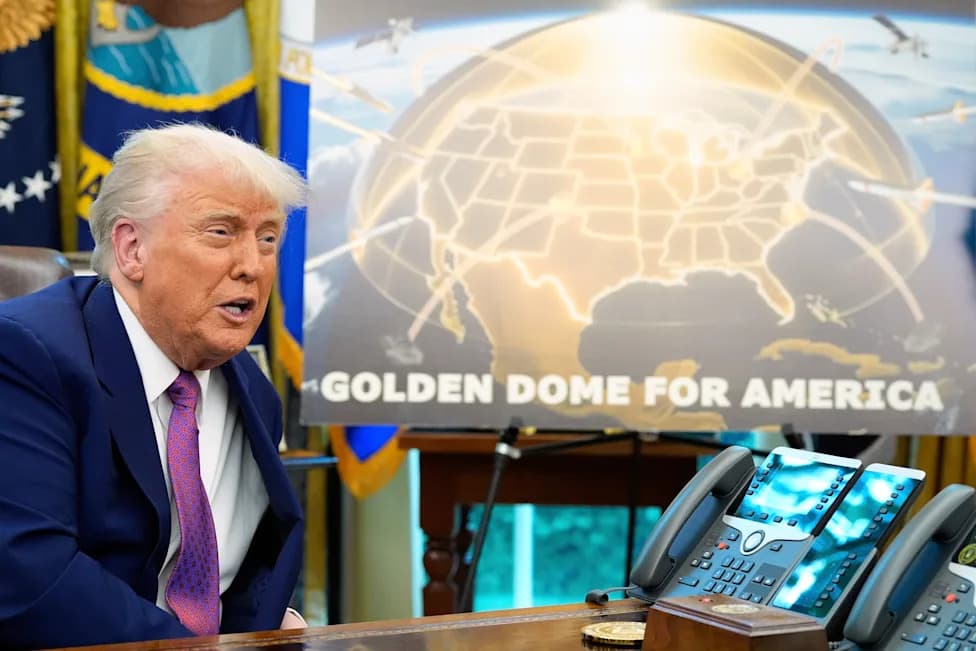
The Pentagon reports progress on the Golden Dome homeland air defense program but faces mounting budget and political hurdles. Gen. Mike Guetlein aims to field a critical sensor by 2028, yet the administration’s plan to fund most work via reconciliation has drawn GOP skepticism. The Pentagon requested $17 billion next year via reconciliation (and $400 million in regular appropriations), while total program costs are estimated between $185 billion and $3 trillion. Space-based interceptors could be cut for affordability, and leaders plan contingency funding strategies if reconciliation fails.
Golden Dome Ambitions Clash With Budget Reality — Funding and Timelines at Risk
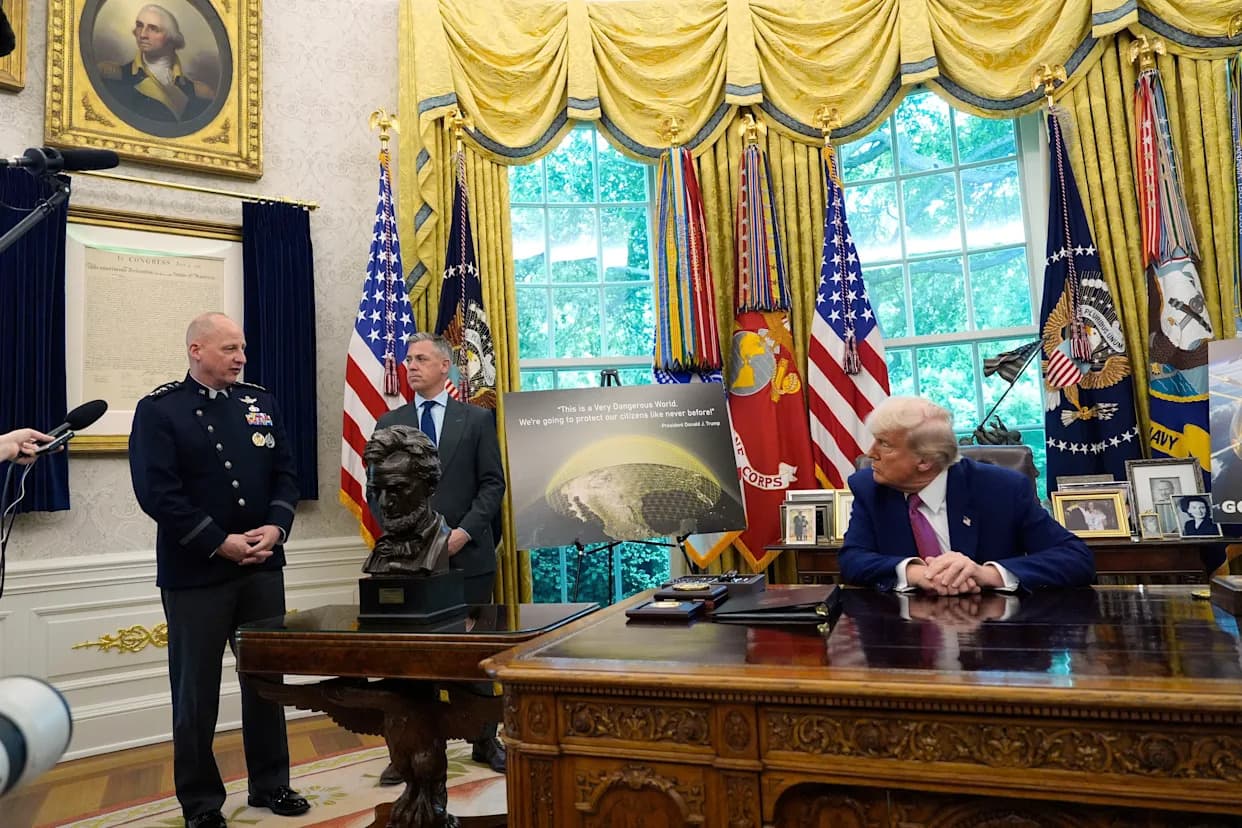
FORT STORY, Va. — Senior Pentagon leaders gathered inside a Navy hangar surrounded by air-defense hardware to announce progress on President Donald Trump’s ambitious Golden Dome homeland air defense program. But momentum is meeting hard fiscal and political limits.
Program Progress and the 2028 Goal
Gen. Mike Guetlein, who leads the Pentagon effort, said the program has made notable strides over the past 10 months and reiterated the administration’s objective to field a key sensor capability by 2028. That timeline, he acknowledged, requires a string of technical, budgetary and programmatic milestones to fall into place quickly.
Funding Uncertainty and Political Headwinds
The Pentagon has asked for $17 billion via a party-line reconciliation measure next year and only $400 million through the regular appropriations process. Overall cost estimates for Golden Dome vary widely — roughly $185 billion at the low end up to $3 trillion at the high end — creating significant uncertainty about the program’s final scope.
“Is [reconciliation] the most efficient, effective way to spend money? In my mind, no.” — Rep. Ken Calvert (R-Calif.)
Several senior Republicans have already signaled skepticism about using reconciliation to fund Golden Dome, particularly ahead of high-stakes midterm elections. A former defense official warned that relying on reconciliation is risky; if that route fails, Golden Dome funding will have to compete with other Pentagon priorities in standard appropriations bills.
What the Pentagon Says It Will Buy
Guetlein emphasized that the program will focus on fielded hardware layered across land, air and space and that many program elements incorporate classified technologies. He declined to provide a detailed public spending breakdown, saying that much of the work involves capabilities that cannot yet be disclosed.
Early Systems And Tests
One tangible piece of the effort is already under way: a modest triangular array of poles and wires at Fort Story — the Army’s Long-Range Persistent Surveillance system. The sensor suite is operating domestically for the first time and is designed to provide 360-degree detection of cruise missiles, drones and aircraft, feeding data into the broader architecture.
Affordability And Program Changes
Cost concerns are reshaping priorities. Guetlein recently warned lawmakers that space-based interceptors — designed to destroy missiles minutes after launch — may be cut if they cannot be produced affordably. “If we cannot do it affordably, we will not go into production,” he told the House Armed Services strategic forces subcommittee.
Industry And Past Funding Experience
Industry leaders and lawmakers say initial Golden Dome funding experienced delivery delays after last year’s reconciliation package of roughly $23 billion, frustrating contractors. Jeff Hanke, president of space systems at L3Harris, described the reconciliation rollout as a “new animal” that slowed early work but said he expects smoother execution if reconciliation is used again.
Future Budget Plans And Contingencies
OMB documents propose a long-term plan to move Golden Dome into the base budget after 2027, with a “Golden Dome for America Fund” line allocating roughly $14.7B–$16B annually from 2028 through 2031. Still, Pentagon leaders say they are preparing contingency plans should reconciliation be ruled out by Congress.
“We’ll go back to the White House and we’ll work with Congress to come up with a new strategy if the White House and Congress decide reconciliation is not the right [path].” — Jules Hurst, Acting Pentagon Comptroller
For now, the program’s trajectory will depend on whether policymakers accept the administration’s funding strategy, whether technical milestones can be met on an accelerated timeline, and whether industry can scale production without prohibitive cost growth.
Connor O’Brien contributed to this report.
Help us improve.