Mexico sought to de‑escalate tensions with the United States after two Americans — reported by some U.S. sources to be CIA officers — died in a car crash in Chihuahua. Mexican officials said the vehicle was in a convoy returning from a raid on clandestine drug labs and that the Americans had been providing drone training elsewhere. Conflicting accounts, anonymous reporting and a diplomatic note to the U.S. embassy have intensified bilateral and domestic political tensions.
Mexico Moves to De‑escalate After Fatal Crash in Chihuahua That Killed Two Reported CIA Officers
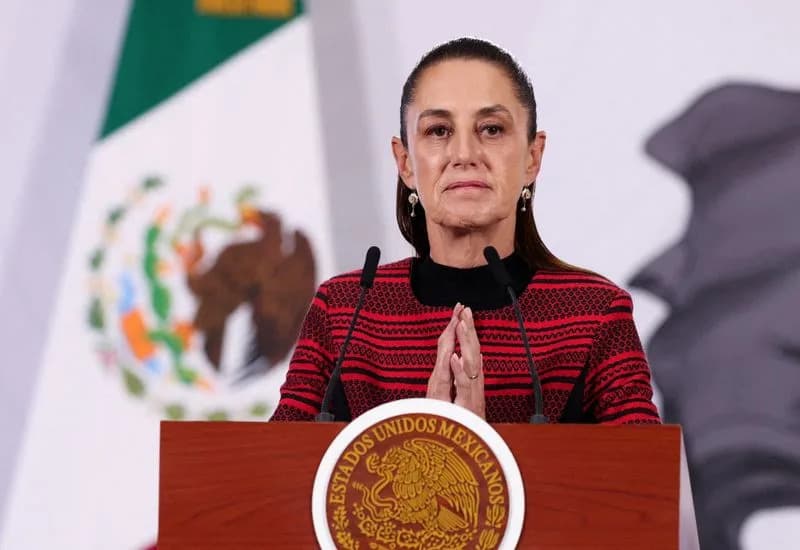
FILE PHOTO: Mexico's President Claudia Sheinbaum addresses the media in her daily press conference, in Mexico City, March 30, 2026. REUTERS/Quetzalli Nicte-Ha/File Photo
Mexican President Claudia Sheinbaum moved to calm rising tensions with the United States on Thursday after two Americans — whom U.S. sources say were CIA officers involved in anti‑narcotics work — were killed in a car crash in the northern state of Chihuahua.
Conflicting Accounts and Diplomatic Questions
The U.S. confirmed two members of its diplomatic mission in Mexico City were killed on Sunday but did not disclose their employer; the CIA declined to comment. Chihuahua Attorney General Cesar Jauregui said the vehicle was part of a convoy returning from an operation to destroy clandestine drug laboratories and that the Americans had been traveling with state investigators and Mexican Army soldiers.
Jauregui later clarified the U.S. visitors did not take part in the raid, saying they had been giving a separate drone‑training class and were given a ride by the returning convoy. That account has been questioned: two former U.S. officials speaking to Reuters on condition of anonymity said the Americans who died worked for the CIA, and Mexican journalist Luis Chaparro first reported their identities. The Los Angeles Times, citing anonymous sources, reported there may have been four CIA officers at the raid and that they wore Chihuahua state investigation agency uniforms; Reuters was not able to verify those details independently.
Mexico's Response and Political Fallout
At her daily briefing, President Sheinbaum reiterated her condolences and said she had conveyed them personally to the U.S. ambassador. She emphasized that “the human aspect is above everything,” responding to criticism from White House press secretary Karoline Leavitt, who had urged greater public sympathy for the dead U.S. officials while Mexico pressed for details on their activities.
Mexico's federal government later sent a diplomatic note to the U.S. embassy requesting an explanation for the presence of U.S. personnel in Chihuahua. Sheinbaum said her administration would investigate whether Mexico's national security law had been violated.
The episode has intensified domestic political friction: the state of Chihuahua is governed by the opposition National Action Party, and the Mexican senate has summoned Chihuahua Governor Maria Campos to explain local actions tied to the incident.
Wider Security Implications
Security analyst Vanda Felbab‑Brown warned the diplomatic spat could be used by elements in Washington who favor unilateral U.S. military action against Mexican cartels, arguing that cooperation has failed and that the United States should act alone. The presence of U.S. personnel in operations that target cartels is a politically sensitive issue in Mexico; Sheinbaum has long supported intelligence sharing but insists that U.S. agents or forces should not carry out operations on Mexican territory.
The CIA has a recorded history of involvement in Mexico’s counternarcotics efforts. Reuters previously reported that the agency runs covert operations in Mexico, training and equipping elite Mexican units to capture high‑value drug trafficking targets.
Reporting: Laura Gottesdiener in Monterrey and Aida Pelaez‑Fernandez in Mexico City; additional reporting by Jonathan Landay in Washington. Edited by Stephen Eisenhammer and Paul Simao.
Help us improve.