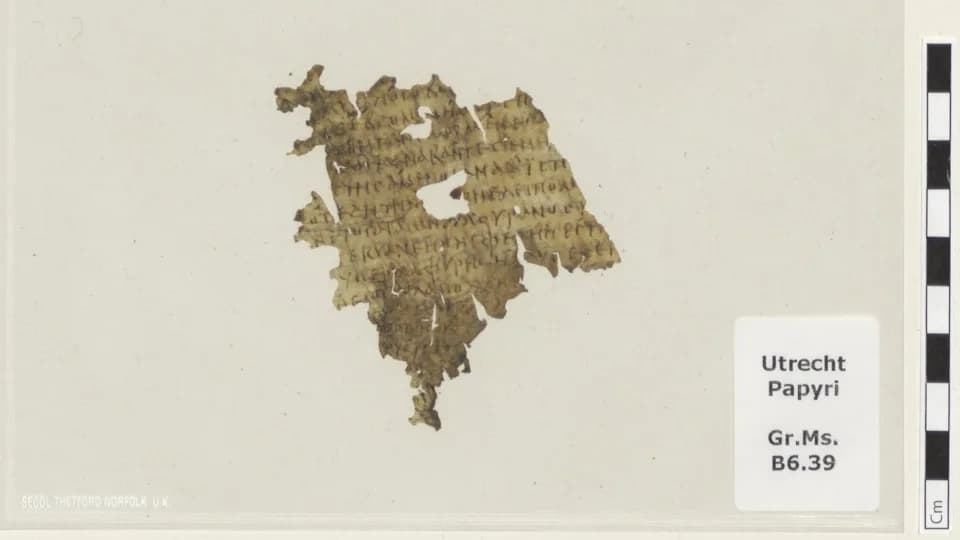
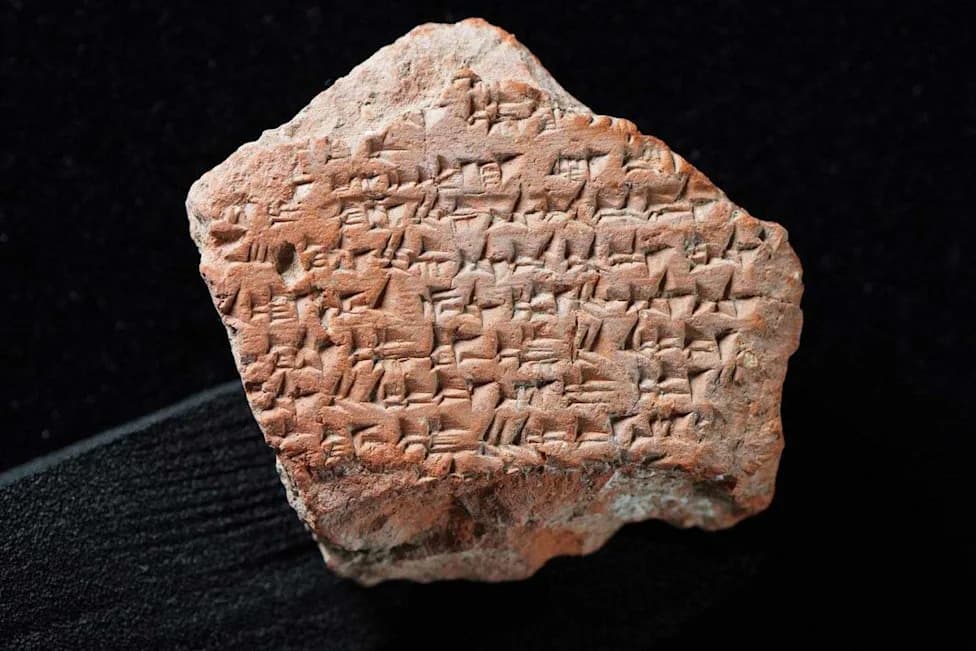
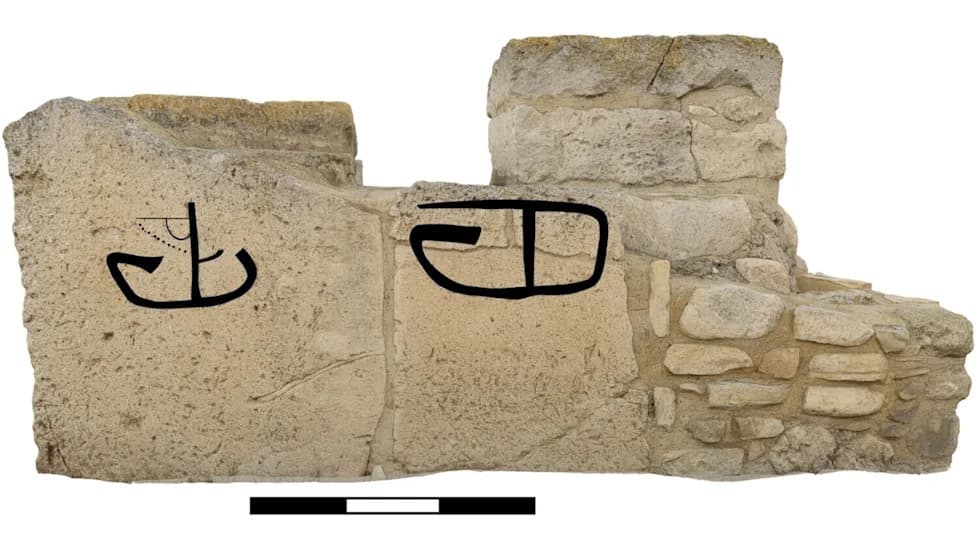
Archaeologists at Al-Bahnasa in Egypt found a fragment of Homer's Iliad inside a mummy, revealing an unexpected literary element in Hellenistic and Roman-period funerary practice. The papyrus contains lines from the Catalog of Ships, which lists the 1,186 vessels that sailed to Troy and opens with an invocation to the Muses. The find, led by the University of Barcelona team of Maite Mascot and Esther Ponce Melado, was accompanied by gilded funerary objects — including three gold tongues — highlighting a blend of Greek literary culture and Egyptian burial customs.
Fragment of Homer's Iliad Found Inside a Mummy at Al-Bahnasa Illuminates Cultural Crossovers
Part of Homer’sIliadWas Found Inside a MummyRichard T. Nowitz - Getty Images
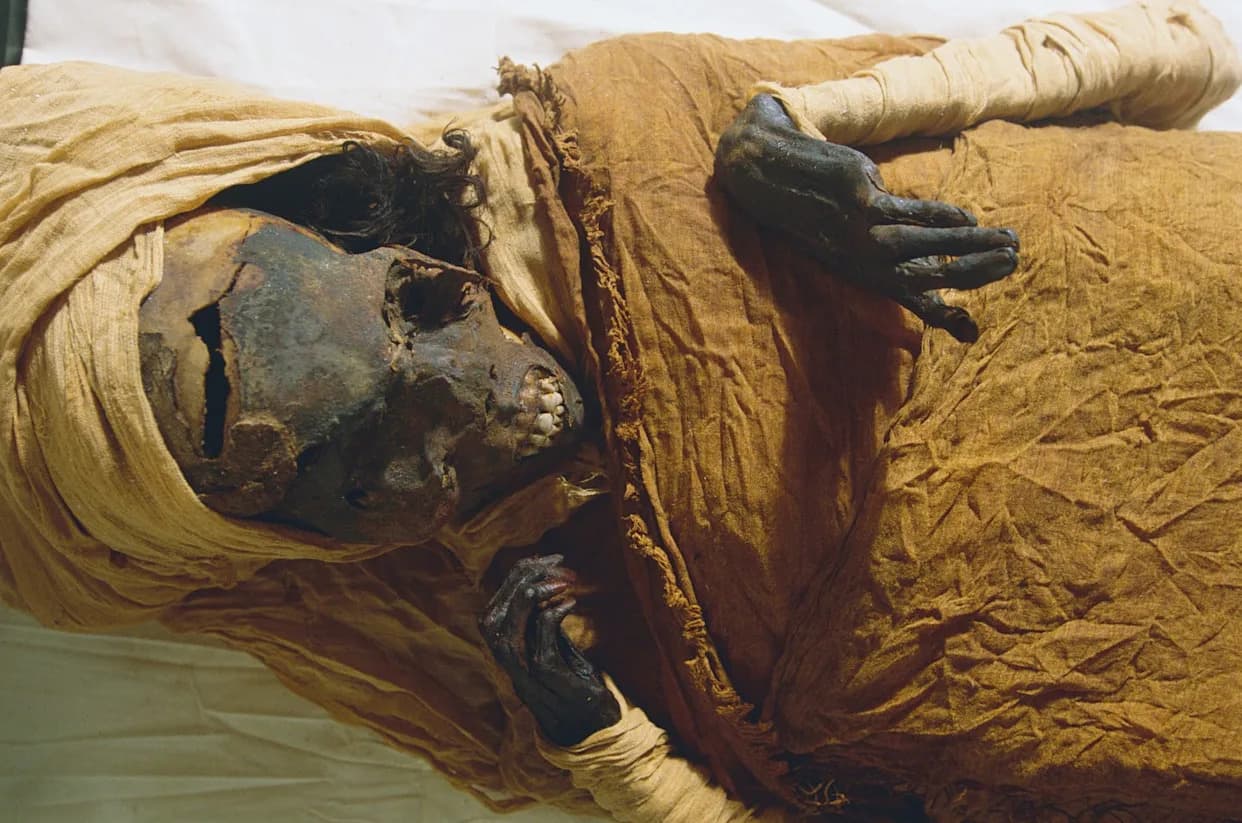
Archaeologists excavating at Al-Bahnasa in Egypt have uncovered a striking example of cultural fusion: a small scrap of papyrus containing an excerpt from Homer's Iliad placed inside the chest cavity of a mummy.
Site and Context
The ruins at Al-Bahnasa mark the ancient city of Per-Medjed, a thriving trade centre from the 25th Dynasty that continued to flourish under Hellenistic and Roman influence and is associated in later periods with Oxyrhynchus. Although much of the city's former grandeur lies in ruins, recent excavations have produced rare artifacts — including gilded mummies and literary fragments — that illuminate daily life and funerary practices during the Greek and Roman eras in Egypt.
The Discovery
A team from the University of Barcelona, led by Maite Mascot and Esther Ponce Melado, discovered a fragmented Greek papyrus inside a mummified individual. Unlike the ritual spells typically found in such contexts, this scrap contains lines from the famous "Catalog of Ships" in Homer's Iliad — an extended passage that invokes the Muses and enumerates the fleet that sailed to Troy.
"I could not recount their numbers nor name them,/Not if I had ten tongues and ten mouths,/And an unbreakable voice and a brazen chest within,/Unless the Olympian Muses, daughters of aegis-bearing Zeus, would remind me how many came under Ilium."
The passage continues by listing the fleet of 1,186 ships that sailed to Troy, naming contingents, their captains and the regions they came from.
Funerary Practices and Interpretation
During the Hellenistic and Roman periods, Greeks and Romans in Egypt adapted Egyptian mummification rites, sometimes inserting bundles of Greek-language papyri into the body cavities left by organ removal. While many of these papyri are ritual texts intended to guide the deceased through the afterlife, the presence of a literary poem — particularly a prestigious epic like the Iliad — suggests other possibilities: personal taste, a protective or symbolic talisman for the afterlife, or the inclusion of prized texts with funerary goods.
Associated Finds
Excavators also recovered three small gold tongues placed in mummies' mouths and evidence of gilded faces and extremities. Gilding was meant to emulate the divine flesh — often depicted as gold — and to help the deceased resemble deities and communicate with them in the afterlife.
Significance
The discovery adds a literary and cultural dimension to what archaeologists already know about Al-Bahnasa and the wider region. As Hisham El-Leithy, Secretary General of the Supreme Council of Antiquities, noted: "This discovery offers new insights into funerary practices in the city of Bahnasa during the Greek and Roman eras, adding an important literary and historical dimension to the site."
Further analysis of the papyrus, its dating, and the mummy's identity may clarify why an epic Greek text was chosen for burial — whether as a commissioned luxury, a personal preference, or a syncretic funerary custom that blended Greek literary prestige with Egyptian ritual practice.
Help us improve.