The Czech Republic has expressed interest in talks about joining France's initiative to expand and deepen European nuclear deterrence, Prime Minister Andrej Babiš said on April 20. France announced in March it would broaden its nuclear capabilities and pursue unprecedented cooperation with European partners. Babiš said the Czech Republic — a non‑nuclear NATO member — could contribute industry and military resources, but any participation would take time to negotiate. He stressed that Prague's ties with the United States would remain unchanged.
Czech Republic Open To Talks On Joining France's Nuclear Deterrence Initiative, PM Babiš Says
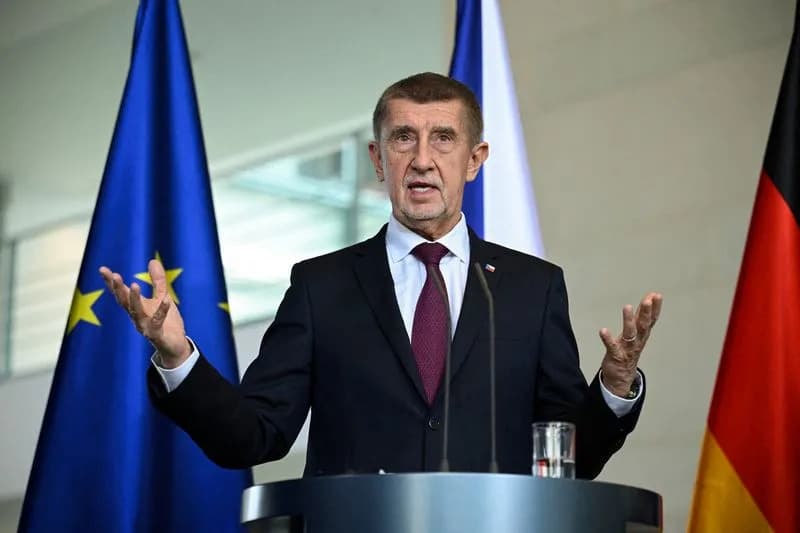
FILE PHOTO: Czech Prime Minister Andrej Babis speaks during a press conference, after bilateral talks with German Chancellor Friedrich Merz, in Berlin, Germany, March 10, 2026. REUTERS/Annegret Hilse/File Photo
PRAGUE, April 20 — The Czech Republic has signaled interest in discussing a potential role in France's plan to broaden European nuclear deterrence, Prime Minister Andrej Babiš said on Monday.
French President Emmanuel Macron announced in March that Paris intends to expand its nuclear forces and strengthen its deterrent through unprecedented cooperation with European partners. Babiš, whose country is a non‑nuclear member of NATO, said Prague was prepared to explore how Czech industry and military capabilities could contribute, but cautioned that any participation would require time and detailed negotiations.
"We are interested in these initiatives and we have to discuss the details and seek some involvement," Babiš told a news conference, adding that the Czech Republic has capable companies and an army that could contribute.
In a video message posted to Facebook on Sunday, Babiš reiterated his support for joining the French initiative and described France as an ideal European partner. He also emphasized that closer cooperation with European allies would not alter the Czech Republic's relationship with the United States.
Other European countries have moved in the same direction: Germany has set up a nuclear steering group to address deterrence issues, and Polish Prime Minister Donald Tusk has said Poland is in talks with France and other allies. Historically, most European states have relied primarily on the United States for nuclear deterrence — a long‑standing pillar of transatlantic security — but recent statements from Paris and several capitals suggest a push to deepen European burden‑sharing and cooperation on deterrence policy.
Any Czech involvement would be subject to allied consultations and legal, political and technical assessments. Prague's expression of interest signals growing European debate over collective approaches to deterrence amid evolving security concerns on the continent.
Help us improve.