Summary: A March 2025 state-approved textbook, My Family, reintroduces 16th‑century Domostroi material into Russian classrooms, endorsing patriarchal household authority. This educational shift, along with the creation of an NGO named "The Oprichnina" and a wider cultural campaign that rehabilitates Ivan the Terrible, reflects a broader Kremlin strategy I call "political neomedievalism." The campaign normalizes coercion, legitimizes inequality and supports authoritarian and imperial policies.
Make Russia Medieval Again: How Putin’s Government Is Remolding Society Using Ivan the Terrible’s Legacy
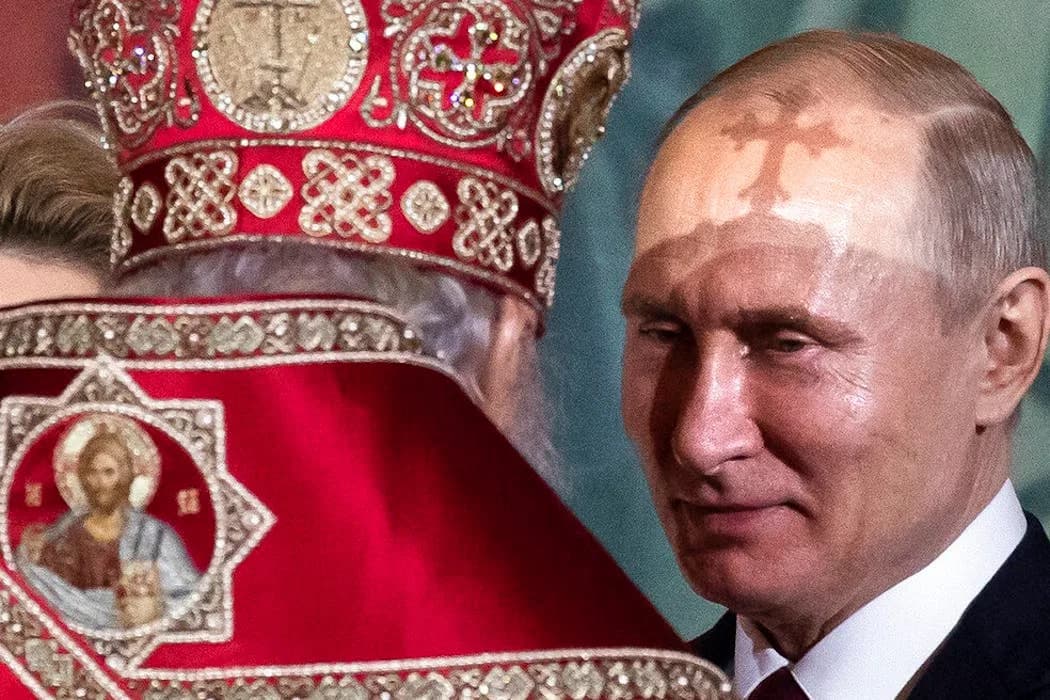
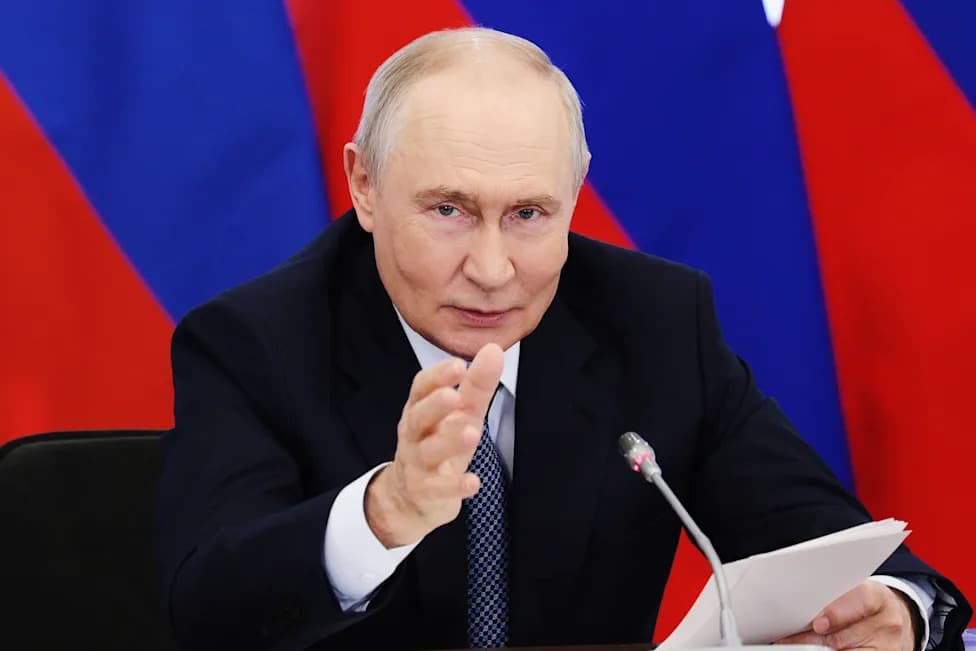
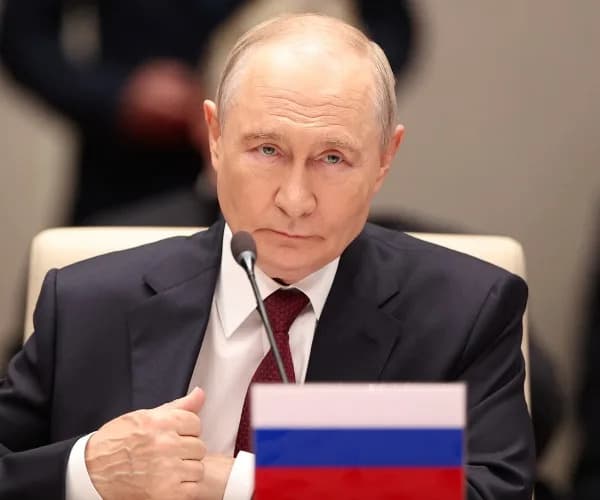
Russian President Vladimir Putin has draped himself in old-fashioned, medieval conceptions of Russian history to add symbolic weight to his authoritarian government.AP Photo/Alexander Zemlianichenko
A new state-approved school textbook, My Family, published in March 2025 and co-authored by State Duma official Nina Ostanina, proposes “traditional moral values” as part of a Family Studies course introduced in 2024–2025. The book draws explicitly on the 16th‑century Domostroi, a compendium of domestic rules traditionally attributed to Sylvester, the monk-tutor of Ivan the Terrible, reviving pre‑modern household norms in modern classrooms.
Domostroi In The Classroom
The textbook reproduces passages from the Domostroi that emphasize strict, male-dominated household authority. Sample excerpts presented in the book include guidance that fathers may coerce their household “in accordance with Orthodox dogmas” and that wives should seek “strict order,” please God and their husbands, and obey their husbands' commands with love. Such inclusions link medieval prescriptions for family life to contemporary civic education.
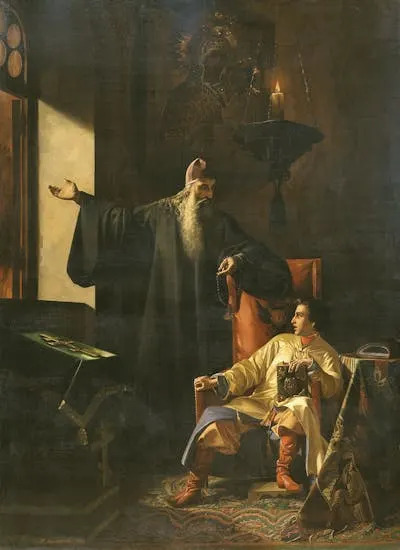
Czar Ivan the Terrible and the priest Sylvester.Wikimedia Commons
"Husbands should teach their wives with love and exemplary instruction."
"Wives ... submit to their husbands in all matters; and what the husband orders, they should agree with love and carry out according to his commands."
Context: Legal And Institutional Trends
These curricular choices fit broader legal and political developments. In 2017, Russia removed non‑aggravated "battery of close persons" from the criminal code, a change critics say weakened protections against domestic violence. In February 2025, the Vologda regional government established an NGO called "The Oprichnina" to "foster Russian identity" and promote the moral education of youth — a name that intentionally evokes Ivan the Terrible’s Oprichnina (1565–1572), known historically for brutal repression.
Rehabilitating Ivan The Terrible
Ivan IV (the Terrible) long has been remembered for violent policies, including mass executions and personal acts of brutality that contributed to sustained social collapse. Since the mid‑2000s, however, state actors and allied groups have recast Ivan as a strong, devout ruler who laid imperial foundations. Public commemoration has followed: the first modern bronze monument to Ivan appeared in 2016, and between 2009 and 2022 state-backed films and TV series repeatedly presented approving portrayals of his rule.
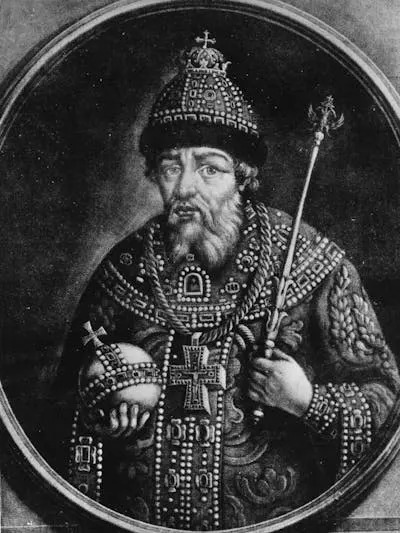
Ivan IV, czar of Russia from 1547 to 1584, known as Ivan the Terrible.Rischgitz/Getty Images
Ideology And Networks
The post‑Soviet reappraisal traces to thinkers such as Metropolitan Ivan Snychov, whose 1994 book The Autocracy of the Spirit influenced the Tsarebozhie current (sometimes called neo‑Oprichnina). This movement favors autocratic monarchy, hierarchical orders, and the canonization of Russian czars; it also frames Russian state power as "sacred." Elements of this worldview surfaced publicly on April 18, 2025, in an article by Alexander Kharichev of the Presidential Administration that many critics read as providing ideological support for contemporary authoritarian governance.
Politics Of Memory And The Modern Agenda
Scholars describe these developments as "political neomedievalism": the deliberate use of medieval models to justify modern policies. By idealizing a theocratic monarchy, rigid social orders, and the normalization of coercion, the Kremlin and allied actors are promoting an official narrative that legitimizes social inequalities, weakens the rule of law, bolsters militarization, and reframes repression as part of national tradition. This narrative supports broader imperial ambitions and helps mobilize public support for aggressive foreign policy, including the invasion of Ukraine.
Conclusion
The introduction of Domostroi passages into school curricula, the creation of institutions named after historical instruments of terror, and the cultural rehabilitation of violent historical figures together signal a coordinated effort to reshape Russian historical memory and social norms. As Dina Khapaeva (Georgia Institute of Technology) argues, these trends are less about nostalgia and more about legitimizing authoritarian governance through a curated past.
Author: Dina Khapaeva, Georgia Institute of Technology
Help us improve.