Archaeologists at Tell el-Farma in Pelusium, northern Sinai, have unearthed a temple to the local god Pelusius after a six-year dig. The sanctuary features a 35-metre circular basin connected to the Pelusiac branch of the Nile and a central square pedestal likely used for a cult statue. Evidence shows the site was used continuously from the 2nd century BCE to the 6th century CE and displays a fusion of Egyptian, Hellenistic and Roman architectural elements.
Ancient Temple of Pelusius Unearthed at Tell el-Farma — 35m Basin Linked to the Nile
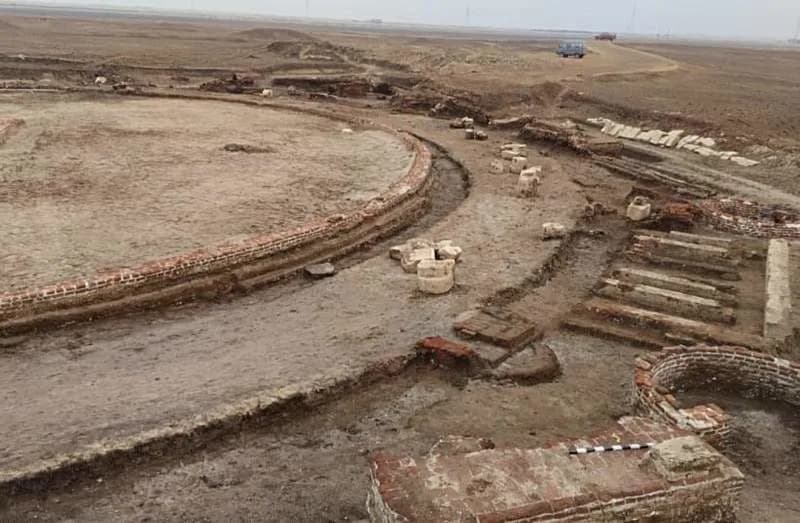
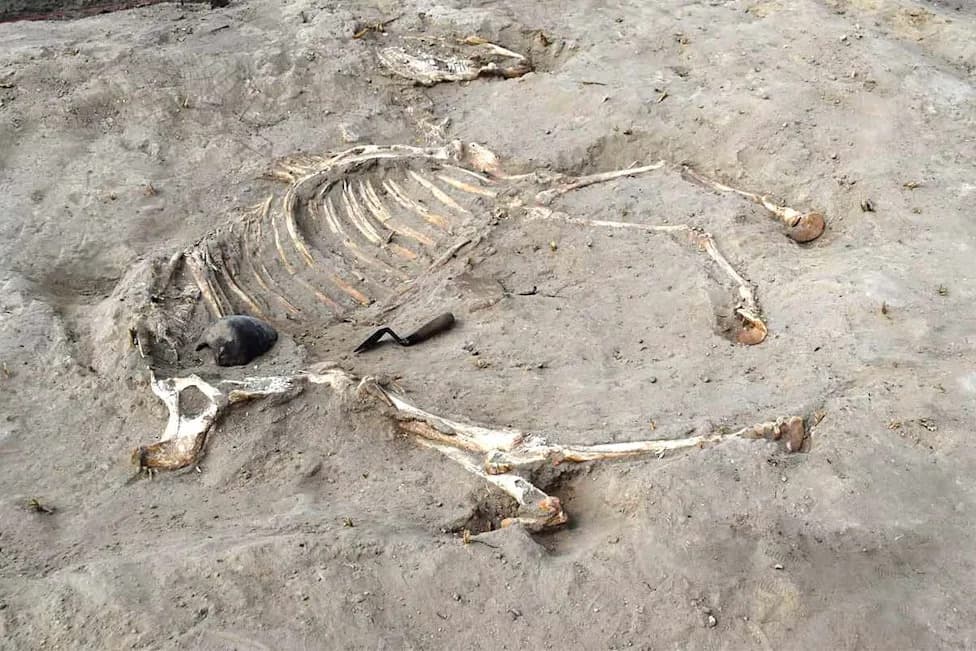
Ruins of ancient temple found at the Tell el-Farma archaeological site in the northern Sinai, April 15, 2026. (credit: EGYPTIAN TOURISM AND ANTIQUITIES MINISTRY)
Archaeologists have uncovered an ancient temple dedicated to the local god Pelusius at Tell el-Farma in Pelusium, northern Sinai, following a six-year excavation, the Egyptian Tourism and Antiquities Ministry announced.
Discovery and Layout
The sanctuary contains a striking circular basin 35 metres in diameter that connects directly to the Pelusiac branch of the Nile, Professor Mohamed Abdel Badie, head of the Egyptian Antiquities Sector at the Supreme Council of Antiquities, said. The basin held "water loaded with Nile silt," a symbolic element linking the cult to Pelusius — a deity whose name is associated with the Greek word pelos, meaning "mud."
Around the basin archaeologists documented a network of drainage channels and, at the basin's centre, a square pedestal believed to have supported a statue of the god. The building originally featured multiple entrances on its eastern, southern and western sides; its northern façade has suffered substantial damage.
Chronology and Significance
Analysis indicates the temple was in continuous use from the 2nd century BCE until the 6th century CE, with only modest architectural modifications over that long span. Part of the complex had first been exposed in 2019 and was initially interpreted as a civic building, but subsequent excavations and comparisons with Hellenistic and Roman-period structures elsewhere clarified its religious function.
“This discovery confirms the strategic and archaeological importance of north Sinai and underlines Pelusium’s role in shaping religious and cultural currents,” said Tourism and Antiquities Minister Sherif Fathy.
Dr. Hisham El-Leithy, Secretary General of the Supreme Council of Antiquities, added that the temple exemplifies a distinctive fusion of ancient Egyptian, Hellenistic and Roman architectural and religious traditions — a tangible testament to cultural interaction between Egypt and the classical world.
What Remains To Be Done
Excavations and conservation work will continue to reveal details about the temple’s decoration, ritual use and the broader urban landscape of ancient Pelusium. Further study may shed light on how local cult practices adapted across centuries of political and cultural change.
Help us improve.