The NTSB says a firetruck was ordered to stop twice—about nine seconds and then five seconds before an Air Canada jet struck the vehicle while landing at LaGuardia on March 22. It is unclear whether the crew heard those warnings; the firetruck also lacked a transponder and LaGuardia’s ASDE‑X system did not issue an alert. Two pilots, Captain Antoine Forest and First Officer Mackenzie Gunther, were killed; 39 passengers and two firefighters were hospitalized, most later released. Investigations into air traffic procedures and system failures are ongoing.
NTSB: Firetruck Told To Stop Twice Seconds Before Fatal LaGuardia Crash; Unclear If Warnings Were Heard
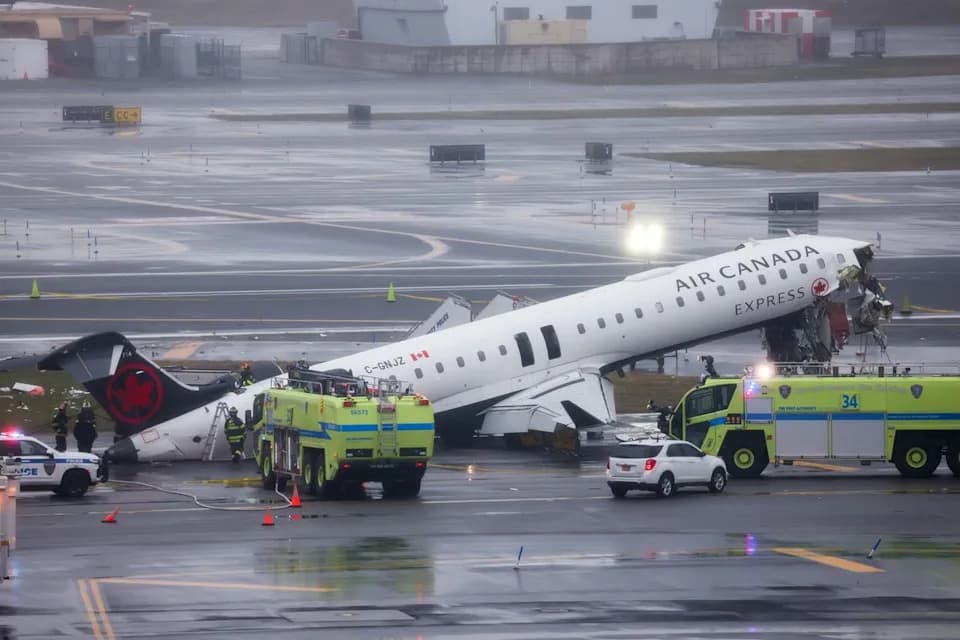
Emergency crews responding to the passenger jet crash at LaGuardia Airport on Monday, March 23.Credit: Michael Nagle/Bloomberg via Getty
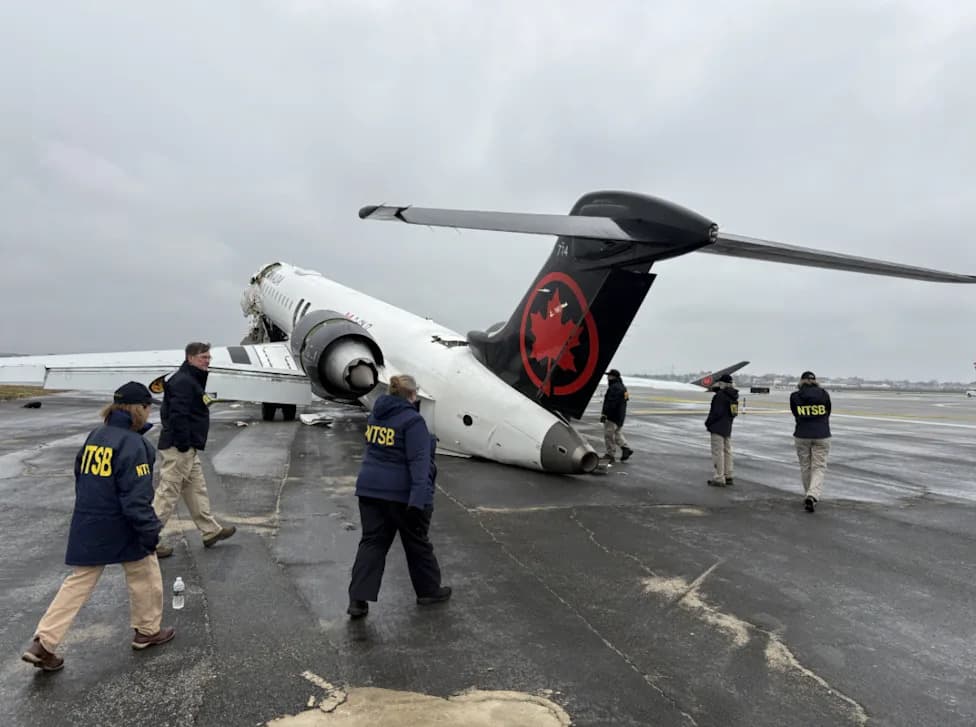
Officials released new details about the deadly collision at New York’s LaGuardia Airport that occurred on Sunday, March 22. The National Transportation Safety Board (NTSB) said the firetruck that crossed in front of an Air Canada jet was told to stop twice in the final seconds before impact, but it remains unclear whether the vehicle’s crew heard those orders.
What Officials Say
At a March 24 press briefing, NTSB investigator Doug Brazy summarized data from the airplane’s cockpit voice recorder. According to that summary, air traffic control issued a stop command about nine seconds before the collision and repeated the warning roughly five seconds later.
NTSB Chair Jennifer Homendy said the two officers in the firetruck — both of whom survived and will be interviewed — may not have heard the warnings. She also noted that the rescue vehicle did not have an operational transponder.
Surveillance and Air Traffic Control
Investigators reported that LaGuardia’s ASDE‑X surface surveillance system, which helps controllers track aircraft and vehicles on airport surfaces, did not produce an alert before the crash. Homendy confirmed two air traffic controllers were on duty and performing multiple duties, which she said is standard for the midnight shift; there is currently no indication that fatigue was a factor, though officials are still verifying details.
Casualties and Response
The crash killed two pilots: Captain Antoine Forest and First Officer Mackenzie Gunther, Port Authority officials confirmed. FAA Administrator Bryan Bedford called their deaths "an absolute tragedy" and described them as young pilots at the start of their careers. Governor Kathy Hochul also offered condolences, calling the event "a deeply human story."
In addition to the two deceased pilots, 39 passengers and the two firefighters were taken to hospitals; most of those transported have since been released. The firefighting vehicle had been responding to reports of an unknown odor in the cockpit of another plane when it entered the runway area.
Ongoing Investigation
The NTSB and other agencies continue to investigate the sequence of events, including the role of air traffic procedures, the lack of a transponder on the rescue vehicle, why ASDE‑X did not alert, and what the firetruck crew did in the final seconds before impact. Officials will interview the firetruck crew and the controllers as part of the probe.
Bottom line: Early evidence from the cockpit voice recorder shows stop commands were issued seconds before the collision, but key questions about whether those commands were heard and why runway‑safety systems did not trigger alerts remain unresolved.
Help us improve.