The US and China have discussed creating a "US-China Board of Trade" to formalize which goods should be traded and to negotiate tariff adjustments in non-sensitive areas. Proponents argue it could deliver clearer, outcome-focused cooperation and reduce recurring conflict. Critics warn managed trade may distort market forces, favor certain industries and hurt competitiveness. Any successful arrangement would require realistic terms and sustained mutual commitment.
Proposed US-China 'Board of Trade' Could Ease Ties — But Experts Warn of Market Risks
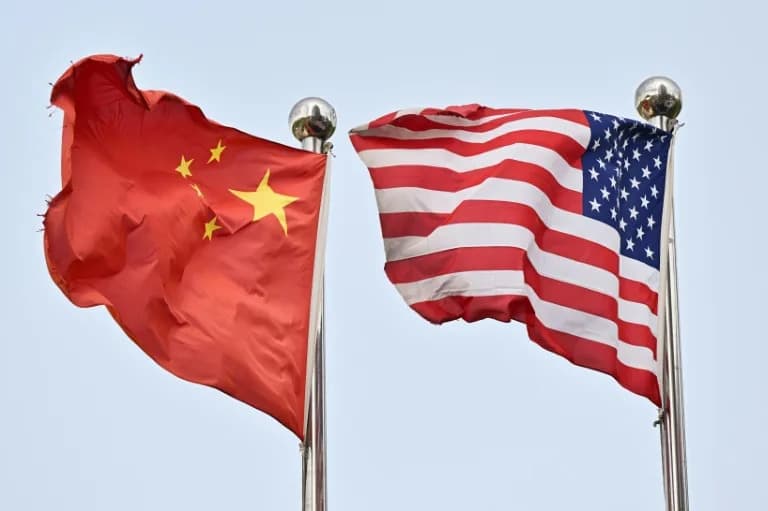
Washington and Beijing are considering a US-China "Board of Trade," said US officials after recent economic talks in Paris (Pedro Pardo)(Pedro Pardo/AFP/AFP)
As Washington and Beijing explore a new mechanism to steer commercial relations, US and Chinese officials have discussed creating a "US-China Board of Trade" to systematize which goods should flow between the two economies and to open talks on tariff adjustments in non-sensitive areas. Supporters say it could produce clearer, enforceable outcomes; critics warn it risks undermining market forces and competitiveness.
What Is a "Board of Trade"?
US trade envoy Jamieson Greer confirmed that senior US and Chinese economic officials discussed a proposal to set up a formal forum — a "US-China Board of Trade." The proposed body would identify categories of goods for prioritised trade, spot opportunities to expand commerce in non-sensitive sectors, and potentially coordinate mutual tariff reductions outside national-security domains, according to Wendy Cutler of the Asia Society Policy Institute.
Potential Near-Term Gains
Negotiators appear to have made progress on Chinese purchase commitments for US agricultural products, energy supplies and aircraft. Proponents argue a board could reduce recurring trade friction by focusing on tangible purchase and import commitments rather than broad policy disputes.
How Does This Differ From Past Deals?
Economists such as Chad Bown of the Peterson Institute for International Economics call this shift toward "managed trade," which prioritises concrete outcomes (like import quotas or purchase commitments) over traditional policy-based approaches. A recent precedent is the Trump administration’s "Phase One" deal, in which China pledged to buy an additional $200 billion of US goods over two years — a target it ultimately did not meet.
Why Some Experts Are Concerned
"Instead of removing regulations and cutting tariffs so buyers and sellers set prices, it becomes more mechanised. That's not a good sign. Where are the market forces?" — Joerg Wuttke, DGA-Albright Stonebridge Group
Critics warn that a managed system could distort competitive markets, favour certain industries or firms, and create political contestation about which sectors receive preferential treatment. Other trading partners might be alarmed by bilateral arrangements that look like carve-outs or protectionism.
Can It Improve Bilateral Relations?
Supporters say a carefully designed board could produce steadier, outcome-focused cooperation and reduce the cycle of escalation and retaliation. But success would depend on realistic, enforceable commitments and sincere, long-term buy-in from both sides. Even with goodwill, experts stress such deals are difficult to negotiate and to implement reliably.
Bottom line: A US-China Board of Trade could provide a pragmatic way to manage trade tensions and expand non-sensitive commerce, but it comes with trade-offs: potential market distortion, competitiveness concerns, and the need for strong mutual commitment to make any agreement credible.
Help us improve.