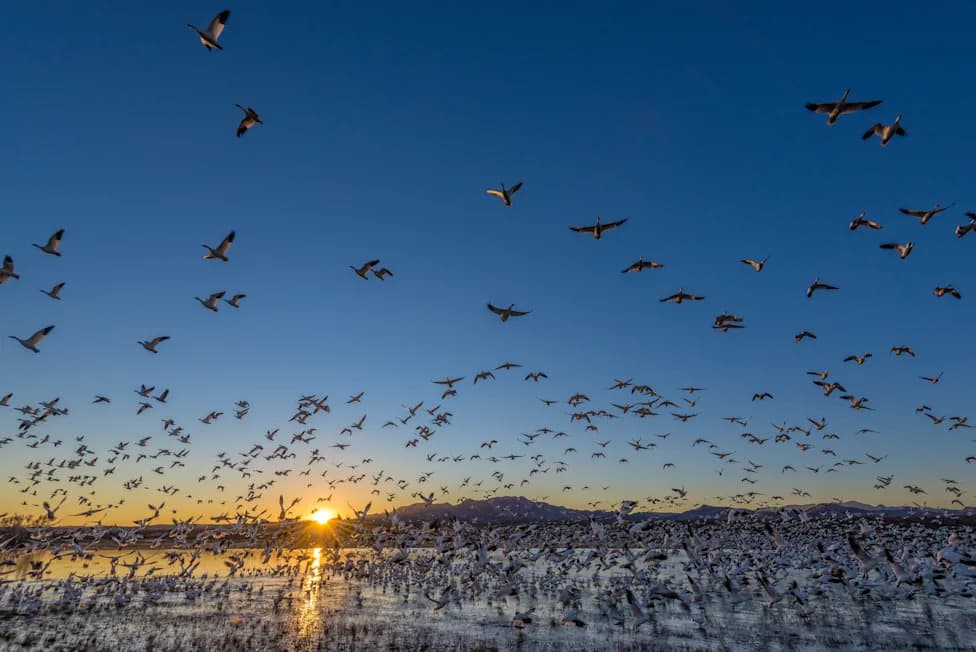
The 1930s Dust Bowl stripped native prairie grasses from the Great Plains, destabilized topsoil and triggered massive dust storms that destroyed habitat for birds, small mammals and predators. Federal responses—especially the 1935 Soil Conservation Service, shelterbelts, and expanded refuges under the Migratory Bird Conservation Act—helped stabilize soils and restore wetlands. Some species recovered, but more than 60% of native prairie is gone and many grassland specialists remain in steep decline, leaving a permanently altered landscape and ongoing vulnerability to drought.
When the Plains Turned to Dust: How the Dust Bowl Devastated America’s Wildlife
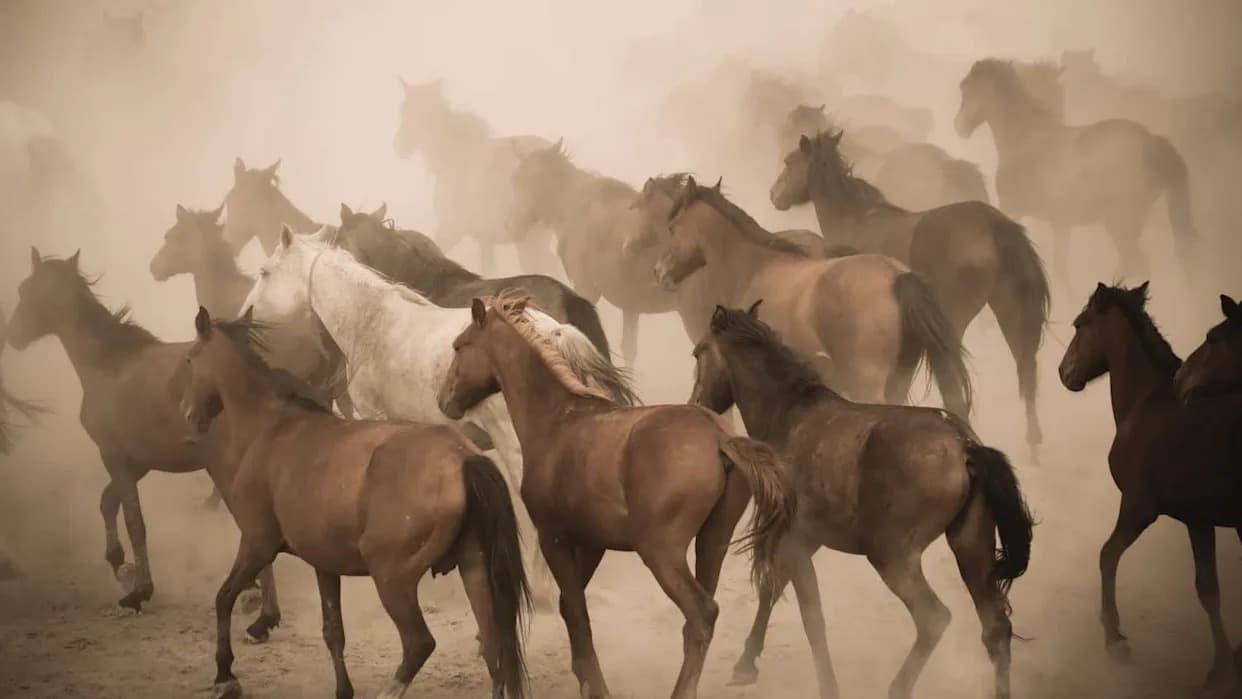
Wild horses running and kicking up dust. Yilki horses are wild horses with no owners in Kayseri, Turkey© yalicn/Shutterstock.com
The Dust Bowl of the 1930s left deep and lasting scars on the Great Plains. Beyond the iconic images of blackened skies and abandoned farms, the crisis stripped away native grasses, destabilized soils, and triggered cascading losses for birds, small mammals and predators that depended on intact prairie ecosystems.
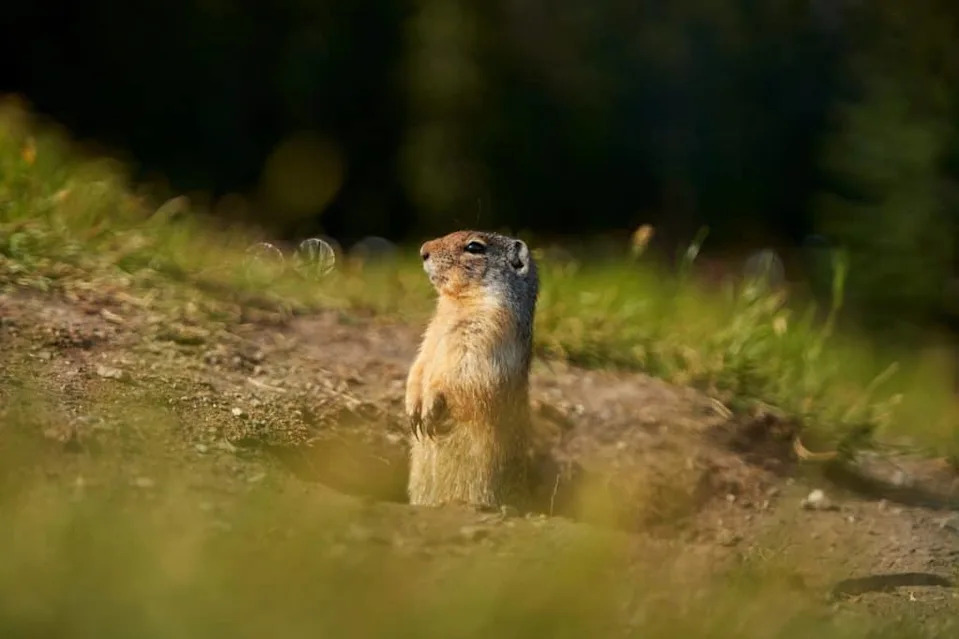
Prairie dogs are one of the indigenous species of the American Great Plains.©Try_my_best/Shutterstock.com(Try_my_best/Shutterstock.com)
A Living Prairie Before the Crisis
For millennia, tallgrass and mixed-grass prairies—driven by species like big bluestem and switchgrass—held soil in place with dense, deep roots and stored moisture below the surface. This living structure supported diverse wildlife: prairie chickens on lek sites, songbirds nesting in tall cover, burrowing mammals such as prairie dogs and ground squirrels that shaped local hydrology, and the raptors and coyotes that hunted them.
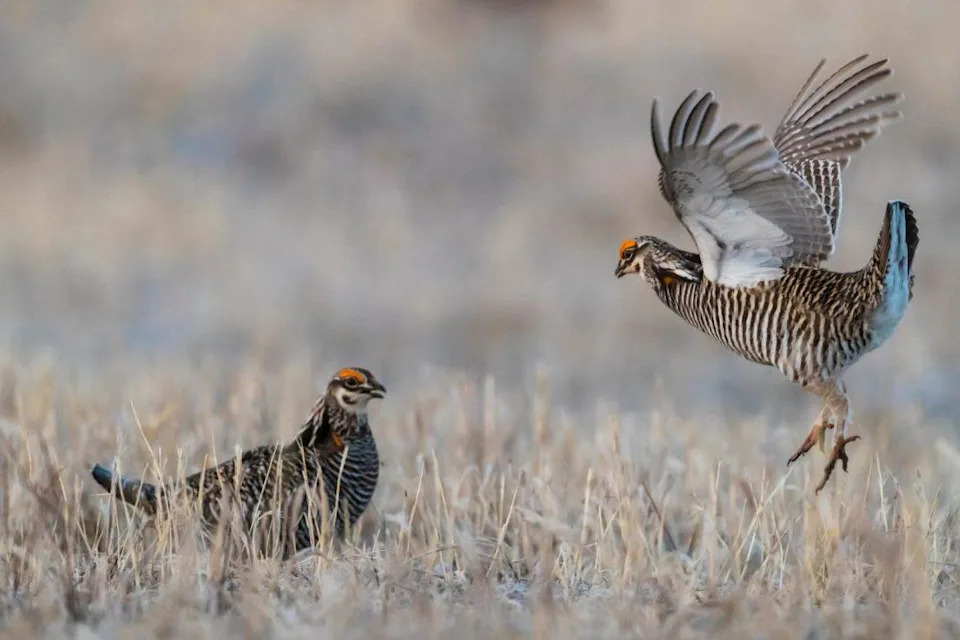
Greater prairie chickens in Nebraska.©Danita Delimont/Shutterstock.com(Danita Delimont/Shutterstock.com)
Mechanized Farming and Ecological Fragility
In the early 20th century, high crop prices and new farm machinery drove rapid conversion of native prairie to cropland. Deep-rooted perennials were replaced by annual crops with shallow roots, leaving soil exposed between seasons. When severe drought arrived in the early 1930s, exposed topsoil dried, disintegrated and was lifted by wind into the massive dust storms that gave the era its name.
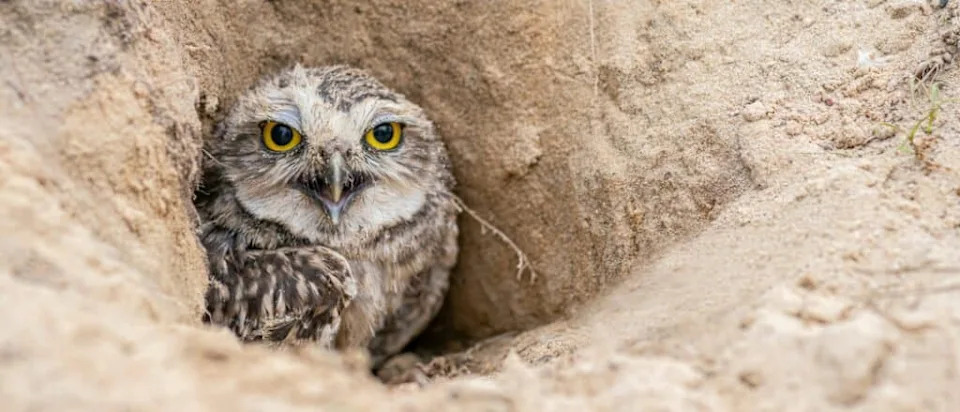
Burrowing owls are a ground-nesting species of the Plains, often taking over prairie dog burrows.©Albert Beukhof/Shutterstock.com(Albert Beukhof/Shutterstock.com)
Direct Impacts on Wildlife
Ground-nesting birds were among the hardest hit: prairie chickens, meadowlarks and other species lost nesting cover and faced greater exposure to wind and predators. Songbirds declined as storms buried nests and reduced insect prey. Burrowing mammals lost habitat and food, and localized surges of animals such as jackrabbits reflected crowding rather than healthy populations. Predators — hawks, owls and coyotes — suffered as prey availability fluctuated and habitats fragmented.
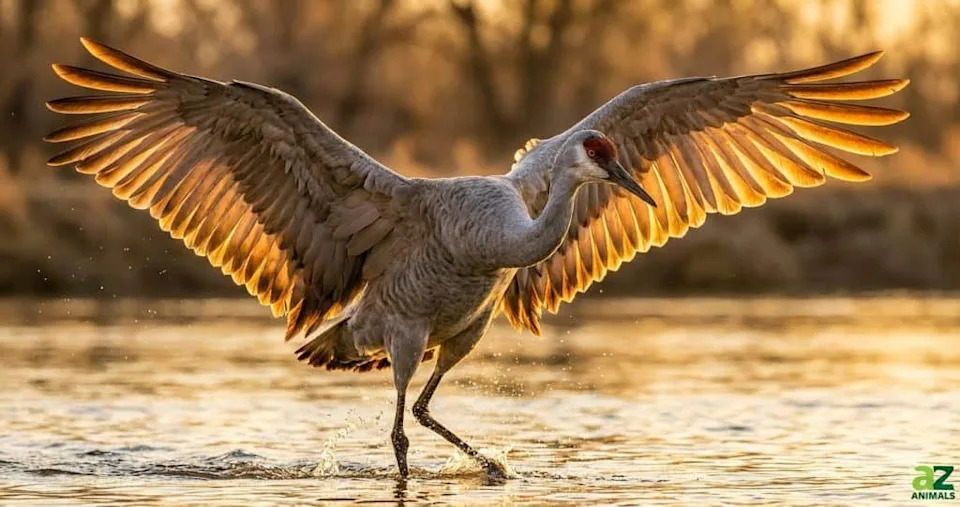
Millions of birds, like this sandhill crane, migrate through the Great Plains every year.©A-Z Animals(A-Z Animals)
Wetlands, Water Quality, and Migratory Routes
Reduced vegetation changed hydrology: rain ran off rather than soaking in, carrying sediment into streams and ponds. Wetlands silted up or dried, shrinking breeding and feeding areas for amphibians, shorebirds and waterfowl. Key stopover sites along the Central Flyway, such as Cheyenne Bottoms, became even more important refuges for migrating birds.
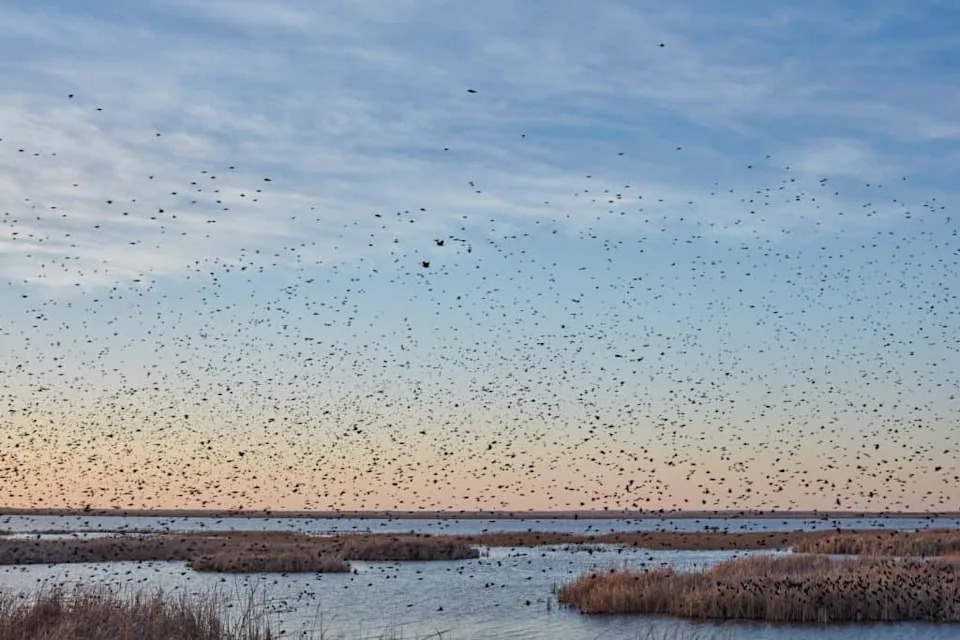
A large flock of migrating birds in the Cheyenne Bottoms wetlands of Kansas.©CLP Media/Shutterstock.com(CLP Media/Shutterstock.com)
Human Responses: Abandonment and Increased Pressure
As farms failed, many families left the Plains, leaving stripped fields that offered poor habitat. Those who remained sometimes intensified direct pressure on wildlife for food or crop protection: thousands of jackrabbits and prairie dogs were eradicated, and hunting of deer, quail and small game increased in some areas.
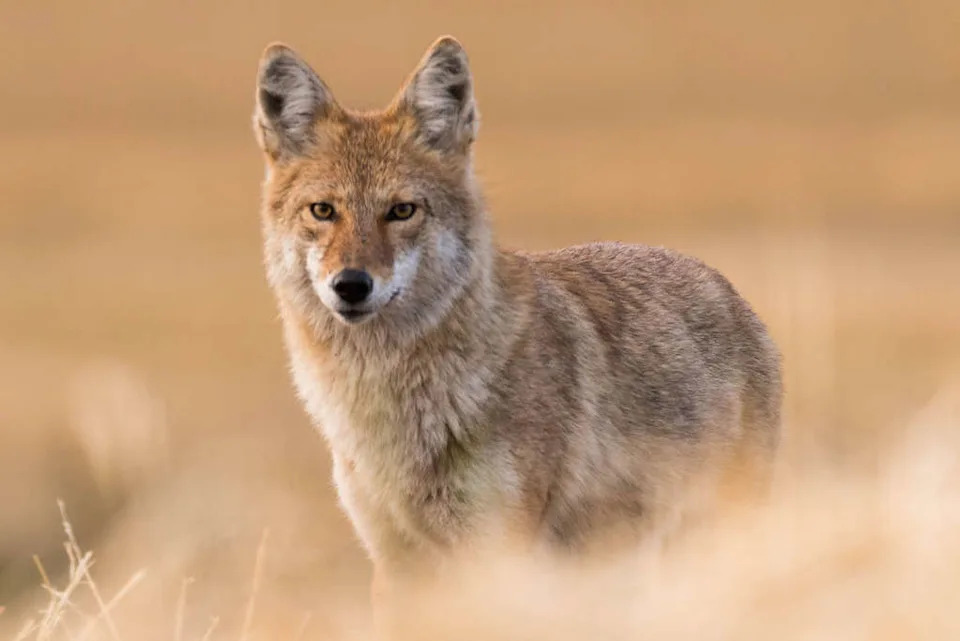
A wild coyote stands on the prairies. This is one of the species that has recovered well from the Dust Bowl catastrophe.©hartmanc10/iStock via Getty Images(hartmanc10/iStock via Getty Images)
Policy Shifts and Restoration
The crisis prompted a major federal response. In 1935 the Soil Conservation Service (now the Natural Resources Conservation Service) promoted contour plowing, cover crops and replanting of native grasses. The Migratory Bird Conservation Act and New Deal programs expanded wildlife refuges and wetland protection. Shelterbelts—long rows of trees—were planted to reduce wind erosion, and restoration projects in the Prairie Pothole Region helped recover breeding habitat for ducks.
Recovery: Partial and Uneven
These measures improved soils and helped some species rebound: adaptable mammals (deer, coyotes) and waterfowl in protected basins have recovered in many places. Yet more than 60% of original native prairie is permanently converted to cropland, and grassland specialists continue to decline. Grassland bird populations have dropped by over 70% since 1970, reflecting long-term habitat loss and fragmentation.
Legacy and Ongoing Risk
Modern practices—no-till planting, cover crops, diverse rotations and windbreaks—reduce the chance of a repeat Dust Bowl, but climatic risks remain. The Great Plains still face severe droughts, and climate projections suggest longer, more intense dry spells could become more common. Without sustained conservation and sensible land management, topsoil loss and ecosystem collapse remain possible under extreme conditions.
The Dust Bowl is both a cautionary tale and a testament: human land-use choices can rapidly reshape ecosystems, but coordinated conservation and policy can repair some of that damage—though not always fully.
Help us improve.