Laboratory trials published in Marine Pollution Bulletin show polystyrene nanoplastics impair decision-making and motor control in marine medaka, causing rushed choices and more stumbling. These behavioral changes could reduce survival and reproductive success, cascading through populations and ecosystems. Because nanoplastics can penetrate tissues and accumulate up the food chain, researchers urge stronger pollution policy and individual steps to reduce plastic waste.
Scientists Warn Nanoplastics Impair Fish Decision-Making, Threatening Ocean Food Webs
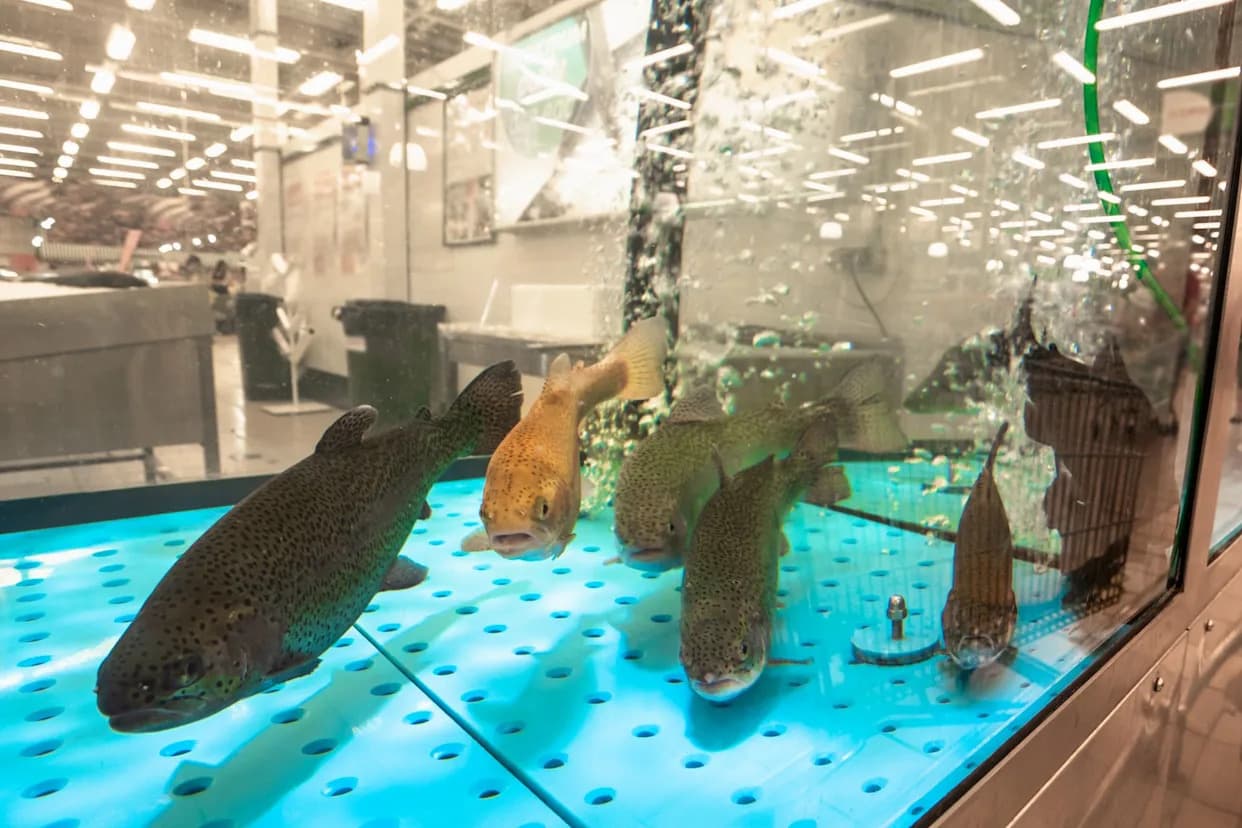
Photo Credit: iStock
Researchers report that microscopic polystyrene nanoplastics disrupt cognitive and motor behavior in marine fish, with potential ripple effects across ocean food webs and human food supplies.
Laboratory Findings
Teams from Shantou University, the Chinese Academy of Fisheries Sciences and Charles Darwin University published controlled laboratory trials in Marine Pollution Bulletin examining how nanoplastics affect marine medaka (Oryzias melastigma), a small fish commonly used in toxicology studies. Scientists added polystyrene nanoplastics to tank water and evaluated the fish in maze tests designed to assess decision-making and motor coordination.
Compared with unexposed fish, medaka exposed to nanoplastics made quicker, more impulsive choices at maze junctions and showed higher rates of stumbling and navigation errors. The researchers interpret these changes as signs of impaired cognitive processing and motor control.
Why It Matters
"For a fish which has changed its behavior, it may have trouble capturing food and most importantly, have trouble avoiding predators," said co-author Professor Sunil Kadri of Charles Darwin University’s Research Institute for Northern Agriculture. Impaired feeding, predator avoidance and mating success at the individual level can translate into population declines and altered ecosystem dynamics.
"Nanoplastics are already widespread, found in oceans, freshwater systems, and even soil, and can move up the food chain, accumulating in living organisms," said co-author Dr. Zonghang Zhang from Shantou University. "Given their pervasive presence and potential to accumulate, we cannot afford to ignore them simply because they are 'invisible.'"
Mechanism And Scope
Environmental studies estimate roughly 80%–85% of marine debris is plastic. Sunlight, abrasion and cold water fragment larger plastics into ever-smaller particles; when fragments reach the nanoscale they can cross biological barriers and penetrate tissues and cells, a behaviour larger fragments cannot match. That property raises concern about bioaccumulation and transfer up the food chain.
Implications For People And Policy
Because billions of people rely on fish and shellfish for protein and livelihoods, behavior and survival changes in marine species could threaten fisheries, coastal communities and food security. The authors call for pairing plastic-pollution policies with targeted protections for marine ecosystems and fisheries, and for further research to evaluate effects across species and in real-world conditions.
Practical Steps
The researchers and environmental experts recommend individual and policy actions: reduce single-use plastics; use reusable bags, bottles and containers; recycle correctly; choose products with less packaging; and support stronger regulations and better waste-management infrastructure to limit plastic entry into waterways.
Study source: Marine Pollution Bulletin (authors from Shantou University, the Chinese Academy of Fisheries Sciences and Charles Darwin University).
Help us improve.