President Lai Ching-te said Taiwan can afford a proposed $40 billion, eight-year special defence budget, citing a booming economy driven by semiconductors and AI demand. The plan, intended to counter a growing threat from China, is stalled in parliament amid opposition concerns it is unclear. Lai said the U.S. emphasis on collective defence and burden-sharing supports Taipei's approach and that AI will be deployed to build a real-time defence system that also spurs industrial growth. Parliament authorised about $9 billion in U.S. arms purchases to meet contract deadlines despite the broader budget impasse.
Taiwan Says $40 Billion Defence Plan Affordable as Economy Booms, President Argues
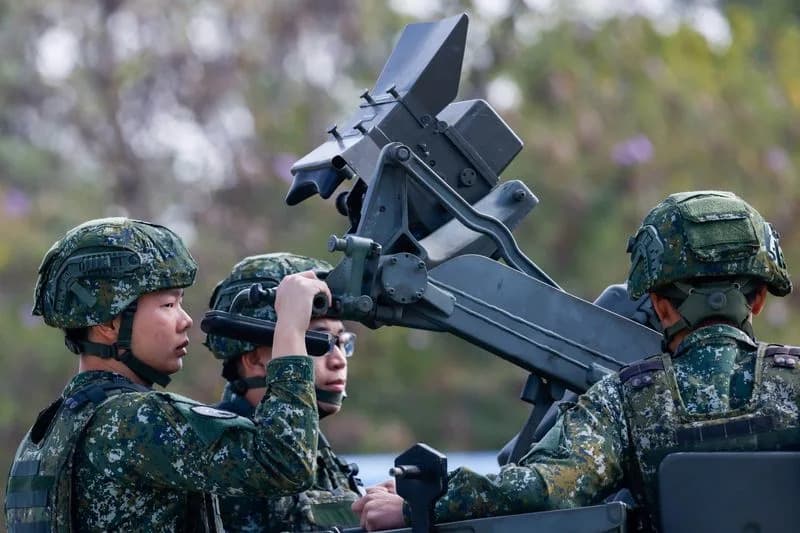
Taiwan military personnel operate an Oerlikon 35 mm twin cannon at an annual military exercise ahead of the Lunar New Year in Chiayi, Taiwan, January 28, 2026. REUTERS/Ann Wang
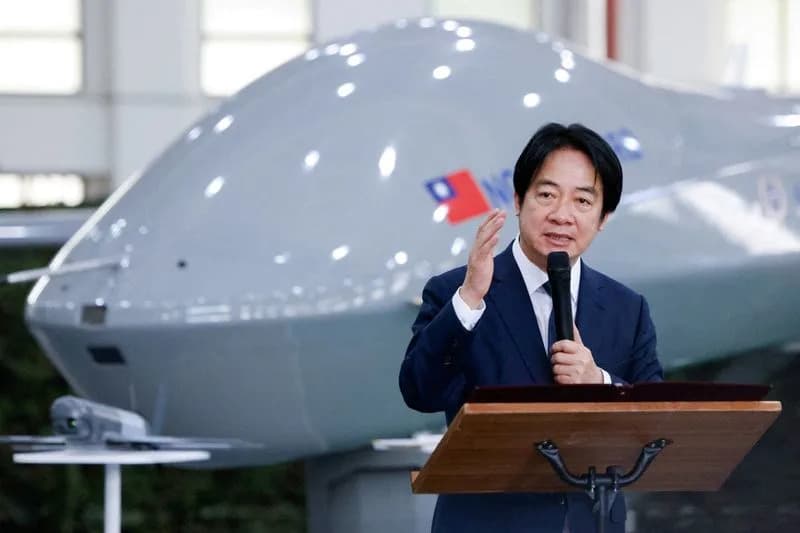
Taipei — President Lai Ching-te said on Saturday that Taiwan can comfortably fund a proposed $40 billion, eight-year special defence package thanks to the island's strong economic performance and a booming semiconductor sector.
Speaking on the 30th anniversary of Taiwan's first direct presidential election — an event remembered for Chinese missile firings intended to influence the vote — Lai framed the spending plan as necessary to strengthen Taipei's ability to deter a rising military threat from China.
"With Taiwan's economic growth, we can absolutely afford it," Lai said of the eight-year plan, adding that the United States' National Security Strategy underscores collective defence and burden-sharing.
The proposal has been stalled in parliament, where an opposition majority criticises the plan as vague and has warned it will not sign what it calls "blank cheques." To meet urgent procurement timelines, lawmakers authorised the government to finalise about $9 billion in arms purchases from the United States on Friday, even though the broader defence budget has not yet been approved.
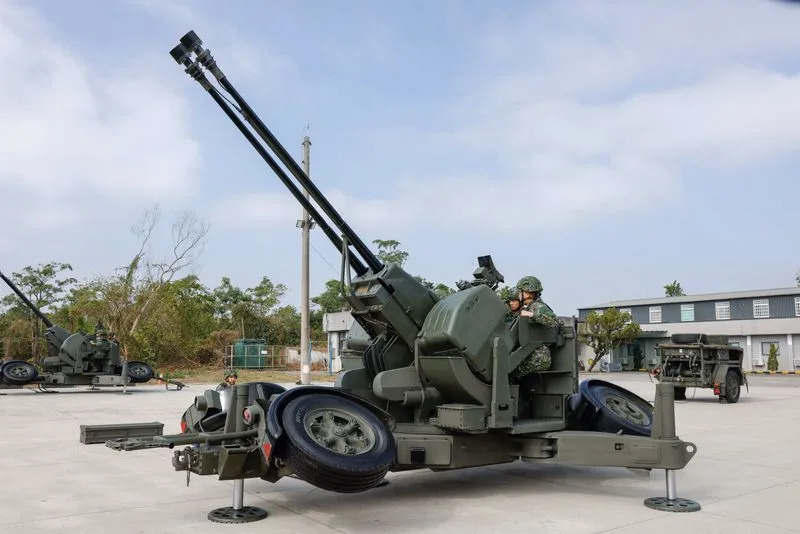
Taiwan military personnel operate an Oerlikon 35 mm twin cannon at an annual military exercise ahead of the Lunar New Year in Chiayi, Taiwan, January 28, 2026. REUTERS/Ann Wang
Lai highlighted Taiwan's status as a global leader in advanced semiconductors and said demand from artificial-intelligence applications helped push the economy to its fastest growth in 15 years in 2025. He argued the defence package would also boost domestic industry: Taiwan plans to use AI to build a real-time defence system and to promote the local defence sector.
China views Taiwan as part of its territory and has never renounced the option of using force. Lai rejects Beijing's sovereignty claims and stresses that only the people of Taiwan can determine their future. Beijing held large-scale military exercises around the island in December, and Chinese warships and aircraft continue to operate routinely near Taiwan.
Context: The debate over the special defence budget comes amid broader international pressure — noted by Lai — for allies to increase defence spending and share more of the security burden in response to heightened geopolitical competition in the Indo-Pacific.
Help us improve.