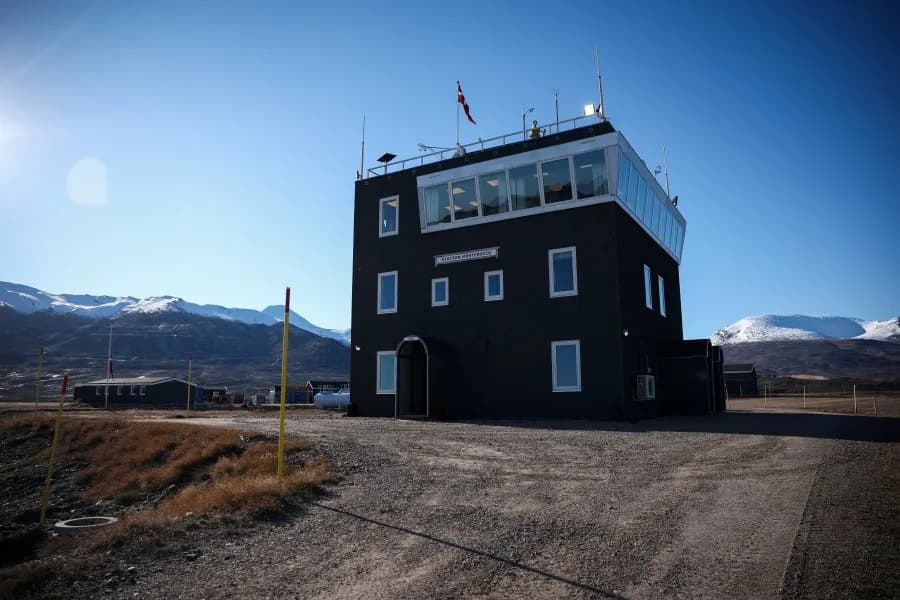
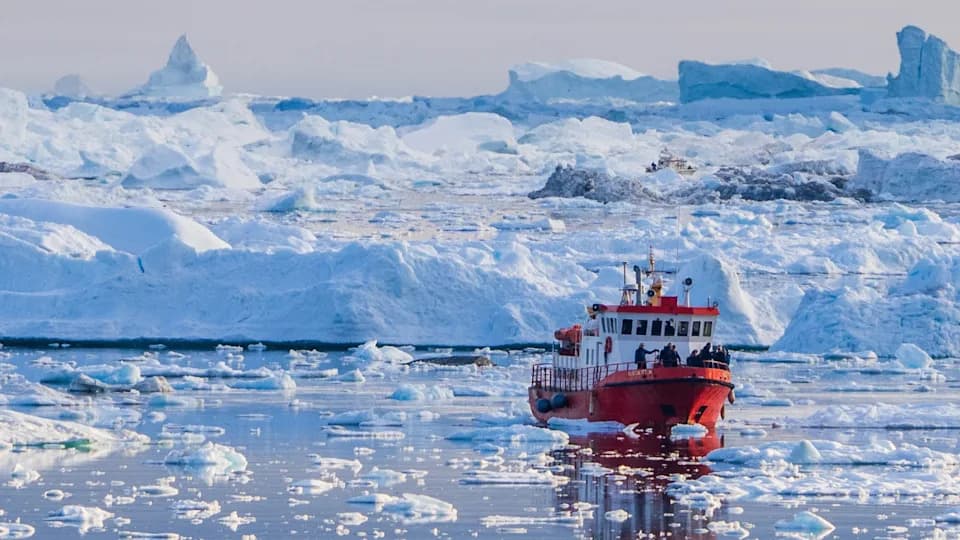
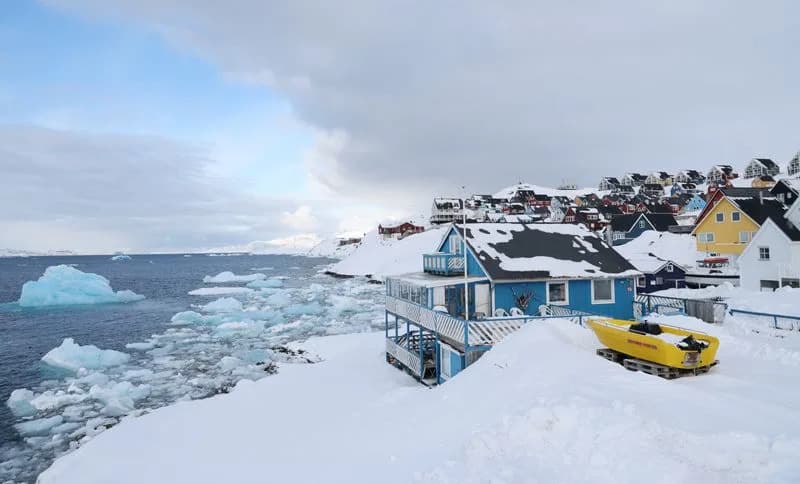
U.S. forces wrapped up Arctic Edge this week, an annual exercise now staged in both Alaska and Greenland to sharpen cold-weather survival and multi-domain defense capabilities. Denmark hosted the Greenland portion and U.S. and Danish special operations trained together. Commanders emphasized that pre-deployment preparation is essential to avoid cold-related equipment failures. At Fort Greely, layered sensors detected all test drones and one was recovered intact using a net-based counter-drone system.
U.S. and Denmark Complete Arctic Edge: First Winter Drills Across Alaska and Greenland Test Cold-Weather Defenses
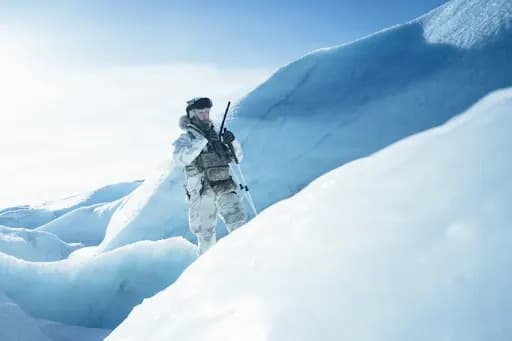
File: A U.S. Air Force Special Operations Forces (SOF) Airman navigates the ice sheet during a simulated search and rescue for ARCTIC EDGE 2026 (AE26) in Kangerlussaq, Greenland, March 7, 2026. / Credit: Defense Visual Information Distribution Service
U.S. military units this week concluded Arctic Edge, the annual multi-domain exercise designed to sharpen operations in the Arctic — and for the first time in recent iterations, the training took place across both Alaska and Greenland.
The Greenland segment was coordinated with Danish authorities and included joint operations involving U.S. and Danish special operations forces. The long-planned drills proceeded despite public comments from President Trump earlier this year about pursuing control of Greenland, an autonomous territory of Denmark.
Training Focus: Survival, Maintenance and Multi-Domain Defense
Officials from NORAD and U.S. Northern Command, which oversaw the exercise, said Denmark hosted U.S. forces for operations emphasizing survival and combat operations in extreme Arctic conditions. Arctic Edge, launched in 2018 and typically held every other winter, was this year conducted in the dead of winter — putting cold-weather procedures and equipment to a rigorous test.
"Half of the battle in exercising in the wintertime in the Arctic is simply surviving," Royal Canadian Air Force Lt. Gen. Iain Huddleston, deputy commander of NORAD, told reporters.
U.S. Air Force Lt. Gen. Robert Davis, head of U.S. Alaska Command and commander of the 11th Air Force, said a central lesson is that units must be prepared for Arctic conditions before they arrive. Crews unfamiliar with extreme-cold procedures routinely see aircraft and equipment sustain damage or require extra maintenance — for example, warming hydraulic systems before start-up or avoiding premature exposure of aircraft windows to frigid air, which can crack panes and ground planes.
Threat Scenarios: Missiles, Drones and Layered Defenses
The exercise did not assign a named adversary but incorporated defensive scenarios relevant to capability sets possessed by a few nations, such as long-range cruise missiles. "We don't have any intelligence that would suggest that we're actually at risk of them launching cruise missiles against Alaska," Davis said, "Nevertheless, we feel like we need to be adequately prepared...from a defensive perspective."
Smaller, rapidly evolving threats from unmanned aerial systems drew particular attention. At Fort Greely in Alaska, forces ran scenarios ranging from a single surveillance drone to a small swarm of roughly six unmanned aircraft to test detection, communication and defeat procedures.
"None of the drones were completely undetected," Davis said, noting that layered sensor suites detected each test drone and passed actionable data to Army defenders. Subzero temperatures — which can fall to about -40 degrees Fahrenheit in the region — did not degrade the performance of those systems. U.S. forces brought down one drone using a net-based counter-unmanned aerial system, recovering it intact for inspection.
Davis also highlighted that many of Fort Greely's counter-drone measures are electronics-based and do not rely on batteries that drain quickly in extreme cold, which helped maintain effectiveness. He warned, however, that the rapid pace of commercial drone development and changing tactics presents a continuing challenge for formal military acquisition and program cycles across theaters, not just in the Arctic.
Help us improve.