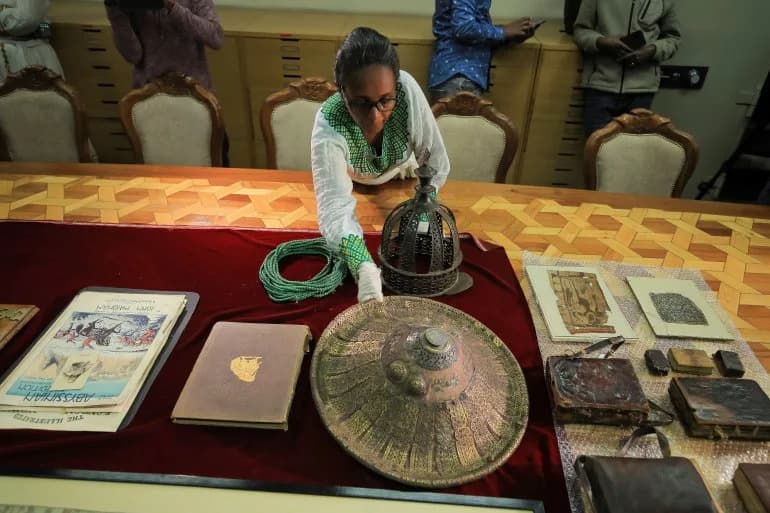
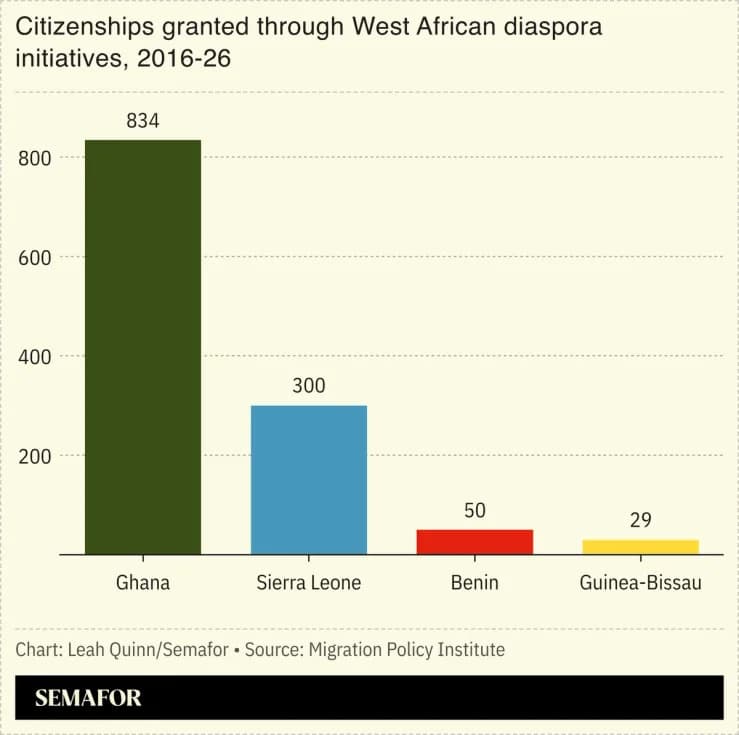
Ivory Coast celebrated the return of Djidji Ayokwè, a monumental "talking drum" looted during colonial rule and repatriated from France. The drum, more than three metres long and nearly 400 kg, was used by the Atchan people to warn of forced labour and mobilize fighters. It is the first of 148 artefacts Ivory Coast has requested from France, and officials described the restitution as a historic step toward reclaiming cultural identity.
Ivory Coast Reclaims Djidji Ayokwè — Historic "Talking Drum" Returned by France
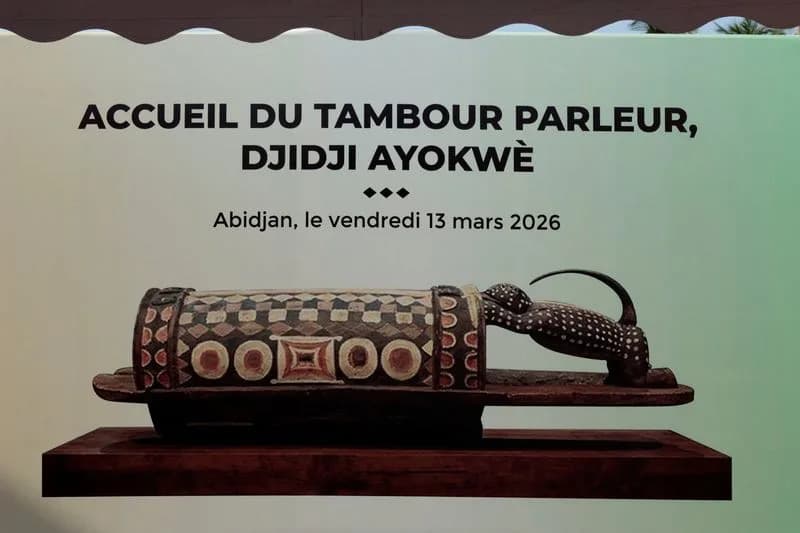
A Photo of the Djidji Ayokwe, an ancestral talking drum of the Atchan people living in southern Ivory Coast, taken from the Ivory Coast during the colonial period and housed at Quai Branly Museum in Paris, is seen in Abidjan, Ivory Coast, March 13, 2026. REUTERS/ Luc Gnago
ABIDJAN, March 13 — Traditional chiefs wearing crowns and gold chains gathered at Ivory Coast's main airport on Friday to welcome the return of a monumental "talking drum" looted more than a century ago. The instrument, known as Djidji Ayokwè, is the first artifact repatriated to the West African nation by former colonial power France.
The drum, whose name means "Panther-Lion" in the Atchan language, is more than three metres long and weighs nearly 400 kg, the Ivorian culture ministry said. Members of the Atchan people in southern Ivory Coast historically used the drum to warn communities of forced labour operations and to mobilize fighters.
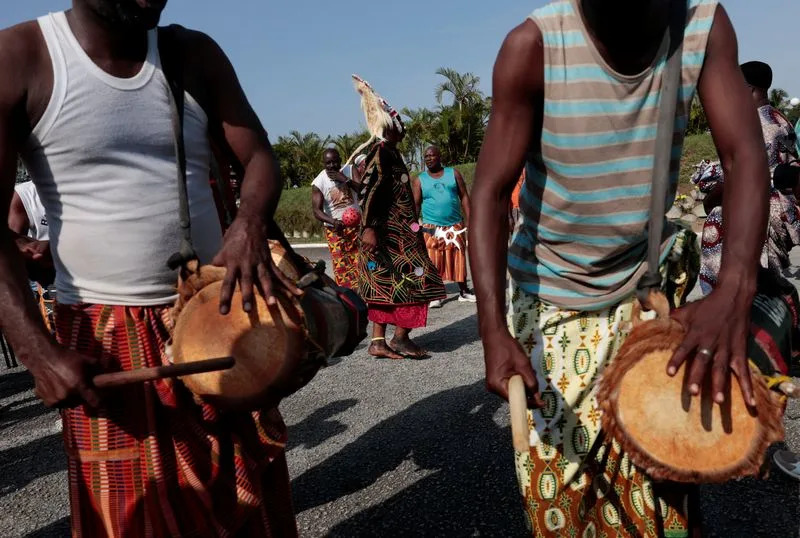
Participants perform during the welcome ceremony for the Djidji Ayokwe, an ancestral talking drum of the Atchan people living in southern Ivory Coast, taken from Ivory Coast during the colonial period and housed at Quai Branly Museum in Paris, in Abidjan, Ivory Coast, March 13, 2026. REUTERS/ Luc Gnago
According to the culture ministry, the drum was confiscated in 1916, held at the governor's palace in Abidjan and later sent to France in 1930, where it was displayed at Paris's Quai Branly museum. The ministry has formally requested the restitution of 148 artefacts held in France; Djidji Ayokwè is the first to make the return journey.
"This is a historic day, and I am deeply moved," said Françoise Remarck, Ivory Coast's minister of culture and Francophonie, at the arrival ceremony, which featured traditional songs and war dances.
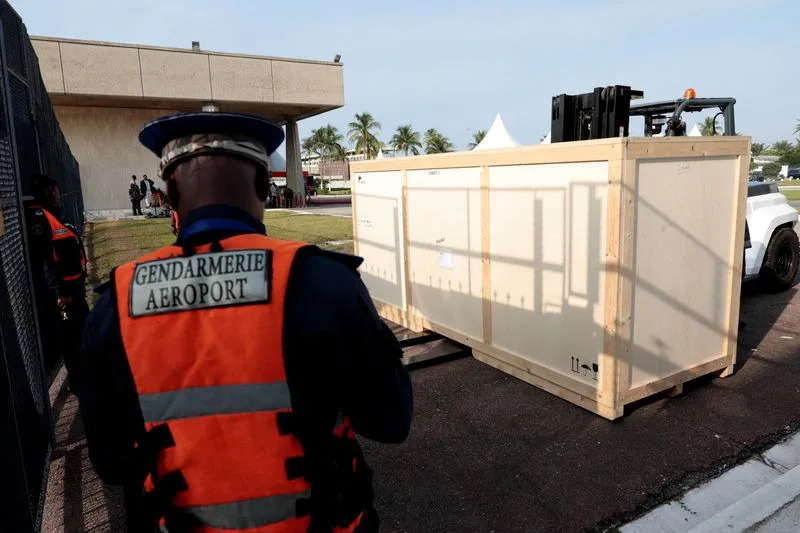
Security forces members stand next to the forklift truck carrying the box containing the Djidji Ayokwe, an ancestral talking drum of the Atchan people living in southern Ivory Coast, taken from Ivory Coast during the colonial period and housed at the Quai Branly Museum in Paris, in Abidjan, Ivory Coast, March 13, 2026. REUTERS/ Luc Gnago
Gervais Djoman, chief of an Atchan village, said: "We are reclaiming our identity. Psychologically, something had been taken from us."
The return of Djidji Ayokwè comes amid growing international pressure on former colonial powers to return cultural objects taken from Africa and Asia. Officials and community leaders in Ivory Coast say restitutions such as this play a vital role in healing historical injustices and restoring cultural heritage.
(Reporting and writing by Loucoumane Coulibaly; editing by Robbie Corey-Boulet)
Help us improve.