
Overview: The U.S. faces simultaneous extremes this week: heavy rain and flash flooding in Hawaii, an early Southwest heat dome with rare 100°F+ days in Phoenix, a polar vortex sending Arctic cold into the Midwest and East, and two powerful snowstorms across the Great Lakes — one possibly intensifying into a bomb cyclone. An amplified jet stream is driving fast temperature swings; scientists link such patterns to Arctic sea-ice loss and human-driven climate change. Officials urge residents to heed local warnings and prepare for diverse hazards.
U.S. Weather Erupts: Heat Dome, Polar Vortex, Bomb Cyclone and Atmospheric River Strike Together
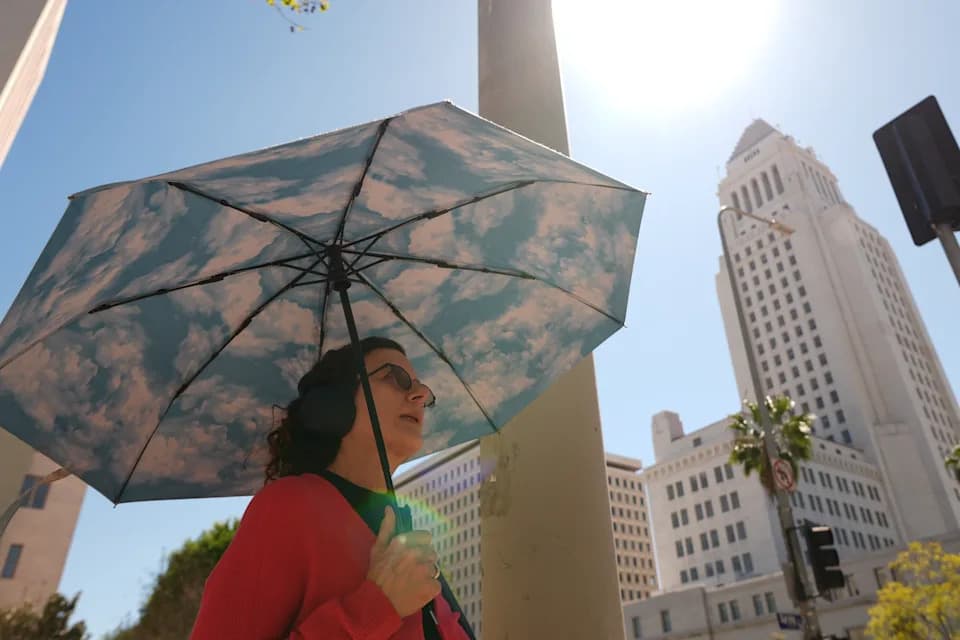
A pedestrian holds a cloud themed umbrella under a sunny day next to Los Angeles City Hall in Los Angeles Thursday, March. 12, 2026. (AP Photo/Damian Dovarganes)(ASSOCIATED PRESS)
Nearly every region of the United States will face extreme, rapidly changing weather this week — from heavy rain and flooding in Hawaii to an early-season heat wave in the Southwest, brutal Arctic air sweeping into the Midwest and East, and major snowstorms across the Great Lakes.
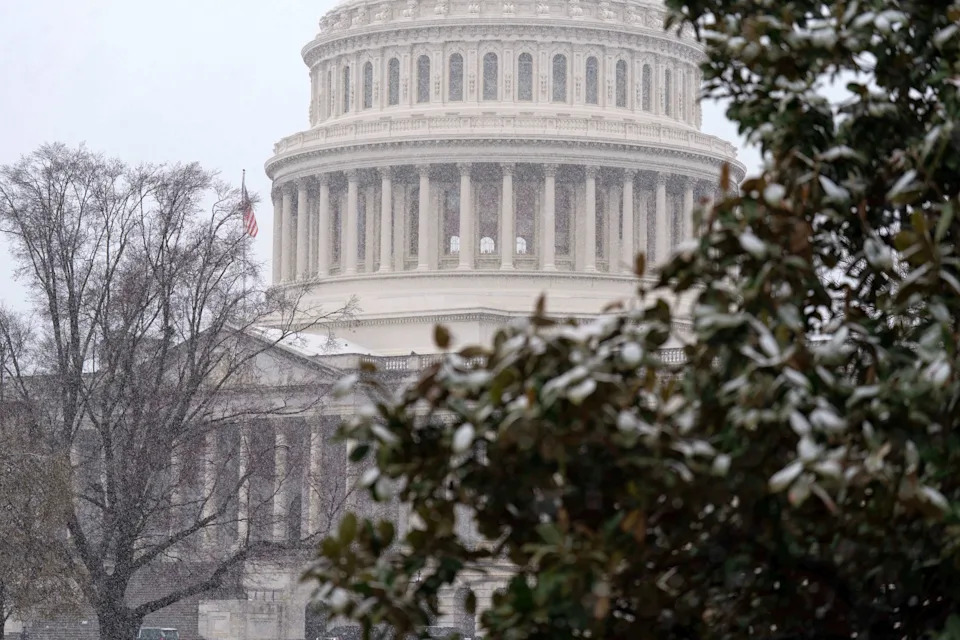
The U.S. Capitol is seen during a snowy day on Capitol Hill Thursday, March 12, 2026, in Washington. (AP Photo/Jose Luis Magana)(ASSOCIATED PRESS)
Heat Dome and Unseasonably Early Triple-Digit Heat
Meteorologists say a heat dome will build over the Southwest early next week, sending daytime highs in Phoenix into the upper 90s and triple digits — forecasts show roughly 98°F (about 37°C) followed by 103°, 105° and two days near 107°F (about 42°C). The National Weather Service notes Phoenix has never hit 100°F before March 26 in 137 years of records, and early-season heat can be more dangerous because people are not yet acclimated.

Construction workers spray water during an unseasonably hot day at MacArthur Park on Thursday, Mar. 12, 2026 in Los Angeles. (AP Photo/Ryan Sun)(ASSOCIATED PRESS)
Los Angeles has already seen unusually hot March weather, with temperatures near 90°F and residents dressing for summer. Officials urge residents to prepare for heat-related stress, hydrate, check on vulnerable neighbors and follow local heat advisories.

People cover themselves from the heat with umbrellas while waiting at a food distribution site Wednesday, March 11, 2026, in Los Angeles. (AP Photo/Damian Dovarganes)(ASSOCIATED PRESS)
Polar Vortex: Arctic Chill Sinks South
At the same time, the polar vortex is forecast to plunge south and funnel Arctic air into the Midwest and East. Forecast lows include Minneapolis near 0°F, Chicago in the single digits, and parts of the Northeast and Mid-Atlantic only reaching teens and 20s. Atlanta could briefly dip into the 20s. Forecasters warn this sharp flip from warmth to cold will create widespread impacts on travel, utilities and outdoor activities.
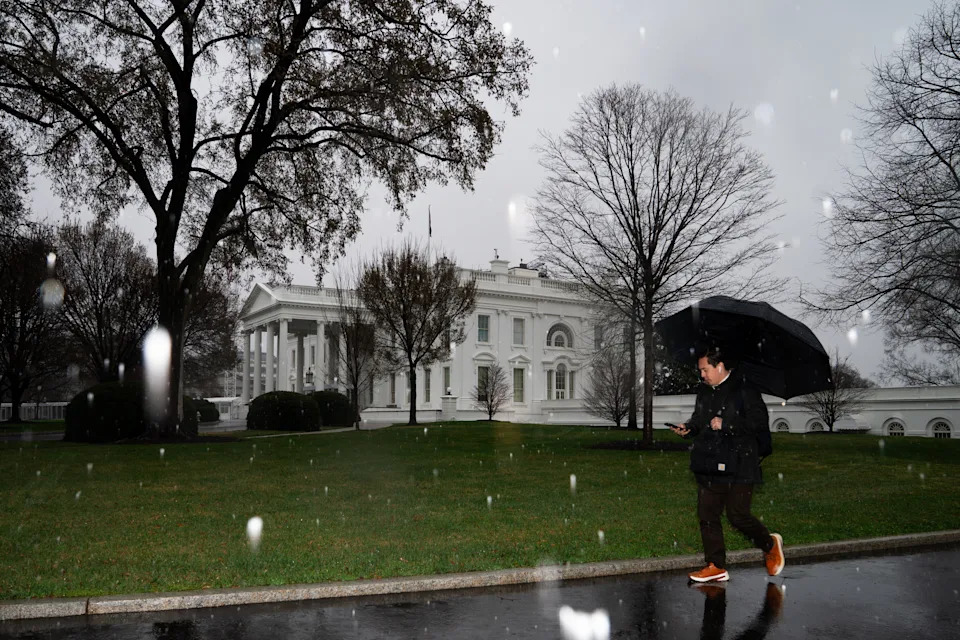
A person walks through falling snow at the White House on Thursday, March 12, 2026, in Washington. (AP Photo/Allison Robbert)(ASSOCIATED PRESS)
Two Snowstorms — One Could Become a Bomb Cyclone
Two storm systems moving across the northern U.S. and Great Lakes — one due Friday and a larger one Sunday into Monday — could together drop 3 to 4 feet of snow in some locations. The second system is forecast to intensify rapidly, with a sharp fall in barometric pressure qualifying it as a "bomb cyclone." Unusually, this storm is expected to draw much of its energy from the polar vortex rather than the ocean.
Hawaii Hit By Atmospheric River, Alaska Much Colder Than Normal
Hawaii is currently experiencing an atmospheric river bringing persistent, heavy rain and significant flood risk; Oahu has been placed under a flash flood warning. Meanwhile, Alaska is forecast to run about 30°F colder than usual for this time of year.
Severe Weather, Tornadoes And Safety
In the past week, tornadoes have killed at least eight people across Oklahoma, Michigan and Indiana. While the next week's severe-storm threat is not expected to be as widespread, dangerous thunderstorms could still develop from the Mississippi Valley eastward on Sunday or Monday. Officials advise following local watches and warnings and preparing for sudden severe-weather outbreaks.
Jet Stream, Climate Links And Outlook
Forecasters point to an unusually amplified jet stream — with steep ridges and troughs — as the driver of these extreme contrasts. Scientists have linked such extreme jet-stream patterns and polar-vortex disruptions to rapid Arctic sea-ice loss and human-caused climate change. Meteorologists expect conditions to begin moderating around the start of spring on March 20, though impacts will persist through the week.
Advice: Stay tuned to local forecasts and warnings, prepare for heat and cold extremes, allow extra travel time in snowy areas, and avoid flooded roads in Hawaii.
Associated Press reporting. Associated Press climate and environment coverage receives support from private foundations; AP is solely responsible for content.
Help us improve.





















