Japan has granted conditional, time-limited approval for two iPS cell–based therapies: Sumitomo Pharma's Amchepry for Parkinson's disease and Cuorips' ReHeart for severe heart failure. Regulators said both products could be available to patients as early as this summer, making them the first commercial iPS-derived medical products worldwide. A Kyoto University–led trial of Amchepry treated seven patients (ages 50–69) with total doses of 5 million or 10 million cells; no major adverse events were reported over two years and four patients improved. Authorities emphasise continued monitoring and further study.
Japan Approves World-First iPS Stem-Cell Therapies For Parkinson’s And Severe Heart Failure
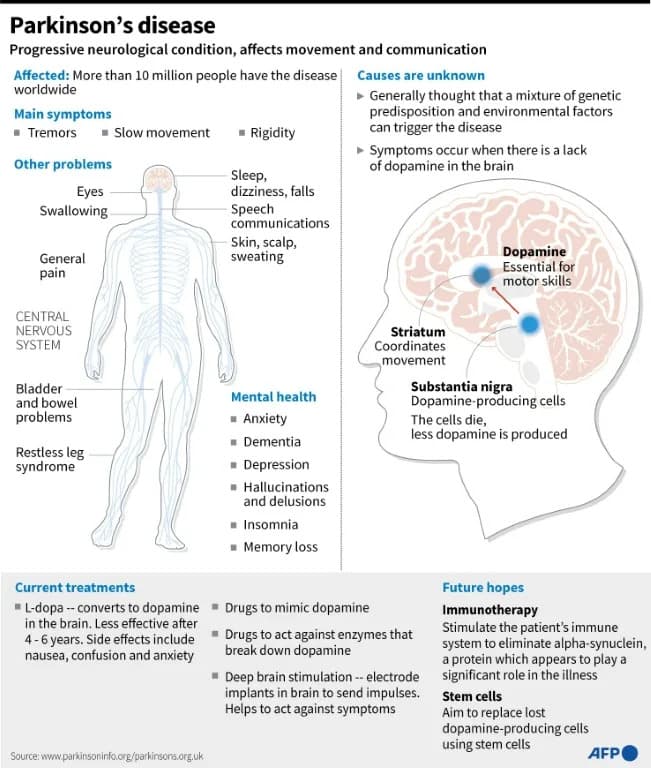
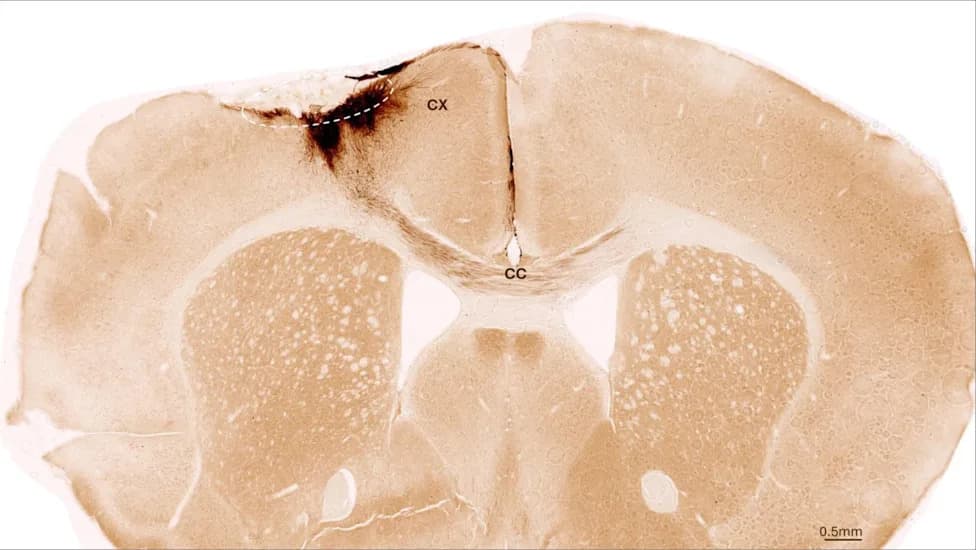
Factfile on Parkinson's disease (John SAEKI)(John SAEKI/AFP/AFP)
Japan has authorised landmark, commercially available therapies derived from induced pluripotent stem (iPS) cells for Parkinson's disease and advanced heart failure, media reports and developers said. Health officials indicated the products could reach patients within months under a conditional, time-limited approval pathway designed to accelerate access to promising regenerative treatments.
Amchepry, developed by Sumitomo Pharma, is an iPS cell–based therapy that transplants donor-derived cells into patients' brains to replace the dopamine-producing neurons lost in Parkinson's disease. Separately, ReHeart, created by medical startup Cuorips, consists of engineered sheets of heart muscle that aim to stimulate new blood vessel growth and restore cardiac function in people with severe heart failure.
“I hope this will bring relief to patients not only in Japan but around the world,” Health Minister Kenichiro Ueno said at a press briefing. “We will promptly carry out all necessary procedures to ensure it reaches all patients without fail.”
Clinical Evidence and Safety
A Kyoto University–led clinical trial of Amchepry enrolled seven people with Parkinson's disease aged between 50 and 69. Each participant received a total dose of either five million or 10 million iPS-derived precursor cells implanted into both sides of the brain. Investigators followed patients for two years and reported no major adverse events; four participants experienced measurable symptom improvements.
These approvals are described as conditional and time-limited, meaning regulators accepted safety and efficacy data from a smaller cohort than typically required for full approval, while requiring continued data collection and post-market monitoring.
What Are iPS Cells?
Induced pluripotent stem (iPS) cells are adult cells reprogrammed back into a juvenile, embryonic-like state and then directed to become specific cell types. Pioneering researcher Shinya Yamanaka won the Nobel Prize in 2012 for this discovery, which enables generation of many cell types without using embryos and has become a major focus of regenerative-medicine research.
Outlook and Caveats
Japanese officials say the therapies could be distributed to patients as early as this summer, which would make them the first commercial iPS cell–based medical products worldwide. Experts caution that the evidence so far is limited by small trial sizes and that long-term efficacy and safety will need confirmation through larger studies and ongoing post-market surveillance.
Worldwide, around 10 million people live with Parkinson's disease. Current treatments typically address symptoms but do not halt disease progression; these iPS-based approaches represent a potential new direction in regenerative therapy, albeit one that requires careful, continued evaluation.
Help us improve.