The UK’s fast Covid vaccine rollout reflected decisive government action and some good fortune, but it did not deliver self-sufficiency. New modelling from the Tony Blair Institute warns that cutting preparedness spending by 25% ahead of a Covid-scale pandemic could cause nearly 19,000 extra deaths and about £840bn in economic losses. The article urges three priorities: maintain modest "warm" domestic manufacturing across multiple platforms, deepen structured international partnerships (for example, EU FAB), and invest in fill-finish capacity and specialist inputs to secure national resilience.
Vaccine Sovereignty Is National Security — How the UK Must Build 'Warm' Manufacturing and Strong Alliances
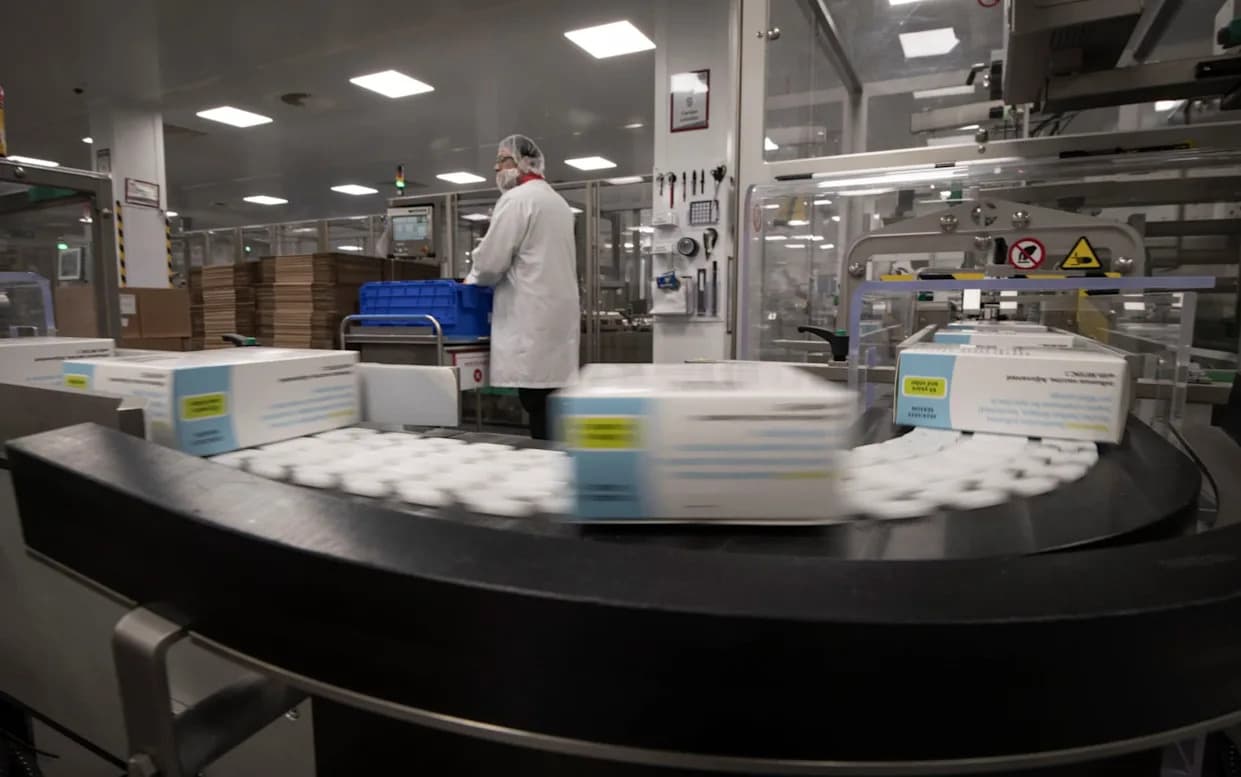
Technicians oversee packing of vaccines at CSL Seqirus Liverpool, the largest manufacturing site in the UK - Simon Townsley
During the Covid pandemic the UK’s rapid vaccine rollout combined bold decision-making with a degree of good fortune. The Vaccine Taskforce moved quickly, backed multiple platforms and partnered effectively with industry and the NHS, delivering one of the fastest national rollouts in the world and saving many lives while limiting economic damage.
Lessons From Covid
Success, however, should not be confused with self-sufficiency. The UK remained heavily reliant on overseas supply chains for raw materials, specialist components and fill-finish capacity, and it did not have fully integrated end-to-end domestic production at scale. When global demand surged, those dependencies became strategic vulnerabilities.
Goodwill is not a strategy. The January 2021 episode in which the European Commission briefly signalled export controls — and the possible invocation of Article 16 over Northern Ireland — underlined that, in a crisis, even close allies may prioritise their own populations.
Since then, geopolitical fragmentation has intensified: export controls are more frequent, trade has become more politicised, and supply chains are increasingly shaped by strategic rivalry. Isolation is not the answer; the UK does not have the domestic market scale to sustain every element of vaccine production alone. But neither can it rely solely on global markets under extreme stress.
Three Practical Priorities
1. Permanent Pandemic Standby
The UK should maintain a modest but resilient domestic manufacturing core kept "warm" across a range of technologies — mRNA, viral vectors, protein subunits and others that may yet emerge. This breadth acts as insurance against scientific surprise and allows rapid scale-up when an emergency arrives.
2. Deepen Structured Partnerships
Stronger, formal partnerships with trusted allies can multiply surge capacity. Serious consideration should be given to joining initiatives such as the EU’s FAB programme — a network of "ever‑warm" facilities designed to provide cross-border surge manufacturing — or creating a similar multinational framework. Participation would spread risk, broaden access and lower the chance that Britain is left exposed during a global supply crunch.
3. Fix Critical Domestic Gaps
Inventing vaccines is only part of preparedness. The UK must ensure sufficient fill-finish capacity to vial doses at scale, reliable access to specialist inputs (for example, lipid nanoparticles), and flexible factories able to switch platforms quickly. Targeted public investment to close these gaps will attract private capital, strengthen the life-sciences sector and secure high-skilled jobs — while ensuring doses can be delivered rapidly when needed.
When budgets are tight, "standby" capacity is often the first casualty because its success is invisible until a crisis. But vaccine plants, regulators and skilled manufacturing workforces cannot be improvised: they take years to build and minutes to overwhelm. Cutting preparedness now is a false economy that stores up a far larger bill in lives lost, livelihoods ruined and public debt increased.
Why This Matters
The Tony Blair Institute’s modelling shows the scale of the risk: in a Covid-scale pandemic within the next decade, reducing preparedness spending by 25% could lead to nearly 19,000 additional deaths, tens of thousands more hospital admissions and around £840 billion in economic losses — roughly £100 billion worse than 2020. Those figures correspond to real human and economic costs: lost parents and partners, shuttered businesses and long-term damage to public finances.
Covid made a clear connection: health security is economic security is national security. A pathogen can close businesses, expand borrowing needs and narrow strategic options within weeks. It also proved what Britain can achieve when government, the NHS and industry act with speed and focus.
The choice is straightforward: treat vaccine manufacturing as peripheral and hope global markets hold under extreme pressure, or recognise it as core national infrastructure — on par with energy and defence — and invest accordingly.
Professor Sir Jonathan Van-Tam is a former Deputy Chief Medical Officer for England.
Help us improve.