Ali Shamkhani, 70, has been confirmed as secretary of Iran’s newly formed Defence Council after surviving a June 2025 strike on his Tehran home. A veteran of the 1980–1988 Iran–Iraq war and a longtime adviser to Supreme Leader Khamenei, Shamkhani now helps coordinate wartime strategy amid renewed tensions with the U.S. and Israel. He has warned that any U.S. military action would be treated as the start of war. Shamkhani and family members have faced U.S. sanctions and scrutiny over alleged sanctions-evasion and elite lifestyles.
After Surviving an Israeli Strike, Ali Shamkhani Returns to Iran’s War Room as Defence Council Secretary
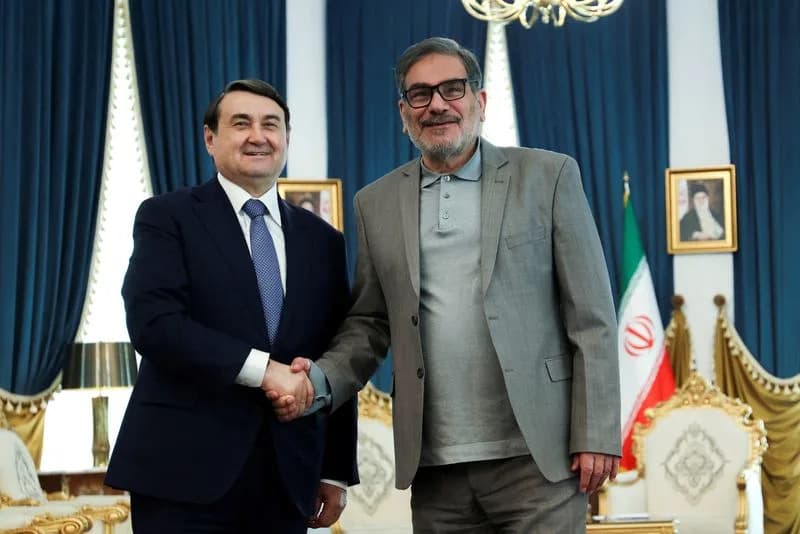
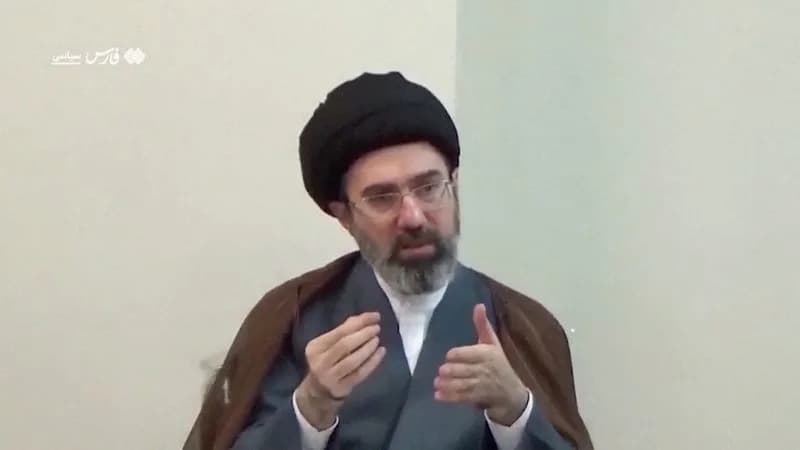
FILE PHOTO: Iran's Secretary of the Supreme National Security Council Ali Shamkhani (R) meets with Russia's Presidential Aide Igor Levitin (L) in Tehran, Iran, April 9, 2023. Majid Asgaripour/WANA (West Asia News Agency) via REUTERS/File Photo
Ali Shamkhani — the 70-year-old former IRGC commander who was pulled alive from the rubble of his Tehran home after an Israeli strike in June 2025 — has been confirmed as secretary of Iran’s newly formed Defence Council and has resumed a central role in Tehran’s strategic decision-making.
Long a close adviser to Supreme Leader Ayatollah Ali Khamenei, Shamkhani now helps steer Iran’s response as tensions with the United States and Israel rise following last year’s 12-day conflict. The Defence Council, created after that confrontation, is charged with coordinating Iran’s wartime policies at a time when U.S. officials have warned of possible strikes if diplomatic talks fail to curb Tehran’s nuclear activities.
“A 'limited strike' is an illusion,” Shamkhani warned on the social platform X in January 2026, adding that any U.S. military action would be considered the start of war and met with an immediate, comprehensive and unprecedented response.
Forged in War
Born in 1955 to an ethnic Arab family in oil-rich Khuzestan province, Shamkhani rose through the ranks during the 1980–1988 Iran–Iraq war. He commanded forces in Khuzestan, served as deputy to IRGC commander-in-chief Mohsen Rezaei by 1982, and by the end of the conflict led the Guards' ground forces while holding a cabinet post.
In 1989, Supreme Leader Khamenei moved Shamkhani to the conventional navy and within a year gave him simultaneous command of both the regular navy and the IRGC naval forces. He pushed for asymmetric naval tactics designed to offset conventionally superior adversaries.
Security Operator and Diplomatic Channel
Shamkhani has combined military credentials with diplomatic roles. As defence minister under President Mohammad Khatami (1997–2005) he made a landmark visit to Saudi Arabia — the first by an Iranian defence official since 1979 — helping to ease bilateral tensions. In 2023, with Chinese mediation, he led talks that helped restore ties with Riyadh after years of estrangement.
He headed the Supreme National Security Council (SNSC) for a decade, including during the 2015 nuclear agreement negotiations and through Washington’s 2018 withdrawal — a period that helped harden his scepticism of the deal. After leaving the SNSC in 2023, he continued as a senior political adviser to Khamenei.
Sanctions, Family Scrutiny and Public Criticism
Shamkhani and members of his family have faced U.S. sanctions and accusations of sanctions-evasion. In 2020 he was sanctioned by the U.S. Treasury, and in 2025 the Treasury targeted his son Mohammad Hossein for operating a fleet of vessels accused of moving sanctioned oil from Iran and Russia to international buyers. U.S. authorities said the family’s shipping network helped Tehran circumvent sanctions; Shamkhani has not publicly addressed these allegations.
Domestically, the family attracted criticism in 2025 when a widely shared video showed Shamkhani’s daughter at an opulent wedding, sparking debate about elite privilege and the contrast between conservative public rhetoric and the lifestyles of those close to power.
What His Return Means
Shamkhani’s confirmation as Defence Council secretary restores a seasoned, militarily experienced and politically linked figure to the centre of Iran’s national security apparatus at a fraught moment. His mix of hardline deterrence rhetoric, battlefield experience and past diplomatic roles suggests he will play a key part in shaping Tehran’s strategy if tensions escalate further.
Reporting compiled from multiple accounts; original reporting by Reuters.
Help us improve.