A Nature study led by Robin Wing found a roughly tenfold spike in lithium ions in the mesosphere tied to the breakup of a Falcon 9 upper stage, with elevated levels lasting more than 20 hours. The researchers used trajectory modelling to link the lithium plume to the rocket's reentry corridor. The paper warns that increasing launch rates and large satellite constellations could deposit tons of engineered material in the upper atmosphere by 2030, and calls for systematic monitoring because impacts on ozone, radiative transfer and aerosol microphysics remain uncertain.
Falcon 9 Reentry Left a Tenfold Lithium Plume — Study Warns of Growing Upper-Atmosphere Pollution
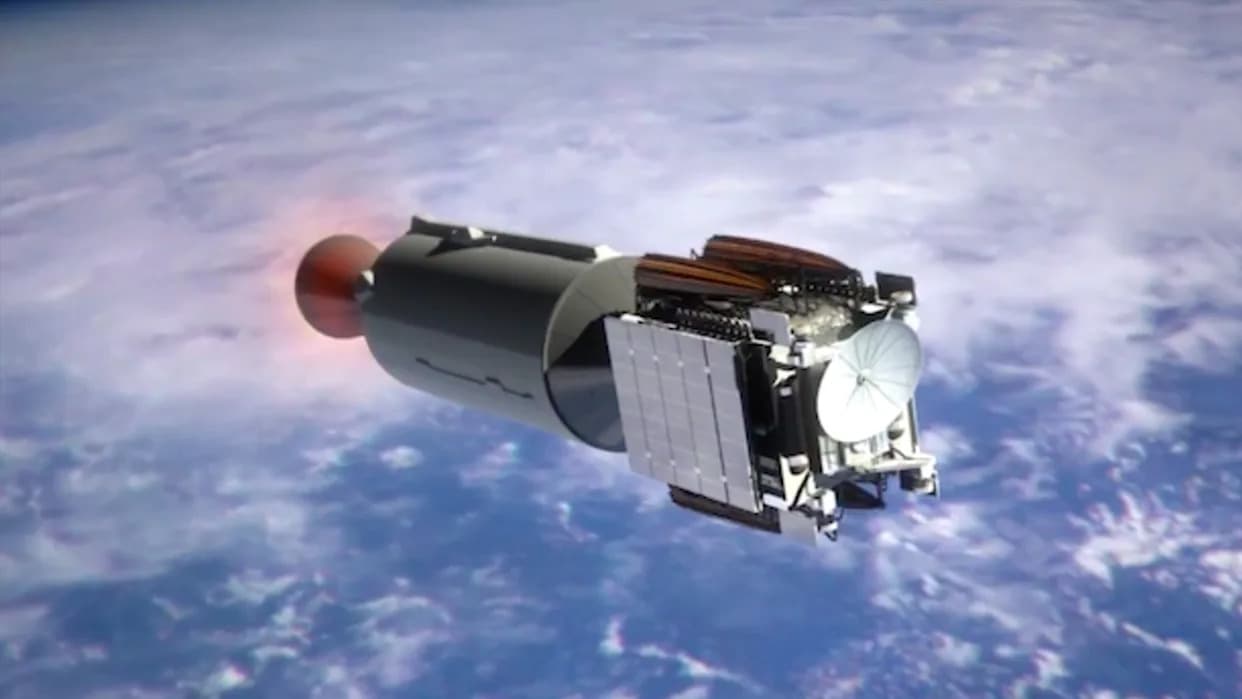
(Credit: ESA)
A new peer-reviewed study led by Robin Wing at Germany's Leibniz Institute of Atmospheric Physics has linked a sharp spike in lithium ions in the mesosphere to the breakup of a Falcon 9 rocket upper stage during reentry. The research, published in Nature (DOI 10.1038/s43247-025-03154-8), reports roughly a tenfold increase in lithium atom concentrations along the reentry corridor that persisted for more than 20 hours.
The Observation
On Feb. 20 the research team detected an abrupt rise in lithium ions in the mesosphere (roughly 50–85 km altitude). Through atmospheric measurements and trajectory modelling, the researchers matched this lithium signature to the descent and disintegration path of a Falcon 9 upper stage that burned up during reentry.
How The Link Was Established
The study combined time-resolved ion measurements with orbital-reentry trajectory analysis to identify the source region. The coincidence in space and time between the observed lithium plume and the modeled breakup path of the Falcon 9 stage supports the conclusion that the reentering hardware deposited the lithium into the upper atmosphere.
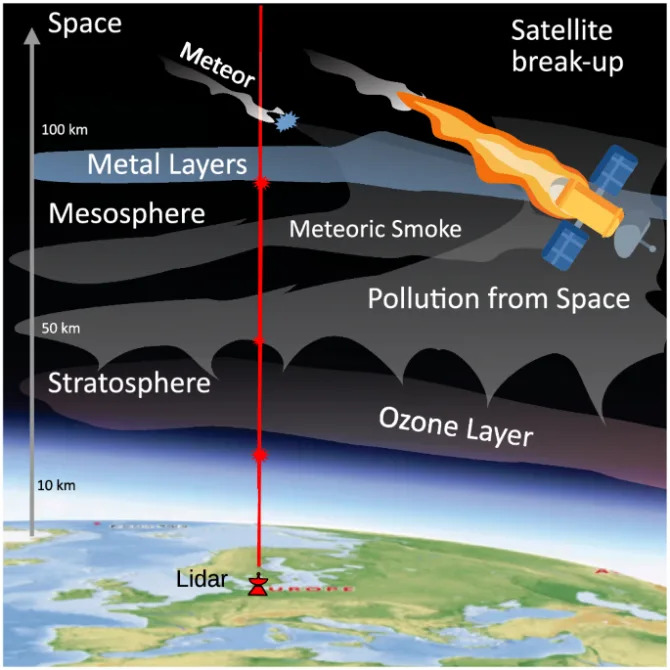
Infographic showing measurement of pollution from space
Why This Matters
Modern rockets and satellites contain engineered materials — aluminium alloys, composite structures and rare-earth elements from electronics — that are uncommon in natural meteoric inputs. When these objects disintegrate on reentry they can inject a cocktail of metals and particulates into sensitive upper-atmosphere layers. The paper highlights concerns about potential effects on radiative transfer, ozone chemistry and aerosol microphysics, but emphasizes that the precise environmental consequences remain largely unknown.
"Satellites and rocket stages introduce engineered materials such as aluminium alloys, composite structures, and rare earth elements from onboard electronics, substances rarely found in natural extra-terrestrial matter," the authors write. "The consequences of increasing pollution from re-entering space debris on radiative transfer, ozone chemistry, and aerosol microphysics remain largely unknown...This finding supports growing concerns that space traffic may pollute the upper atmosphere in ways not yet fully understood."
Broader Implications and Next Steps
With commercial operators planning to deploy tens of thousands of satellites in the coming years, the study warns there is a realistic prospect that by 2030 many tons of engineered material could be vaporizing in the upper atmosphere each day. The authors call for systematic monitoring of reentry pollutants, targeted laboratory and modelling studies to quantify chemical and radiative impacts, and consideration of mitigation measures in launch and satellite design.
Credit: Wing et al., Nature — DOI 10.1038/s43247-025-03154-8
Help us improve.