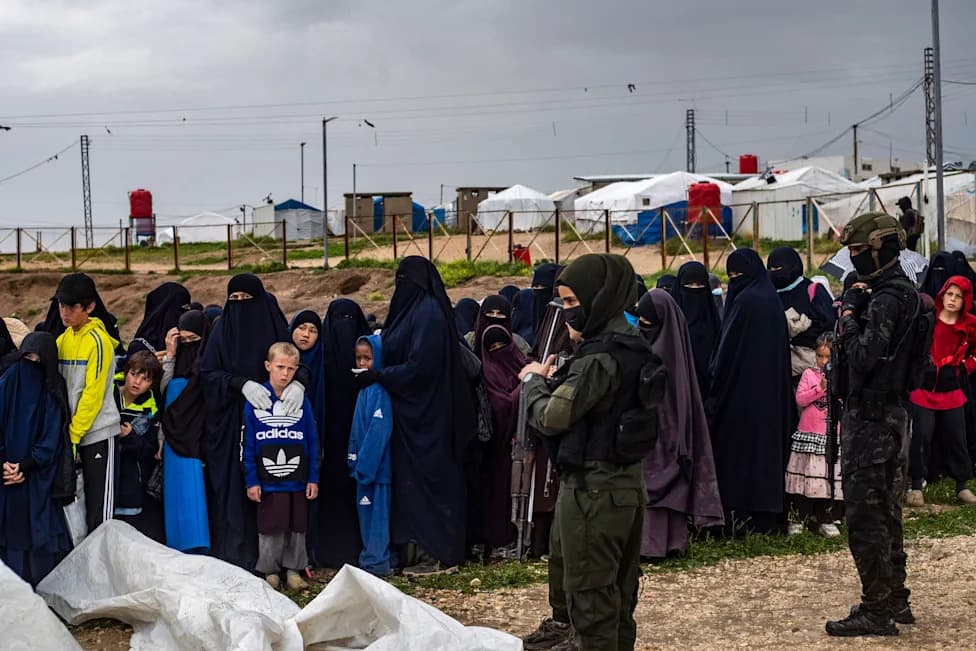
Syrian authorities say Al-Hol, a remote camp in Hasakah that once sheltered relatives of alleged ISIL members, has been fully evacuated and closed after the last convoy left on Sunday. At its 2019 peak the camp held about 73,000 people; last month roughly 24,000 remained, including over 6,000 foreign nationals from about 40 countries. Since the Syrian government took control, many residents have been moved to other sites, repatriated to Iraq, or returned to government-held areas; the smaller Roj camp remains under SDF control. Authorities say most of the relocated are women and children who will need reintegration support, while international repatriation remains stalled in many cases.
Syria Announces Full Evacuation and Closure of Al-Hol Camp Once Home to Tens of Thousands Linked to ISIL
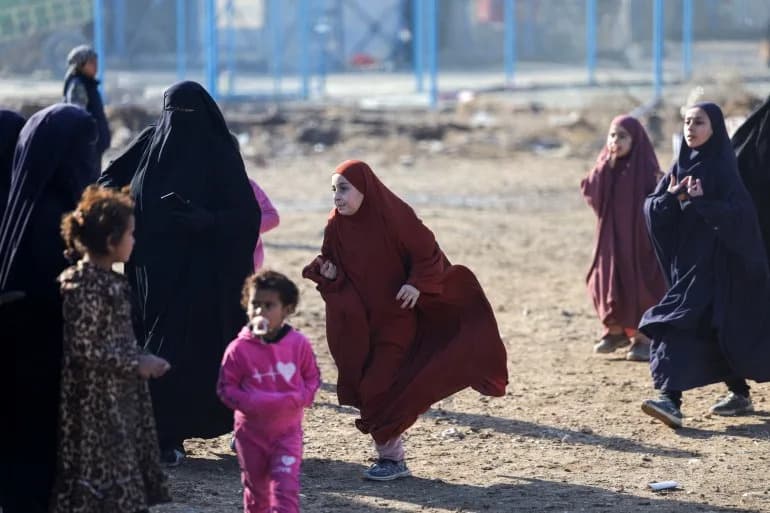
Women and children gather at al-Hol camp in Hasakah, Syria, in January [Khalil Ashawi/Reuters]
Syrian authorities say they have fully evacuated and shut down the Al-Hol desert camp, a heavily guarded facility in northeastern Hasakah province that for years housed relatives of people alleged to be members of the armed group ISIL (ISIS).
Officials said the final residents were moved out in a convoy on Sunday morning.
"All Syrian and non-Syrian families were relocated," Fadi al-Qassem, the Syrian government official overseeing the site, told Agence France-Presse.
Background and Numbers
Al-Hol swelled to roughly 73,000 people at its 2019 peak. Authorities say about 24,000 people remained last month, including mainly Syrians and Iraqis and more than 6,000 foreign nationals from roughly 40 countries. Although many residents were never formally charged with crimes, the camp effectively functioned as a form of de facto detention for families under heavy guard.
Recent Developments
Last month the Syrian government took control of Al-Hol from Kurdish authorities as Damascus expanded its presence across parts of northeastern Syria. Since the takeover, thousands of residents have departed for destinations that are often unclear—some moved in organised convoys, several hundred were transferred to the Akhtarin camp in Aleppo province, and others were repatriated to Iraq.
The UK-based Syrian Observatory for Human Rights reported that an unspecified number of people left the camp individually rather than waiting for organised convoys. Ground sources told Al Jazeera that many Syrian nationals returned to their hometowns, while numerous foreign residents traveled west into government-controlled areas in Idlib and Aleppo governorates.
Humanitarian and Security Concerns
Authorities say the people relocated are mainly women and children who will require support for reintegration. Humanitarian groups and rights monitors have long expressed concern about living conditions, the indefinite nature of detention-like restrictions, and the challenges of repatriation and long-term care.
The Roj Camp And Repatriation Stalemates
The smaller Roj camp in northeastern Syria remains under the control of the Kurdish-led Syrian Democratic Forces (SDF). Most of Roj's inhabitants are foreign nationals whose home countries have largely refused to repatriate them.
On 16 February, Syrian authorities blocked buses carrying 34 Australian women and children who left Roj and were heading toward Damascus with plans to travel on to Australia. Australian officials later said they would not repatriate those families. Prime Minister Anthony Albanese defended the decision:
"We have no sympathy, frankly, for people who travelled overseas in order to participate in what was an attempt to establish a caliphate to undermine and destroy our way of life."Albanese added that while it is unfortunate that children have been affected, Australia will not provide support for these families.
The closure of Al-Hol raises urgent questions about the long-term fate of displaced families, legal protections, and the responsibilities of states to repatriate and rehabilitate their citizens who remain abroad.
Help us improve.