President Trump said he is "considering" strikes on Iran amid a U.S. military buildup in the region, including two deployed carriers and the imminent arrival of the USS Gerald R. Ford. Legal expert David Janovsky tells TIME that unilateral strikes would likely be unlawful absent an imminent attack and that Congress normally must authorize acts of war. Reps. Thomas Massie and Ro Khanna plan a War Powers resolution to bar strikes without a vote, and Janovsky warns that decisive congressional action could alter both the legal and political calculus.
Would a War With Iran Be Legal? Legal Expert Says Unilateral Strikes Would Likely Be Unlawful
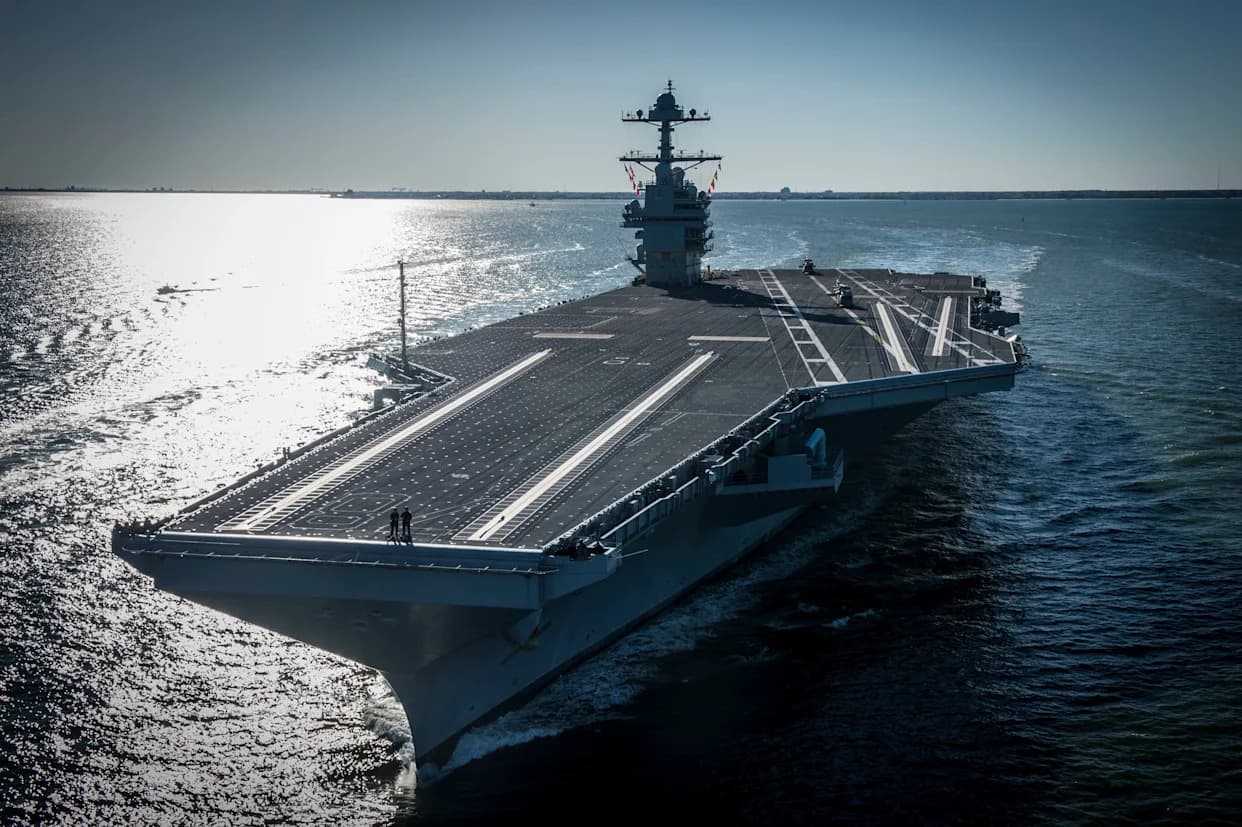
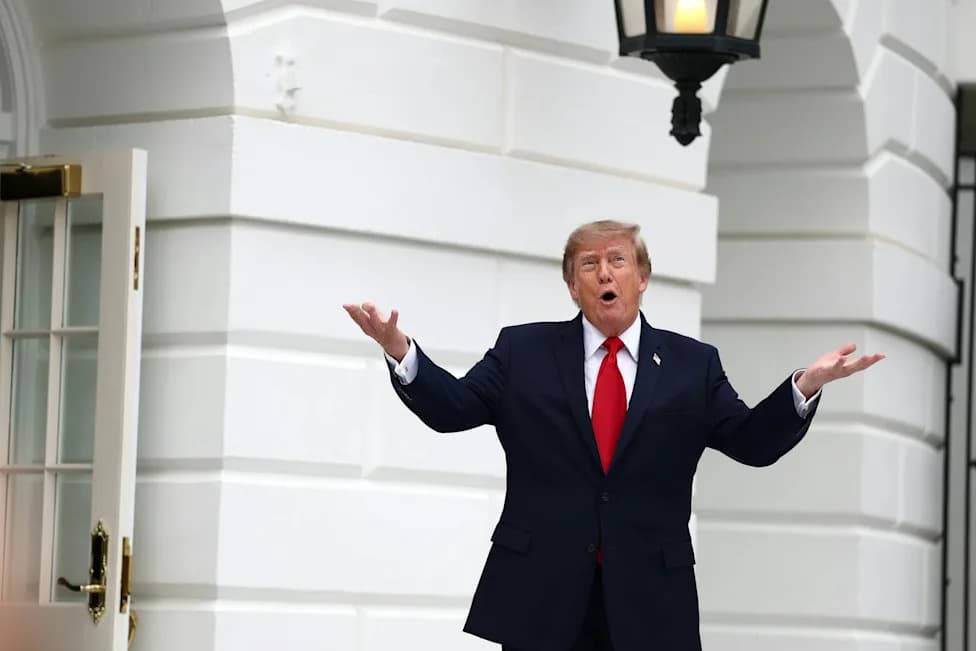
President Donald Trump said Friday he was "considering" strikes against Iran as a way to pressure Tehran into accepting a deal over its nuclear program, following a recent buildup of U.S. military forces in the region. Two aircraft carriers are already deployed and the USS Gerald R. Ford is expected to arrive imminently.
Asked whether he was weighing limited strikes on Iran's leadership to secure a nuclear deal, Trump replied: "I guess I can say I am considering that." On Thursday he gave Tehran a 10-to-15-day deadline to reach a deal or face what he warned would be "really bad things." The prospect of additional military action comes after a violent crackdown on protests inside Iran that reportedly killed thousands, and after U.S. participation in an Israeli-led operation last June that struck three Iranian nuclear sites.
Legal Analysis
David Janovsky, Acting Director of The Constitution Project at the Project On Government Oversight, told TIME that, legally speaking, the short answer to whether the president can unilaterally order strikes is "no." While presidents have some inherent authority as Commander in Chief, Janovsky explained that such authority is normally limited to true emergencies—an attack in progress or a clearly imminent attack—not the circumstances described here.
The short answer is no. There's no indication that there's any sort of circumstance that would give the President the unilateral authority to order military action.
Under the Constitution, a contemplated attack on a foreign sovereign is, in the simplest terms, an act of war, and Congress holds the exclusive power to declare war. Janovsky said the administration would ordinarily need congressional authorization before launching strikes of the kind being discussed.
Past Justifications And Current Concerns
Janovsky argued that strikes carried out in 2025 were not legally justifiable and that similar strikes today would face the same legal challenges. The administration's brief explanation at the time invoked both the President's inherent authority and a claim of collective self-defense with Israel, but Janovsky maintained that self-defense requires a far more immediate threat than what is now alleged.
Congressional Role And Political Effects
Calls for congressional oversight have already begun. Republican Rep. Thomas Massie and Democrat Rep. Ro Khanna said they plan to introduce a War Powers resolution to bar the president from ordering military action against Iran without congressional approval. "Congress must vote on war according to our Constitution," Massie wrote on X, adding that he would force a House vote as soon as possible.
Janovsky said proactive congressional action could have two important effects. Legally, a clear legislative prohibition would limit the executive branch's room for creative legal interpretations and could influence the military lawyers who must review any operational orders. Politically, an explicit statement from Congress would signal limited support for military action and could constrain the administration's options.
Longer-Term Implications
Janovsky traced the current predicament to a long-running trend in which successive administrations have pushed the boundaries of executive military authority while Congress has often acquiesced. After the 2025 strikes there was an attempt to pass a War Powers resolution, but many lawmakers treated the action as a one-off. The return of this controversy, he said, underscores the urgency for Congress to act now to restore constitutional balance.
Bottom line: Without clear congressional authorization, unilateral strikes against Iran would likely be subject to serious legal challenge and could be unlawful under the Constitution absent an imminent threat.
Contact: [email protected]
Help us improve.