Paris and Milan-Cortina offered starkly different opening ceremonies: Paris presented a modern, experimental narrative that some viewers found politically charged, while Milan emphasized heritage, landscape and national pride. A Paris segment many interpreted as invoking the Last Supper prompted criticism and an apology from organizers, becoming a flashpoint in France’s cultural debate. Experts including Hugh Dugan and Emma Schubart say the split reflects broader political and cultural divides across Europe.
Heritage vs. Reinterpretation: Milan’s Patriotic Opening Stands In Contrast To Paris’ Controversial Ceremony, Experts Say
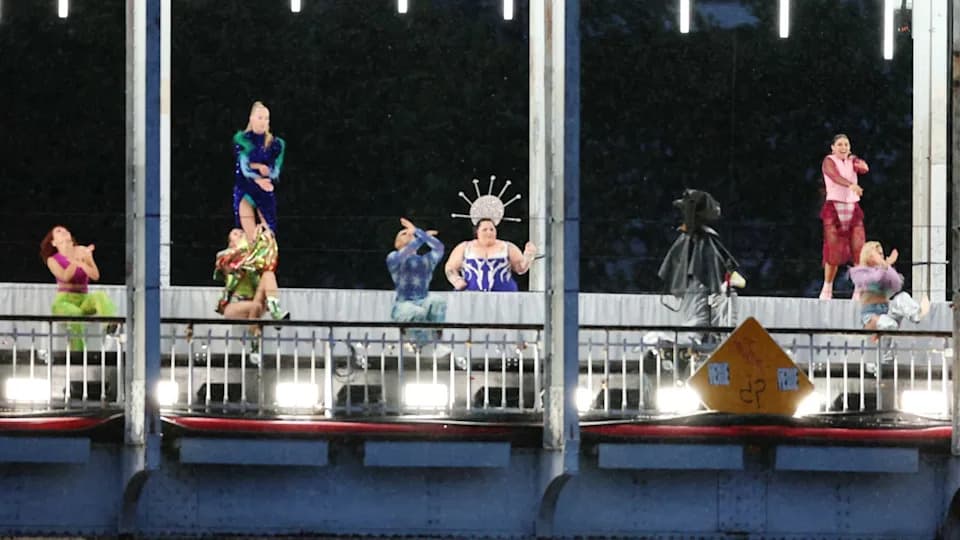
Some of the performers who appeared in the Last Supper depiction in the 2024 Paris Olympics opening ceremony.(Reuters Photos)
The opening ceremonies for Paris 2024 and Milan-Cortina delivered two markedly different narratives about national identity and the role of culture in the Olympic Games. Where Paris staged a modern, experimental tableau that some viewers read as politically charged, Milan leaned into classical imagery, landscape and patriotic symbolism — a contrast experts say mirrors broader debates in Europe about culture and politics.
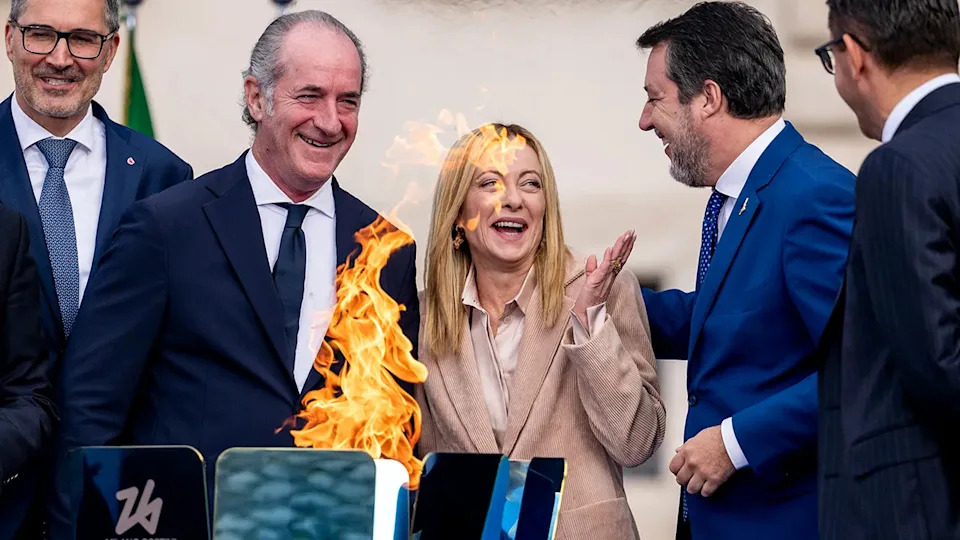
Italian Prime Minister Giorgia Meloni attends the Inauguration ceremony of the Olympic Torch Relay for the Milan-Cortina Winter Olympic Games at the Quirinale Palace, on Dec. 5, 2025, in Rome.
Two Different Visions on a Global Stage
Olympic opening ceremonies are among the world’s most-watched cultural broadcasts, giving host nations a powerful platform to shape how they are perceived at home and abroad. In the 2024 cycle, the two ceremonies showcased competing ideas about whether the Games should prioritize reinterpretation and pluralism or celebrate tradition and national heritage.
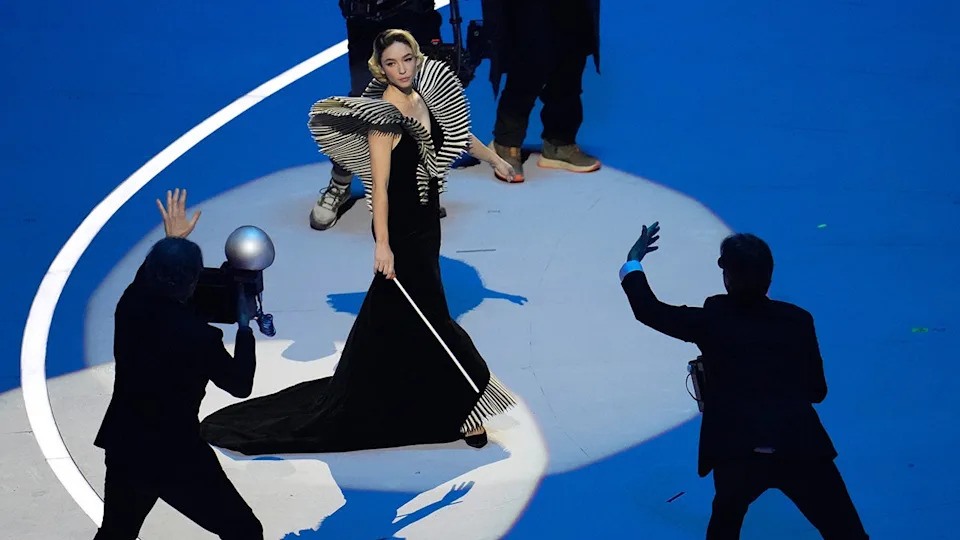
Italian actress Matilda De Angelis performs during the Winter Olympics opening ceremony in Milan, Italy, Friday, Feb. 6, 2026.
“Paris tried to reinterpret tradition. Milan showcased tradition,” said Hugh Dugan, an Olympic Truce advocate and former U.S. diplomat, framing the contrast as part of a larger debate over the role of culture, politics and identity in the Games.
Paris: Experimental, Ambitious, And Polarizing
Dugan described the Paris opening as “a deliberately disruptive, decentralized, urban spectacle — visually bold but polarizing,” built around a mosaic of contemporary French life, diversity and reimagined historical themes. Critics argued that choreography, costuming and staged vignettes sometimes conveyed explicit social commentary, prompting questions about whether parts of the show were intentionally provocative or ideologically driven.
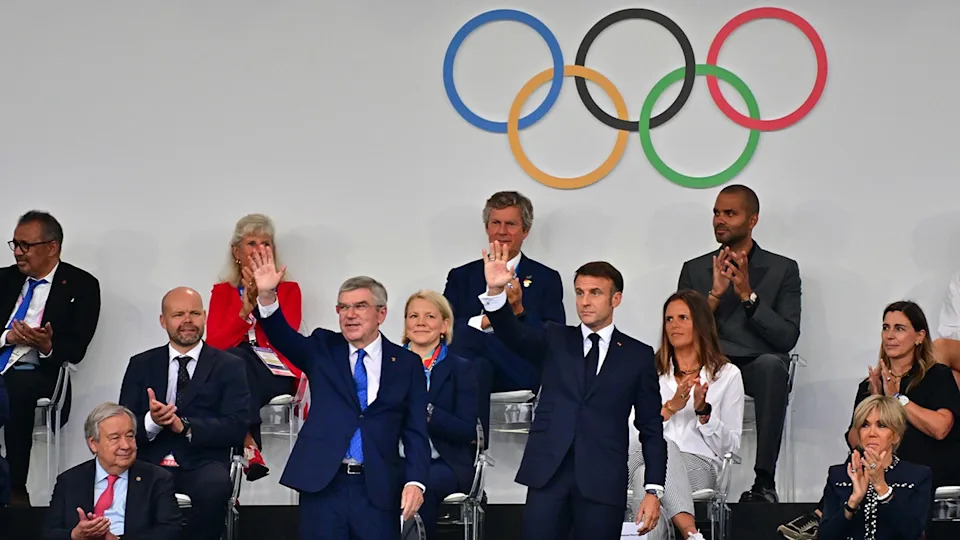
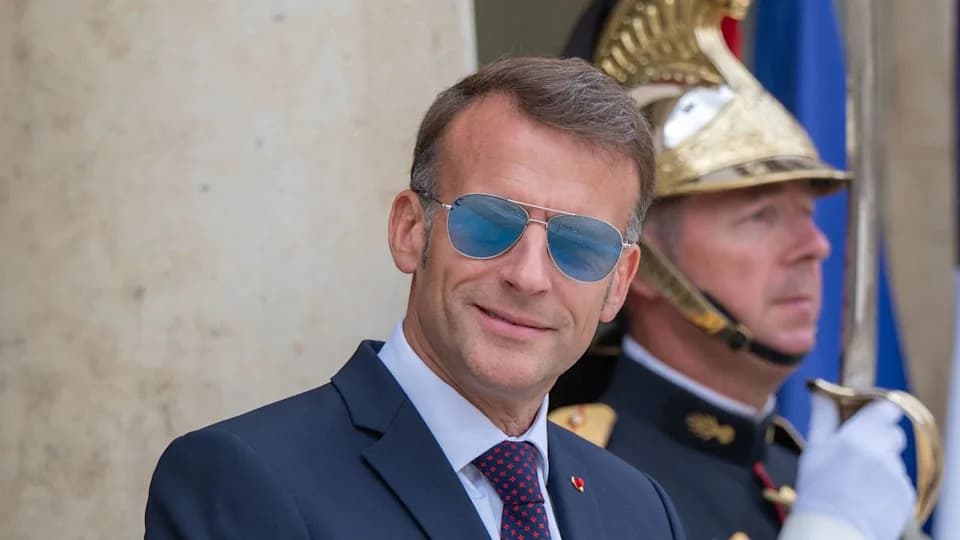
French President Emmanuel Macron, right, waves during the opening ceremony of the Olympic Games on July 26, 2024, in Paris.
The ceremony staged along the Seine sparked particular controversy after a segment many viewers interpreted as referencing Leonardo da Vinci’s Last Supper. That sequence drew criticism from Christian groups and conservative commentators; organizers later said there had been no intent to offend and apologized to anyone upset by the imagery. The episode became a flashpoint in France’s ongoing national conversation about identity, religion and public symbolism.
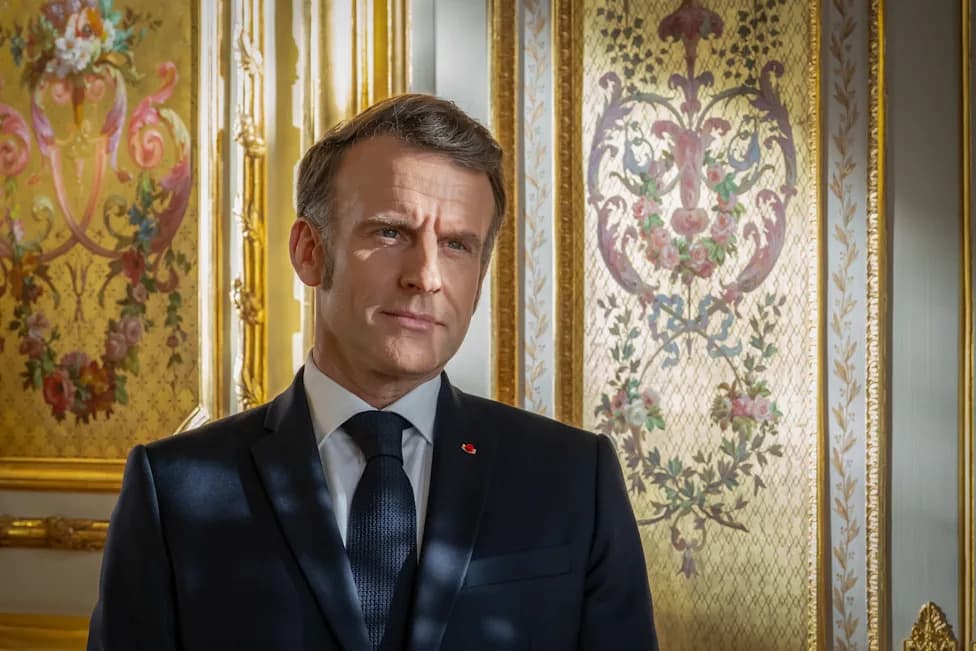
“The Olympics have become a stage for cultural politics as much as sport,” said Emma Schubart, a research fellow at the London-based Henry Jackson Society. She contrasted President Emmanuel Macron’s France — which she said embraced progressive, post-national themes — with Prime Minister Giorgia Meloni’s Italy, which highlighted heritage and unapologetic patriotism.
Milan-Cortina: Tradition, Scenery, And Unity
By contrast, coverage of the Milan-Cortina opening emphasized unity, tradition and Italy’s cultural and design heritage. Reporters and commentators noted a deliberate focus on landscape, craftsmanship and the athletes’ procession, with performances rooted in classical imagery and national identity rather than overt ideological symbolism. Dugan characterized the Italian presentation as “panoramic, heritage-driven, classical,” in contrast to Paris’s “maximalist, narrative-driven, experimental” style.
Dugan — who recently launched a Truce Compliance Index to track how countries honor the Olympic truce — argued that the two ceremonies reflect distinct philosophies about what opening ceremonies should represent: either a platform for contemporary cultural narratives or a celebration of timeless, unifying themes tied to heritage and human connection.
What This Means Going Forward
The contrast between Paris and Milan highlights a broader evolution in how host nations use the Olympics to project values and identities. As countries increasingly deploy opening ceremonies to send cultural and political messages, debates about taste, symbolism and the purpose of global sporting rituals are likely to continue.
Help us improve.