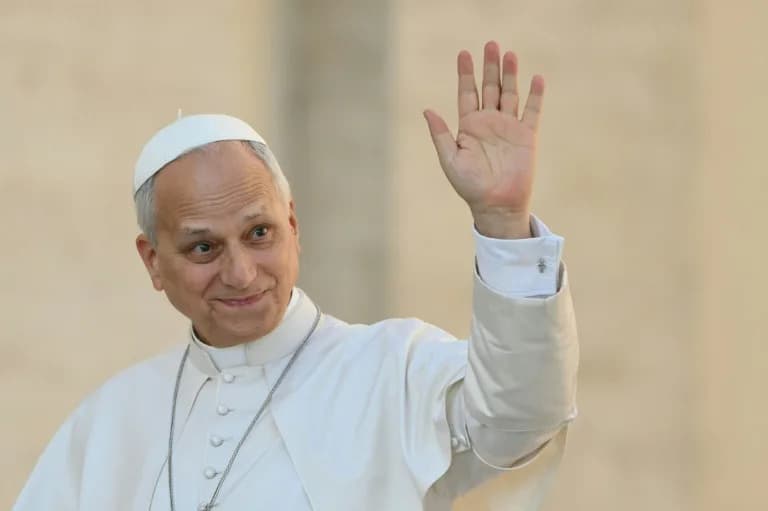
France’s four-day papal visit by Pope Leo XIV — including an open-air Mass in Paris — has reignited debate over laïcité, the country’s strict secular model rooted in the 1905 law. The law guarantees freedom of conscience while imposing state neutrality and shapes policies on public worship, school dress and the use of public spaces. Critics say some measures disproportionately affect Muslim women, while supporters argue laïcité protects individual liberty and public order.
Papal Visit Puts France’s Laïcité in the Spotlight: Balancing Secularism and Ceremony
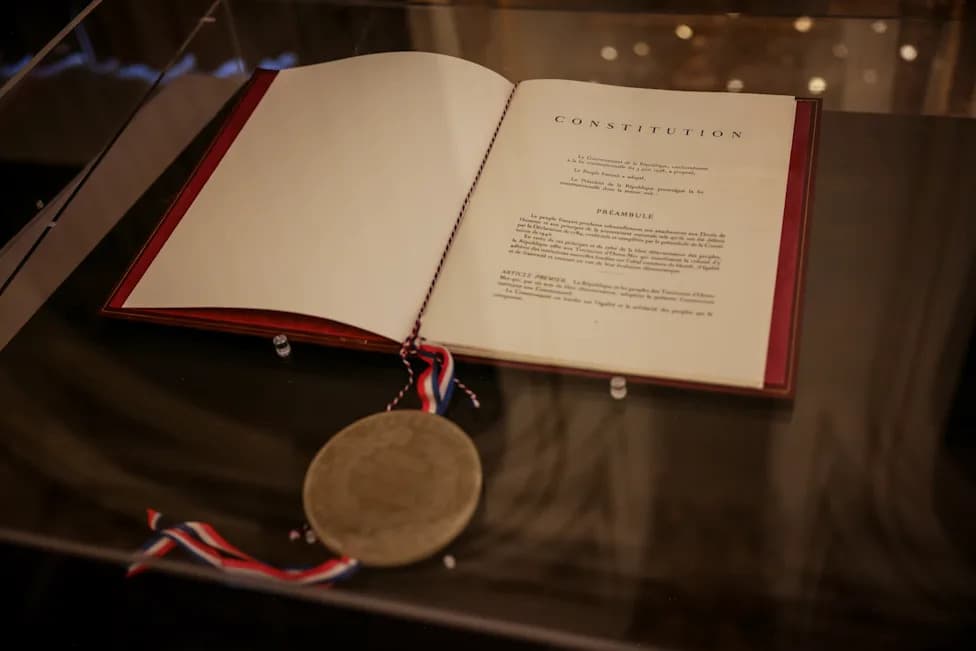
The text of the French Constitution is on display at the Elysee Palace in Paris on Saturday, Sept. 19, 2026. (AP Photo/Thomas Padilla)(AP Photo/Thomas Padilla)
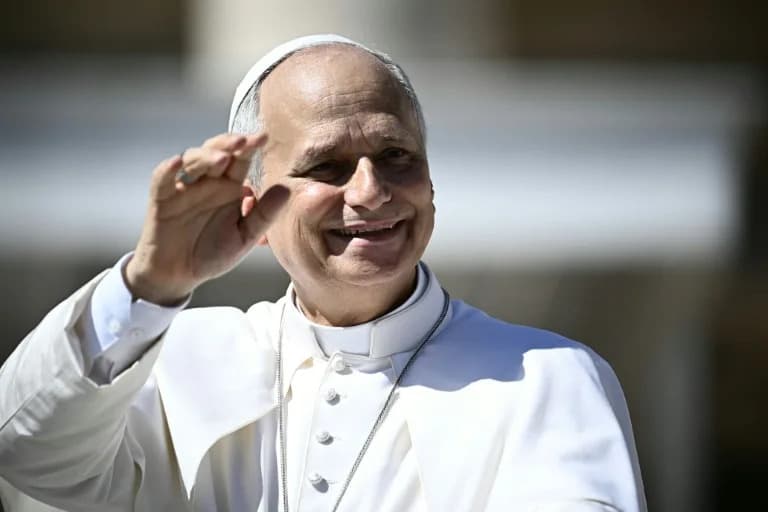
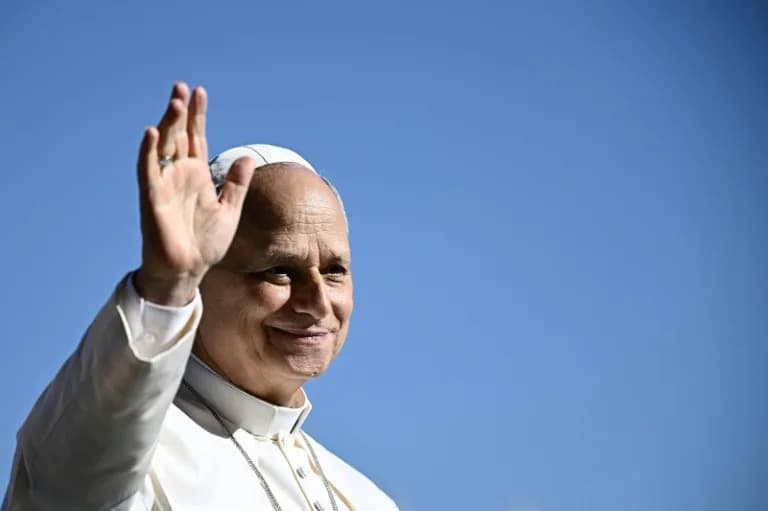
A four-day visit by Pope Leo XIV beginning Friday — featuring large public gatherings, popemobile processions and an open-air Mass in Paris — places France’s strict secular model, known as laïcité, under renewed public scrutiny.
What Is Laïcité?
France’s Constitution declares it an “indivisible, secular, democratic and social Republic.” Laïcité guarantees freedom of conscience and the free exercise of religion so long as practice does not disturb public order. It also requires the state to remain neutral toward all religions.
Historical Foundations
Many of the key principles of French secularism originate in the landmark 1905 law, which aimed to separate state institutions from the Catholic Church’s then-strong influence. The law enshrines freedom of conscience and requires public authorities to be neutral.
Who Pays For Places Of Worship?
Religious buildings erected before 1905 are the property of municipalities or the state; these public bodies maintain the structures while allowing religious communities to use them for worship. Most places of worship built after 1905 — including many mosques — are financed and maintained by the religious organizations themselves.
Religion In France Today
A national survey conducted in 2019–2020 found that 29% of respondents identified as Catholic, 10% as Muslim, and roughly half said they had no religious affiliation.
The Papal Visit And State Protocol
During his visit the pope will travel to Paris, Saint-Denis, Lourdes and Metz. He will be formally received at the Élysée Palace by the French president in his role as head of state of Vatican City — an encounter between two heads of state that does not, in itself, violate laïcité.
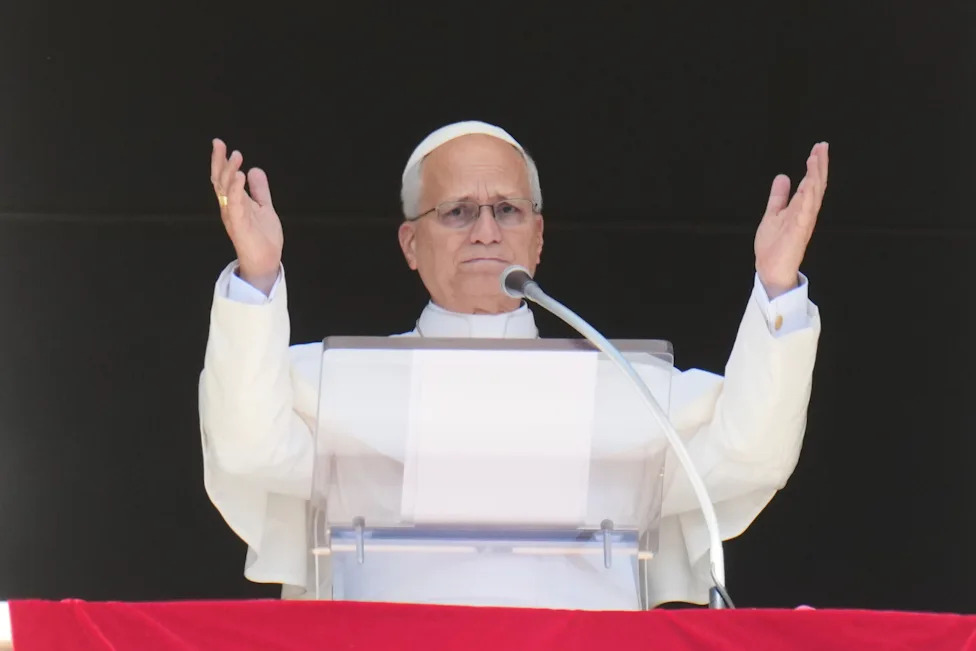
Pope Leo XIV delivers the Angelus noon prayer in St. Peter' s Square, at the Vatican, Sunday, Sept. 20, 2026. (AP Photo/Gregorio Borgia)(AP Photo/Gregorio Borgia)
France’s secularism does not forbid government leaders from meeting religious figures. President Emmanuel Macron met Pope Leo at the Vatican in April to discuss relations with the Holy See, international affairs and interreligious dialogue. During Pope Francis’ 2023 visit to Marseille, Macron attended Mass as president out of respect and courtesy but did not participate in worship.
Public Ceremonies, Security And Visibility
The 1905 law explicitly states that religious ceremonies, processions and other outdoor manifestations are subject to ordinary public-order rules. The state provides and finances security for large events. Still, some observers say staging a Mass at Place de la Concorde and along the Champs-Élysées — close to the National Assembly and the presidential palace — gives the Catholic Church exceptional public visibility and may appear to reinforce its cultural prominence.
For comparison, in 2008 Pope Benedict XVI celebrated Mass before an estimated 260,000 people at Les Invalides in central Paris.
Religion In Schools And Sport
A 2004 law bans conspicuous religious symbols in French public schools. The prohibition covers Muslim headscarves, Jewish kippahs and oversized Christian crosses, while allowing discreet symbols such as small crosses or Stars of David worn as jewelry. The ban does not apply to private schools or to university students.
Officials and many educators argue that these rules protect less observant and nonreligious students from pressure while preserving private freedom of worship. Critics contend the policy disproportionately affects Muslim girls who wear headscarves.
Rules governing religious symbols in sport are more complex. National-team athletes are prohibited from displaying religious symbols while competing in an official capacity, including at the 2024 Paris Olympics. In 2023, France’s highest administrative court upheld the national soccer federation’s ability to ban headscarves in competition, recognizing that federations may set rules even when such measures raise questions about freedom of expression.
Why It Matters
The papal visit has renewed debate over how to apply laïcité: balancing historical tradition, republican neutrality and the public visibility of religion during high-profile international events. The visit highlights the tensions that arise when secular principles meet mass religious observance in the public square.
Help us improve.