The United States and the Philippines said they will expand deployments of advanced missile and unmanned systems to the Philippines to bolster deterrence in the South China Sea. Both allies condemned China’s actions as illegal and destabilizing and pledged deeper military cooperation, including joint exercises and U.S. support to modernize the Philippine military. Ambassador Jose Manuel Romualdez said upgraded missile launchers could be deployed this year and potentially purchased by the Philippines in future. Existing U.S. systems such as the Typhon and an anti‑ship launcher remain in northern Luzon and Batanes.
US to Expand Missile Deployments in Philippines as Tensions With China Escalate
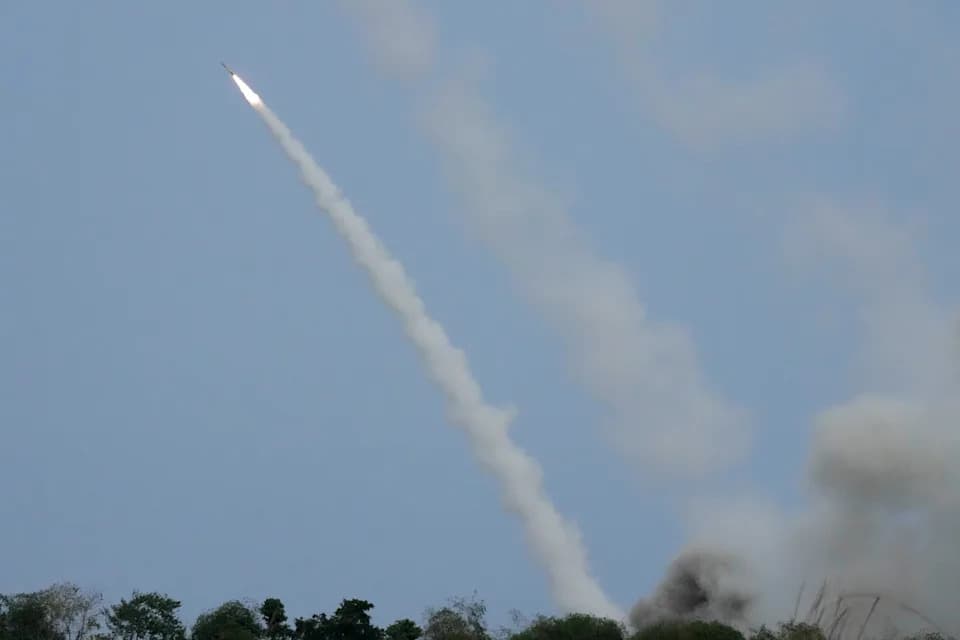
FILE -A U.S. M142 High Mobility Artillery Rocket System (HIMARS) fires a missile during a Combined Joint Littoral Live Fire Exercise at the joint military exercise called "Balikatan", Tagalog for shoulder-to-shoulder in a Naval station in Zambales province, northern Philippines on Wednesday, April 26, 2023. (AP Photo/Aaron Favila, File)(ASSOCIATED PRESS)
The United States will expand the presence of advanced missile and unmanned systems in the Philippines to strengthen deterrence in the South China Sea, the two treaty allies said after annual security talks in Manila.
In a joint statement issued following Monday’s meetings, Washington and Manila outlined defense and security priorities for the year, including expanded joint exercises, U.S. assistance to modernize the Philippine armed forces and measures “to increase deployments of U.S. cutting‑edge missile and unmanned systems to the Philippines.” The statement also reaffirmed both countries’ commitment to preserving freedom of navigation and overflight, unimpeded lawful commerce and other lawful uses of the sea.
What Officials Said
Both governments condemned what they described as China’s “illegal, coercive, aggressive, and deceptive activities” in the South China Sea and warned those actions hurt regional peace, stability and economies across the Indo‑Pacific.
Philippine Ambassador to the United States Jose Manuel Romualdez, who participated in the talks, said U.S. and Filipino defense officials discussed the possible deployment this year of upgraded U.S. missile launchers that the Philippines may later decide to purchase. “It’s a kind of system that’s really very sophisticated and will be deployed here in the hope that, down the road, we will be able to get our own,” Romualdez told The Associated Press.
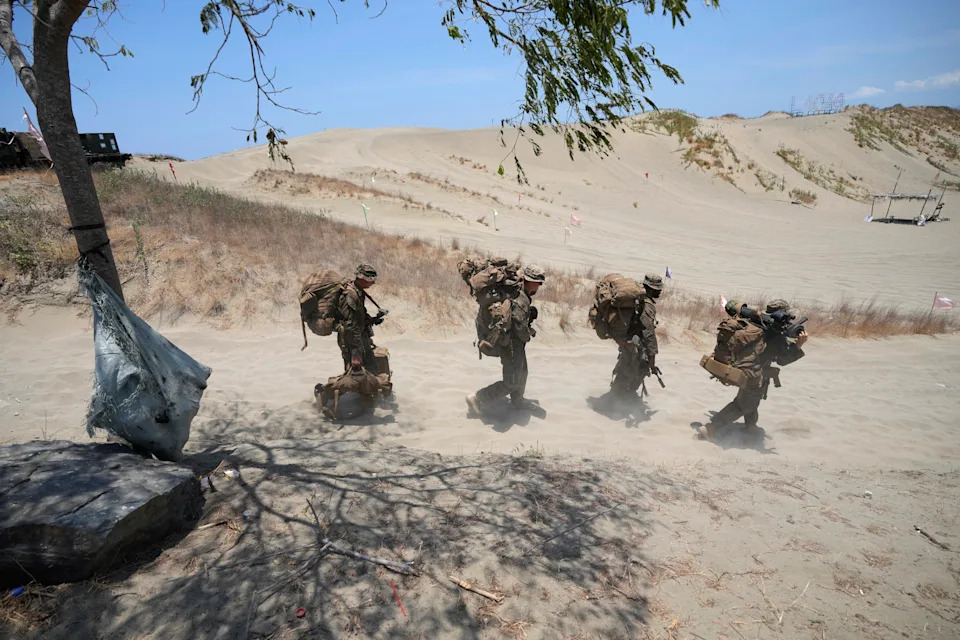
FILE -U.S. troopers in battle gear walk during a joint military exercise on May 8, 2024, in Laoag, Ilocos Norte, northern Philippines. (AP Photo/Aaron Favila, File)(ASSOCIATED PRESS)
Existing Deployments And Capabilities
U.S. forces previously deployed a mid‑range missile system referred to as Typhon to Luzon in April 2024. That land‑based launcher can field the Standard Missile‑6 (SM‑6) and the Tomahawk Land Attack Missile; Tomahawks have a range of over 1,000 miles (about 1,600 kilometers), which would put parts of mainland China within reach from northern Luzon.
In April of the previous year, U.S. Marines deployed an anti‑ship system called the Navy Marine Expeditionary Ship Interdiction System (NMESIS) to Batan Island in Batanes province, which faces the strategically important Bashi Channel just south of Taiwan. U.S. officials have used joint exercises to familiarize batches of Filipino forces with these systems’ capabilities and operations.
Beijing’s Reaction And Regional Context
Beijing has repeatedly protested the deployments, saying the weapons are intended to contain China’s rise and could undermine regional stability. China has asked the Philippines to remove the launchers, a request Manila—led by President Ferdinand Marcos Jr.—has rejected.
Confrontations between Chinese and Philippine coast guard vessels have increased in recent years in disputed waters. Other claimants and stakeholders in overlapping maritime disputes include Vietnam, Malaysia, Brunei and Taiwan, making the South China Sea a persistent flashpoint for regional and strategic tensions.
Key takeaway: U.S. missile deployments to the Philippines are being framed by both Washington and Manila as deterrence measures intended to protect maritime rights and regional security, even as Beijing objects and diplomacy continues.
Help us improve.