China will remove import tariffs on goods from 53 African countries from May 1, expanding an existing zero-tariff scheme that previously covered 33 states. Eswatini is excluded because of its diplomatic ties with Taiwan. Xi Jinping announced the change at the African Union summit in Addis Ababa, framing it as a boost for development. The move follows Washington's extension of AGOA and highlights US–China competition for African resources, though analysts warn of risks from commodity dependence and limited domestic value addition.
China To Scrap Tariffs For 53 African Countries From May 1 — Opportunity And Risk
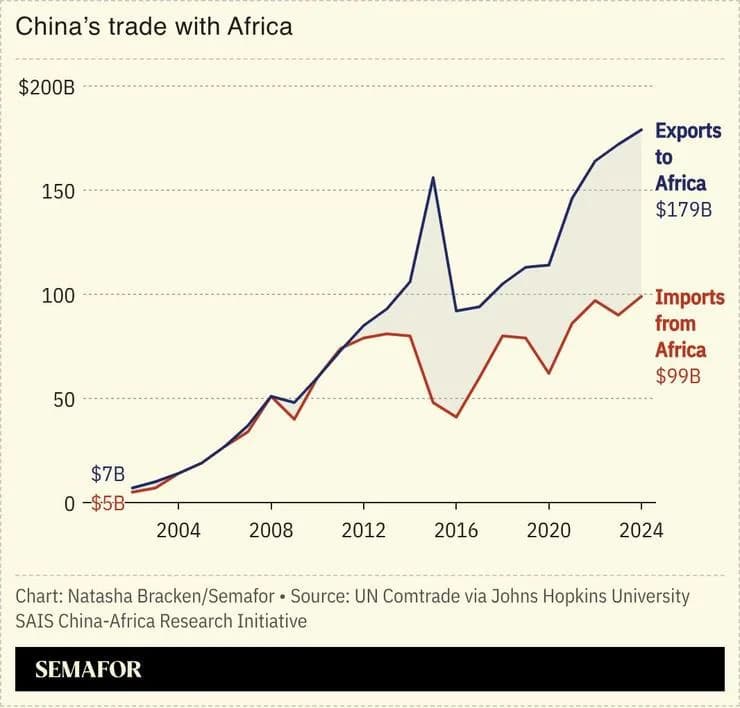
A chart showing China’s trade with Africa yearly.
China will remove import tariffs on goods from 53 African countries, effective May 1, in a move Beijing says will spur trade and development across the continent.
What Changed
Beijing already operated a zero-tariff regime covering imports from 33 African states and expanded that programme last year. The latest announcement broadens duty-free access to 53 countries, while Eswatini remains excluded because it maintains formal diplomatic ties with Taiwan.
How It Was Announced
Chinese leader Xi Jinping unveiled the policy expansion as African leaders met in Addis Ababa for the African Union summit. Xi said the measure would "undoubtedly provide new opportunities for African development."
"Undoubtedly provide new opportunities for African development." — Xi Jinping
Context And Reactions
The announcement comes weeks after the United States extended the African Growth and Opportunity Act (AGOA) preferential trade pact for sub-Saharan countries, underscoring growing US–China competition for African markets and resources.
Potential Benefits
- Export growth: Easier market access to China could boost African agricultural and manufactured exports.
- Investment: Tariff relief may attract more Chinese investment in infrastructure, mining and processing.
- Job creation: Expanded trade and investment could support employment if linked to local value chains.
Risks And Caveats
Analysts warn the move could deepen African economies' reliance on commodity exports — especially metals and minerals coveted by both China and the US for defence and electronics manufacturing — leaving countries vulnerable to international price swings. Without parallel investment in processing, skills and industrial policy, gains may be limited and value added could remain low.
Policymakers and business leaders say the outcome will depend on complementary measures: rules of origin, safeguards for vulnerable sectors, incentives for downstream processing, and transparent investment terms.
Help us improve.