Many House members and senators are retiring as Republican incumbents weigh the political costs of continued loyalty to Donald Trump amid sagging poll numbers and persistent controversies. Fifty-one House members and twelve senators have opted not to run, with Republicans accounting for most departures. Lawmakers cite voter fatigue over the president�s conduct, weak approval on the economy and health care, and investigations into alleged corruption and ties to the Epstein network. Faced with a tough midterm environment and limited down-ballot help, numerous Republicans prefer to exit rather than defend the administration.
Why So Many Congressional Republicans Are Leaving — And What It Means for the Midterms
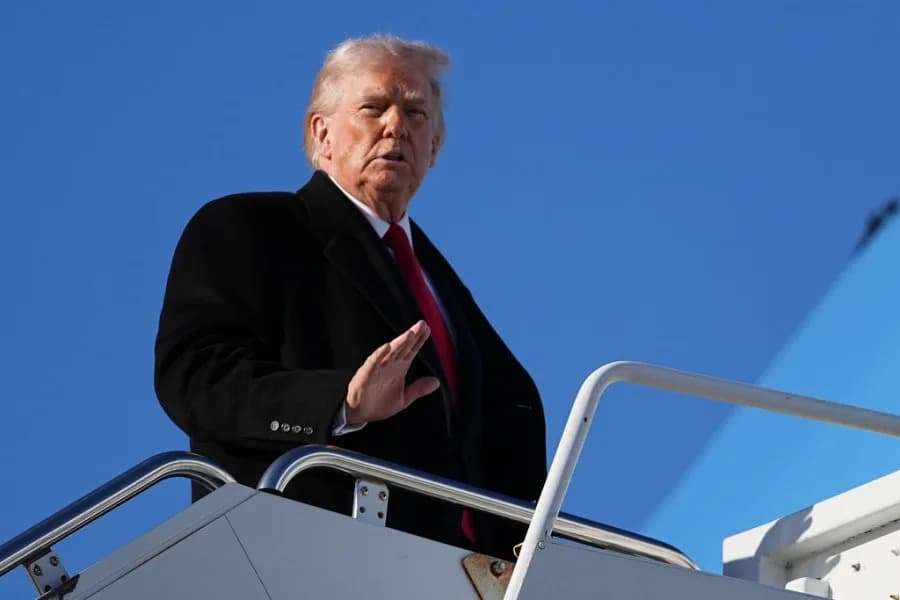
More than a decade after Donald Trump first descended the escalator, many congressional Republicans face stark choices about their political futures.
They can walk away. They can stay and remain mute as polls show weak public support for Trump and his party. Or they can accept that unwavering loyalty to Trump carries tangible political costs.
Trump�s ascendancy delivered control of the White House, Senate and House. But for Republicans still serving in Washington, the consequences of that allegiance are accumulating as the midterm elections approach.
Incumbent House and Senate Republicans seeking reelection are already being judged by voters for the president�s actions — from racially charged social-media posts to controversies surrounding Jeffrey Epstein and his associates.
Many are choosing to leave. According to an NBC News analysis, 51 House members and 12 senators have announced they will not seek reelection this cycle, a pace that could produce the largest turnover in Congress this century. Most of the departing members are Republicans: 30 House members and 6 senators.
That level of departures mirrors the mass exodus before the 2018 midterms, when Democrats reclaimed the House by flipping 41 seats.
"If Donald Trump says, 'jump three feet high and scratch your head,' we all jump three feet high and scratch our head," Rep. Troy Nehls (R-Tex.) said after the 2024 election.
Nehls is among those not running again.
When Rep. Marjorie Taylor Greene (R-Ga.) announced her departure last year, she warned that House Republicans remaining in a Democratic-controlled chamber would be expected to defend the president against impeachment and other attacks — an outcome she called "absurd and completely unserious." That prediction now looks prescient for many Republicans worried about blowback at home.
Recently, six House Republicans broke with the president on tariff policy and were immediately attacked on social media. The political bite of those attacks was blunted in part because several of those lawmakers are retiring or represent vulnerable districts likely to flip.
Politico Playbook captured the moment as a gradual erosion of Trump�s iron grip on the party, suggesting the early months of last year were a high-water mark for his control.
Another factor driving the rush to the exits is the limited down-ballot benefit some Republican candidates receive from Trump�s campaigning; his endorsements and rallies have not uniformly moved the needle for vulnerable House and Senate races.
So why should vulnerable Republicans spend two years defending every controversial move, justifying the indefensible and risking their careers in town halls back home? They face concerted Democratic attacks focused on alleged corruption, foreign cryptocurrency dealings that reportedly benefited associates, and lingering questions about the Epstein network and any potential efforts to influence its legal outcomes.
Sen. Jon Ossoff (D-Ga.) has described senior members of the administration as an "Epstein class, ruling our country," arguing that wealthy appointees and Trump�s own riches expose a populist fraud. That critique is resonating with many voters.
Polls show significant public dissatisfaction with the administration�s performance: a Fox News poll reported 61 percent disapproval of the president�s handling of the economy, 62 percent disapproval on health-care costs and 64 percent disapproval on inflation and tariffs. The same poll found that voters most motivated to turn out currently favor Democrats, with 52 percent support.
Many members of Congress arrive determined to pass laws that improve life in their districts. But the current exodus reflects a harsher reality: a deeply polarized legislature that has produced limited bipartisan accomplishments. Its major legislative legacy this session may be a regressive tax cut that benefits high earners and corporations while swelling the federal debt.
Last week, the Congressional Budget Office projected federal debt would reach roughly $64 trillion over the next decade.
Aside from that, this Congress has been marked by manufactured scandals, the longest government shutdown in modern history, and continuing controversy tied to the Epstein network. With those headwinds, many Republican lawmakers have concluded: you�d quit, too.
About the author: Juan Williams is a senior political analyst for Fox News Channel and a prize-winning civil rights historian. He is the author of the book New Prize for These Eyes: The Rise of America�s Second Civil Rights Movement.
Help us improve.