The author, a former police officer, examines late-January Minnesota video showing federal immigration officers detaining an ICE observer and using force that appears to lack clear legal justification. Multiple recordings suggest a pattern of rapid escalation—often before lawful detention is established—with tactics such as force stacking, prolonged prone restraint, and chemical agents used against restrained people. The piece argues escalation cannot substitute for legal authority and calls for strict policy enforcement, transparent accountability, and improved training to restore public trust.
Former Cop: What Is ICE Doing? Video Shows Alarming Pattern of Escalation
As a Former Cop, I Have to Ask: What the Hell Is ICE Doing?
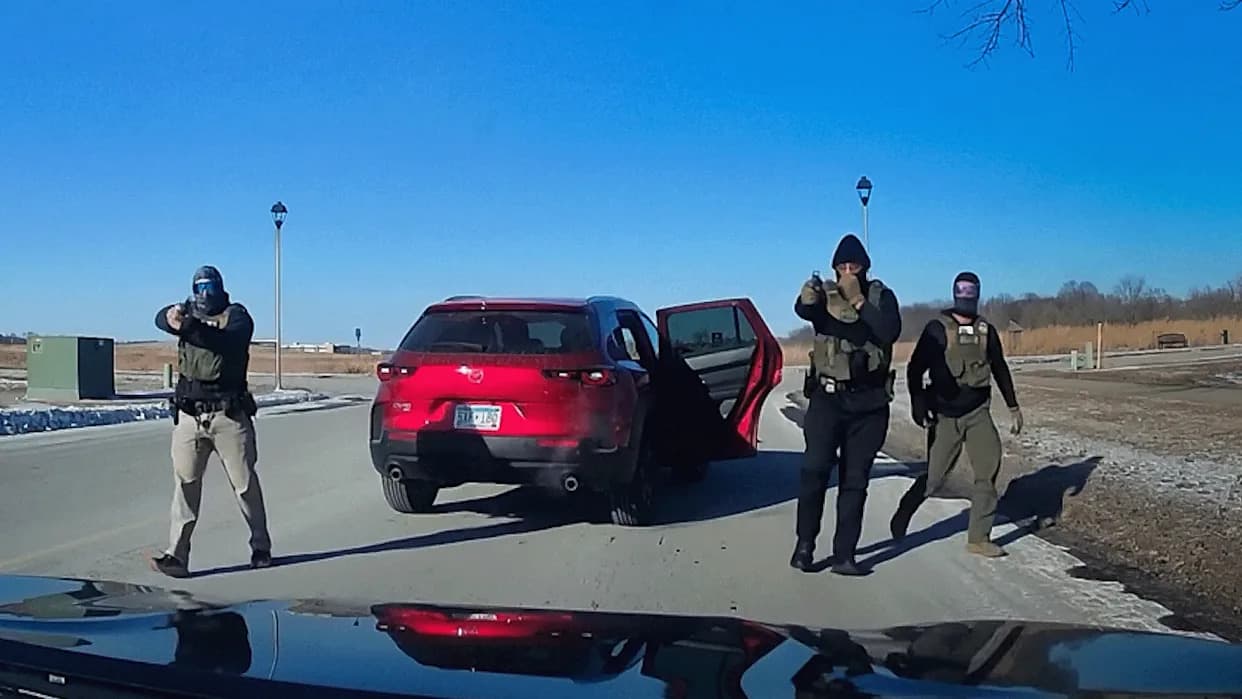
In a late-January video from Minnesota, federal immigration officers accelerated past a vehicle belonging to an ICE observer, then swerved to box her in. As the driver called someone and asked them to dial 911, agents exited with weapons drawn, ordered her out of the car, and briefly detained her before releasing her after an agent took a phone call and diverted to meet the local police chief.
Professional Concerns Beyond a Single Encounter
To the public, the scene is frightening. To someone who spent years on the job and is trained to operate within legal and jurisdictional boundaries, the footage raises deeper professional concerns. The problem is not merely that enforcement occurred; it is that the enforcement appears to have been carried out without clear authority, restraint, or lawful purpose.
That clip is not an isolated example. A growing set of recordings shows similar patterns in federal immigration enforcement: encounters apparently begun without evident legal justification that escalate rapidly, with agents using force in ways that conflict with accepted policing standards. In some instances an agent punches a person during an attempted detention even though the individual did not appear to pose an immediate threat. In others, chemical agents are sprayed at people already pinned to the ground by multiple officers, sometimes at point-blank range. Individuals are struck by canisters or other objects, and pepper-ball munitions are deployed at distances that appear to contradict standard use-of-force protocols.
Training, Policy, and Legal Principles
Modern law-enforcement training is explicit about the hazards of force stacking, prolonged prone restraint, and unnecessary escalation with chemical agents. These tactics are repeatedly flagged as risky and, in extreme cases, lethal. A fundamental lesson at every academy is straightforward: without lawful authority to detain, you may not use force. Escalating force does not retroactively create legal authority.
Officers are accountable for decisions that create danger. Courts look at the totality of circumstances leading up to a use-of-force moment, not just the split-second when force is applied.
Policies also require de-escalation once control is achieved. Earlier resistance does not justify continued or increasing force. Spraying chemical agents into the face of a restrained person or layering additional tools while someone is prone is not de-escalation—it's a recipe for serious injury or worse.
Consequences and a Path Forward
These incidents place a strain on local policing because the public does not distinguish between agencies when they experience coercion. Patterns of overreach and unnecessary escalation erode professional legitimacy and public trust—assets policing depends on.
This critique is not anti-law enforcement; it is pro-professionalism. Federal immigration agencies can correct course, but doing so will require clear, consistently enforced policy; transparent accountability for misconduct; and renewed investment in disciplined, scenario-based training that reinforces legal limits and de-escalation techniques. If left unaddressed, the current trajectory risks lasting damage to public trust and to the broader credibility of law enforcement.
Originally published on Reason.com.
Help us improve.