European leaders at the Munich Security Conference signaled deep doubts about U.S. reliability after recent political turbulence, with German Chancellor Friedrich Merz warning that America's claim to global leadership has been weakened. Delegates included several Democrats eyeing future presidential runs, but their presence did little to erase concerns that the transatlantic alliance will take years to repair. High-profile moments included Gavin Newsom's frank outreach, Alexandria Ocasio-Cortez's difficult exchange on Taiwan, and conciliatory—but cautious—remarks from Republican figures.
Munich Security Conference: European Leaders Say U.S. Credibility Has Been Eroded — Democrats Struggle to Reassure Allies
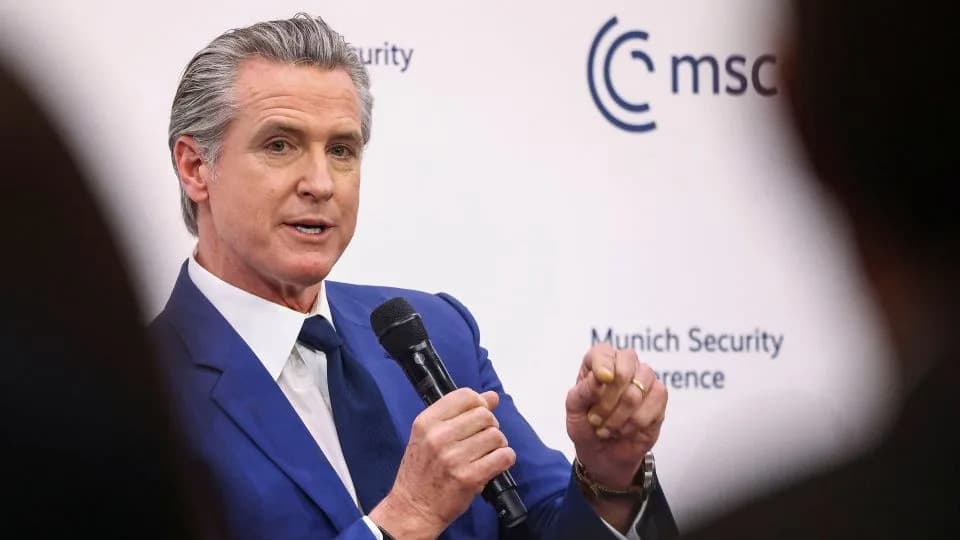
California Governor Gavin Newsom speaks during the Munich Security Conference in Munich, Germany, on Friday. - Liesa Johannssen/Reuters
The Munich Security Conference this year exposed deep unease in Europe about American reliability and left Democrats who attended scrambling to reassure partners while positioning themselves for future presidential contests.
Delegates and speakers portrayed a transatlantic relationship under strain after years of tumultuous U.S. politics. European leaders and commentators warned that restoring trust will be a long, generational task — and that even a future Democratic presidency may find the United States no longer automatically regarded as the undisputed leader of the liberal international order.
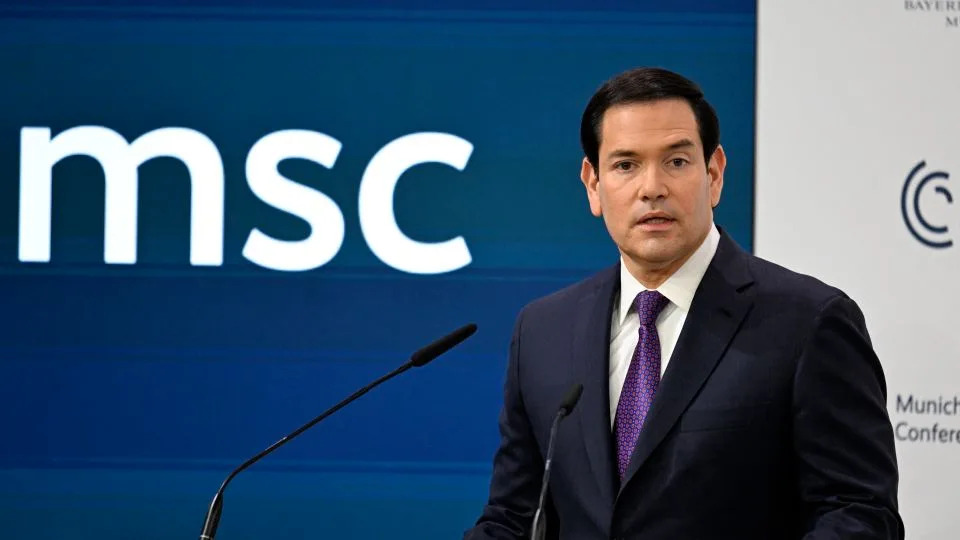
US Secretary of State Marco Rubio speaks during the 62nd Munich Security Conference in Munich, Germany on Saturday. - Thomar Kienzle/AFP/Getty Images
Main Moments in Munich
Friedrich Merz’s Stark Warning. German Chancellor Friedrich Merz framed the mood in blunt terms:
"A divide has opened up between Europe and the United States. The United States' claim to leadership has been challenged, and possibly lost."His remarks underscored a new urgency in Europe to consider deeper strategic autonomy, and he acknowledged confidential talks with other European capitals about strengthening deterrence independent of U.S. guarantees.
Gavin Newsom’s Outreach. California Governor Gavin Newsom, one of several Democrats viewed as future White House contenders, traveled to Munich to stress reassurance and to listen. He told reporters that many European leaders now view the United States as unpredictable: "They see us as unreliable, and a lot of them think it’s irrevocable." Newsom nonetheless argued that the relationship can be rebuilt and emphasized that domestic political strength matters to international credibility.
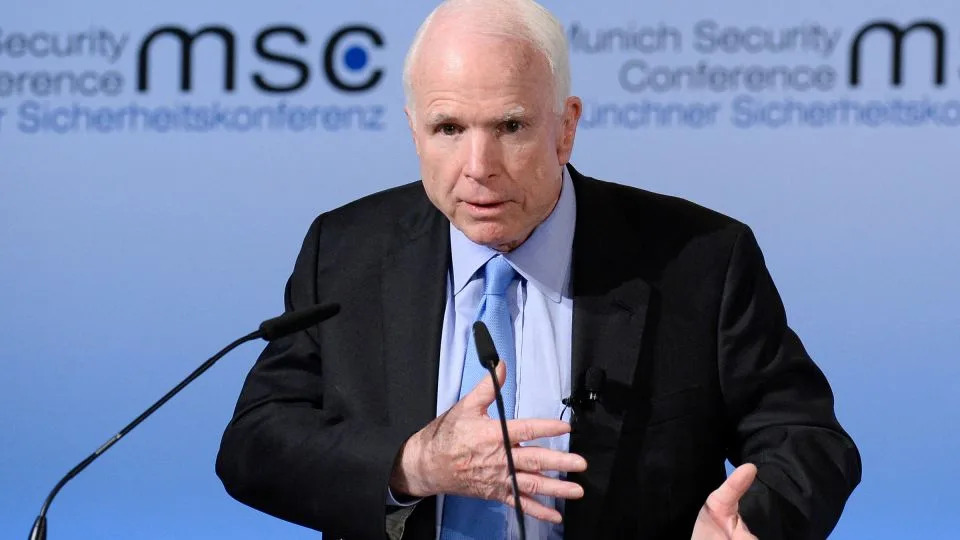
US senator John McCain speaks on the first day of the 53rd Munich Security Conference (MSC) at the Bayerischer Hof hotel in Munich, southern Germany, on February 17, 2017. - Thomas Kienzle/AFP/Getty Images
Progressive Spotlight and a Misstep. Representative Alexandria Ocasio-Cortez, who sought to introduce a progressive, populist foreign-policy perspective abroad, drew attention for a halting reply when asked whether she would support sending U.S. troops to defend Taiwan in the event of a Chinese invasion. The exchange illustrated the high stakes for emerging presidential hopefuls confronting complex geopolitical questions on a global stage.
Republican Voices and Mixed Signals. Several Republican figures drew notice as well. Senator Marco Rubio delivered remarks that were relatively conciliatory compared with some of last year’s more confrontational tones from other Republican personalities. But his subsequent travel to Slovakia and Hungary — countries led by figures sympathetic to populist and nationalist currents — highlighted divergent U.S. voices and priorities abroad.
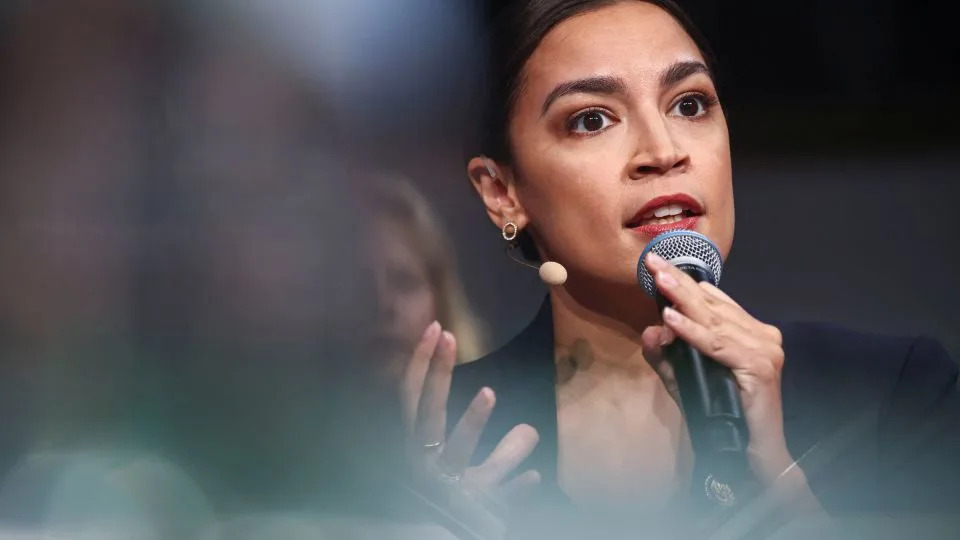
Rep. Alexandria Ocasio-Cortez speaks during the Munich Security Conference in Munich, Germany, on Sunday. - Liesa Johannssen/Reuters
Senator Lindsey Graham offered a darker assessment, warning that inaction toward Iran could embolden rivals like Russia and China and damage Western credibility:
"If America doesn’t take down the Iranian regime, it will be a disaster. It means you can’t rely on America…When rubber meets the road, they don’t do a damn thing."
Institutional Friction and Political Fallout
The planned congressional delegation was scaled back after House Speaker Mike Johnson canceled the official trip, and many House members stayed home. That absence, combined with partisan theatrics and high-profile domestic fights, reinforced European concerns that U.S. foreign-policy reliability is increasingly tied to shifting domestic politics.
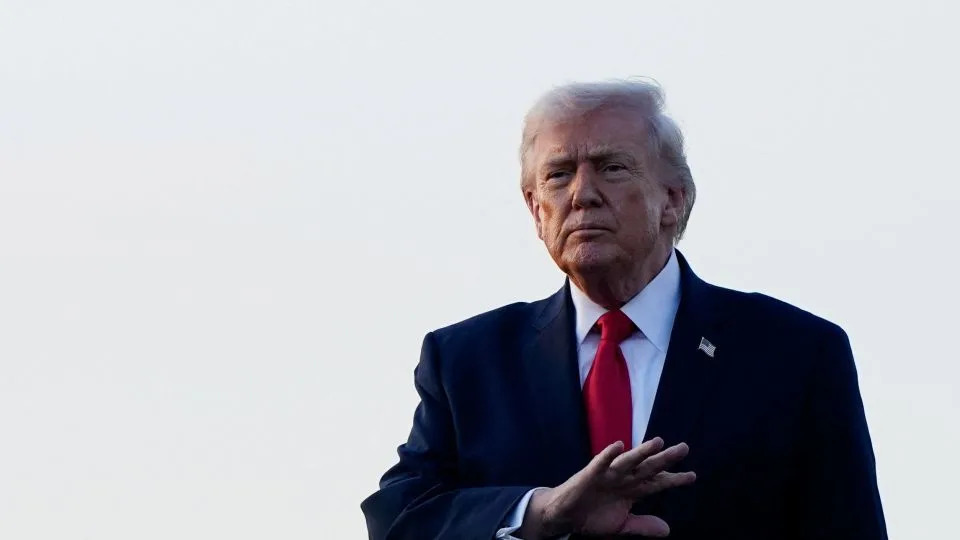
President Donald Trump gestures as he arrives at Palm Beach International Airport in West Palm Beach, Florida, on Friday. - Elizabeth Frantz/Reuters
Echoes of John McCain’s legacy were visible in small rituals — a memorial dinner and a plaque at the Bayerischer Hof hotel — but no single American figure dominated the conference the way McCain once did. Senators and representatives who attended attempted to carry the torch of transatlantic cooperation, but they also confronted Europeans’ frank questions about U.S. dependability.
Democrats Looking Ahead. A number of Democrats present — including Gavin Newsom, Sen. Mark Kelly, Rep. Alexandria Ocasio-Cortez, and others mentioned as potential 2028 contenders — used the trip to build foreign-policy credentials and reassure partners. Some stressed that while global institutions brought stability after 1945, they have not always delivered for working people, a theme Democrats are trying to reconcile with the need to reassure allies.
Overall, Munich offered a clear takeaway: European policymakers are recalibrating their expectations of the United States. Rebuilding trust will require sustained, bipartisan American engagement over years, if not decades.
Help us improve.