The federal firearms buyback, launched in January to remove banned assault‑style weapons, is encountering logistical hurdles, provincial refusals and police reluctance. Owners must register by March 31 to be eligible for compensation, or surrender/decommission their firearms by October 30, 2026. The program is funded to buy roughly 136,000 guns, while independent estimates put total firearms in Canada far higher. Experts are split on the buyback’s likely effect: it may reduce the risk of mass shootings but is unlikely to eliminate illegal gun trafficking on its own.
Why Canada’s National Firearms Buyback Is Drawing Heavy Criticism
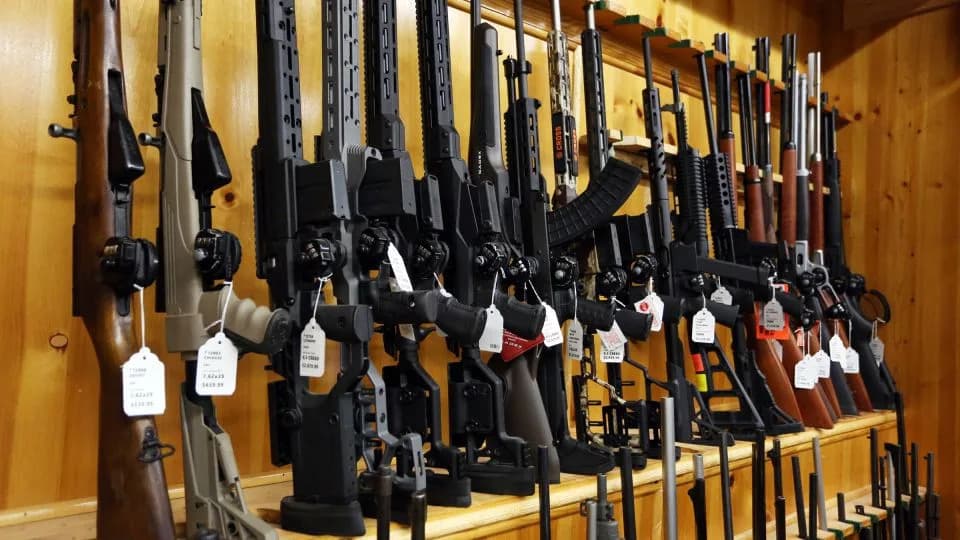
Rifles on display at That Hunting Store in Ottawa, Ontario in 2022. A federal buyback for assault-style weapons in Canada, where gun control is broadly popular, has been met with criticism from provincial officials, police and gun owners - Dave Chan/AFP/Getty Images
A deadly school shooting in British Columbia has intensified scrutiny of Canada’s nationwide firearms buyback program, a controversial effort that Ottawa began rolling out in January to remove and compensate owners of now‑prohibited assault‑style weapons.
Background
Canada already has stricter gun laws than the United States and rare mass shootings, but the 2020 Nova Scotia rampage — in which a man impersonating a police officer killed 22 people — prompted sweeping reforms, including bans on roughly 2,500 makes and models of assault‑style firearms. The government’s buyback is one of those measures.
How The Program Works
Under the framework released by the federal government, owners of prohibited makes and models must register for the buyback by March 31 to be eligible for compensation. Those who register after that date will not receive payment but still must surrender or permanently decommission prohibited firearms by October 30, 2026, or risk criminal charges for illegal possession.
Logistical And Capacity Constraints
The federal government says it has funds to buy about 136,000 firearms. That figure contrasts with independent estimates — a 2017 Small Arms Survey report cites roughly 2 million registered and an estimated 10 million unregistered firearms in Canada — underscoring the scale mismatch between the program and the total number of guns nationwide.
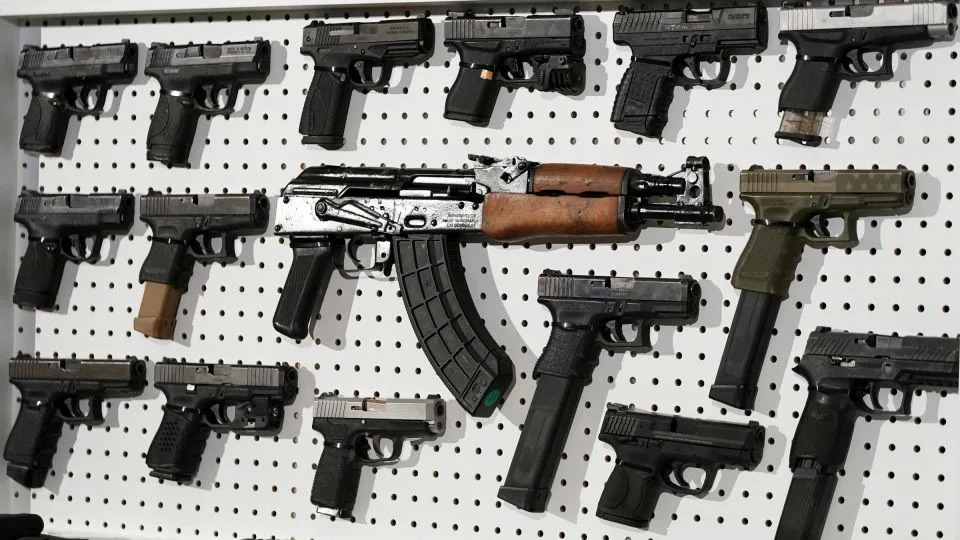
Weapons arrayed after a joint US-Canadian operation to seize firearms illegally smuggled into Canada in 2024. Canadian police say firearm smuggling from the US is a major concern. - Arlyn McAdorey/The Canadian Press/AP/File
Provincial And Police Pushback
Several provinces, notably Alberta, Saskatchewan and Manitoba, have refused to participate. Alberta barred its police forces from administering collections; provincial officials say the federal government had years to build an operational mechanism and criticize the program as rushed.
Many police services are also reluctant to act as collection points. Some departments have cited recommendations from police associations that emphasize limited capacity and greater concern about illegal, smuggled firearms — the very kinds of weapons often used in violent crime.
Federal Response: Mobile Collection Units
The Ministry of Public Safety says that where local police won’t cooperate, the federal government will deploy mobile collection units (MCUs) to retrieve prohibited firearms directly from owners. Provinces and firearms officials have raised questions about licenses, logistics and how MCUs will operate in practice.
Debate Over Effectiveness
Experts are divided. Some researchers and police officials warn that voluntary buybacks primarily attract law‑abiding owners and have limited impact on criminal networks and violent crime. Others point to evidence that removing specific categories of semi‑automatic, military‑style firearms can reduce the risk of mass shootings. Supporters stress the buyback is one targeted measure among a suite of policies aimed at curbing smuggling, tightening bail and investing in policing and prevention programs.
What To Watch
- Whether provinces change course or continue to block police participation.
- How many prohibited firearms are surrendered through registrations and MCUs versus those that remain in circulation.
- Whether complementary measures (border enforcement, anti‑smuggling initiatives, bail reform) reduce gun violence tied to illegal weapons.
The buyback is framed by officials as a public‑safety effort focused on reducing access to semi‑automatic military‑style firearms — not as a standalone solution to all gun crime. Its ultimate impact will depend on implementation, intergovernmental cooperation and how well it reaches weapons diverted into criminal networks.
Help us improve.