Italian authorities revealed a fourth-century AD Roman shipwreck off Gallipoli (Lecce) discovered in June 2025. The vessel lies on its back and contains numerous amphoras believed to have carried garum, the prized fermented fish sauce of antiquity. The Guardia di Finanza is maintaining continuous protection while regional superintendencies seek about €780,000 to document and survey the site. Excavation and conservation will follow UNESCO guidelines to preserve the wreck and its artifacts.
Fourth-Century Roman Shipwreck Carrying Priceless Garum Amphoras Found Off Gallipoli, Italy
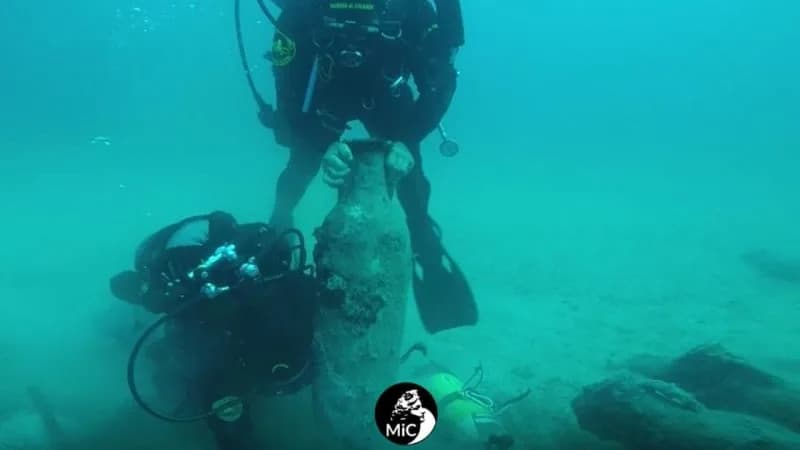
Divers carrying amphorae from the fourth century AD Roman shipwreck discovered off the coast of Gallipoli, southern Italy in June 2025. (photo credit: Screenshot/X/@MiC_Italia)
Italian authorities announced on February 3 that divers and maritime patrols have identified a remarkably well-preserved Roman shipwreck dating to the fourth century AD, located off the coast of Gallipoli in the province of Lecce, southern Italy.
The Culture Ministry said the wreck, discovered in June 2025, lies largely intact on its back. Conservators observed a large cargo of amphoras on the seabed that appear to have once carried garum, the fermented fish sauce that was one of antiquity’s most prized culinary exports.
What Was Found
The vessel’s position and preserved load provide a rare snapshot of late Roman maritime commerce. The amphoras—stacked within the hull—offer direct evidence of trade in luxury foodstuffs and may yield new insights into supply networks, consumption, and daily life during the imperial age.
Protection and Investigation
To safeguard the site, Italy’s financial police, the Guardia di Finanza (GDF), have maintained continuous surveillance, the ministry said. The GDF announced the discovery on X (formerly Twitter), noting the wreck was detected during routine maritime patrols using advanced onboard detection equipment.
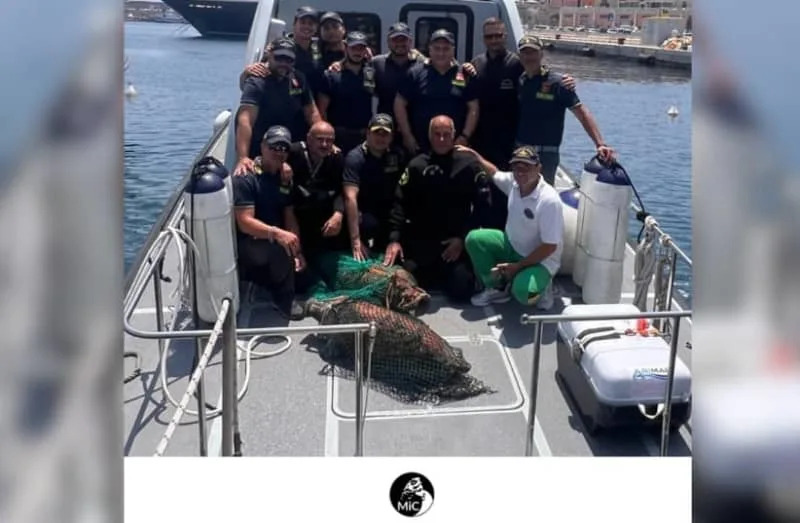
Divers with an amphorae found in the fourth century AD Roman shipwreck discovered off the coast of Gallipoli, southern Italy in June 2025. (credit: Screenshot/X/@MiC_Italia)
Regional cultural superintendencies in Brindisi, Lecce and Taranto are coordinating next steps, seeking funding for thorough documentation, an underwater archaeological survey, and safety measures to prevent looting and disturbance of the site.
Italy’s High Council for Cultural Heritage and Landscape has provided a preliminary project estimate of about €780,000 to support initial conservation and survey work. Detailed planning for excavation and artifact conservation will follow internationally accepted standards.
“The garum cargo gives direct testimony to commercial traffic across the Roman Mediterranean and opens new perspectives for research into the economy and everyday life of the imperial age,” the Culture Ministry said.
Conservation Standards
Officials said all recovery and conservation work will be planned and carried out in accordance with the principles of the UNESCO Convention on the Protection of the Underwater Cultural Heritage, ensuring both scientific rigor and long-term preservation of the site and its finds.
Archaeologists now plan a careful, phased approach: remote sensing and documentation, targeted excavation where necessary, artifact recovery under controlled laboratory conditions, and long-term conservation and study. The find promises to shed light on late Roman maritime trade and the role of luxury consumables like garum in the Mediterranean economy.
Help us improve.