The Saudi-backed Presidential Leadership Council has decreed a new 34-member government and confirmed Shaya Mohsen al-Zindani as prime minister, while he retains the foreign affairs portfolio. The cabinet includes 10 returning ministers and three women, and names Marwan Faraj bin Ghanim as finance minister, Mohamed Abdullah Ali as oil minister and Taher Ali al-Uqaili as defence minister. The formation follows Riyadh-hosted talks aimed at easing tensions with the Southern Transitional Council, and UN officials warn that political instability and funding shortfalls are intensifying a severe humanitarian crisis affecting more than 18 million people.
Shaya Mohsen al-Zindani Confirmed as Yemen's Prime Minister as Riyadh-Backed Government Is Formed
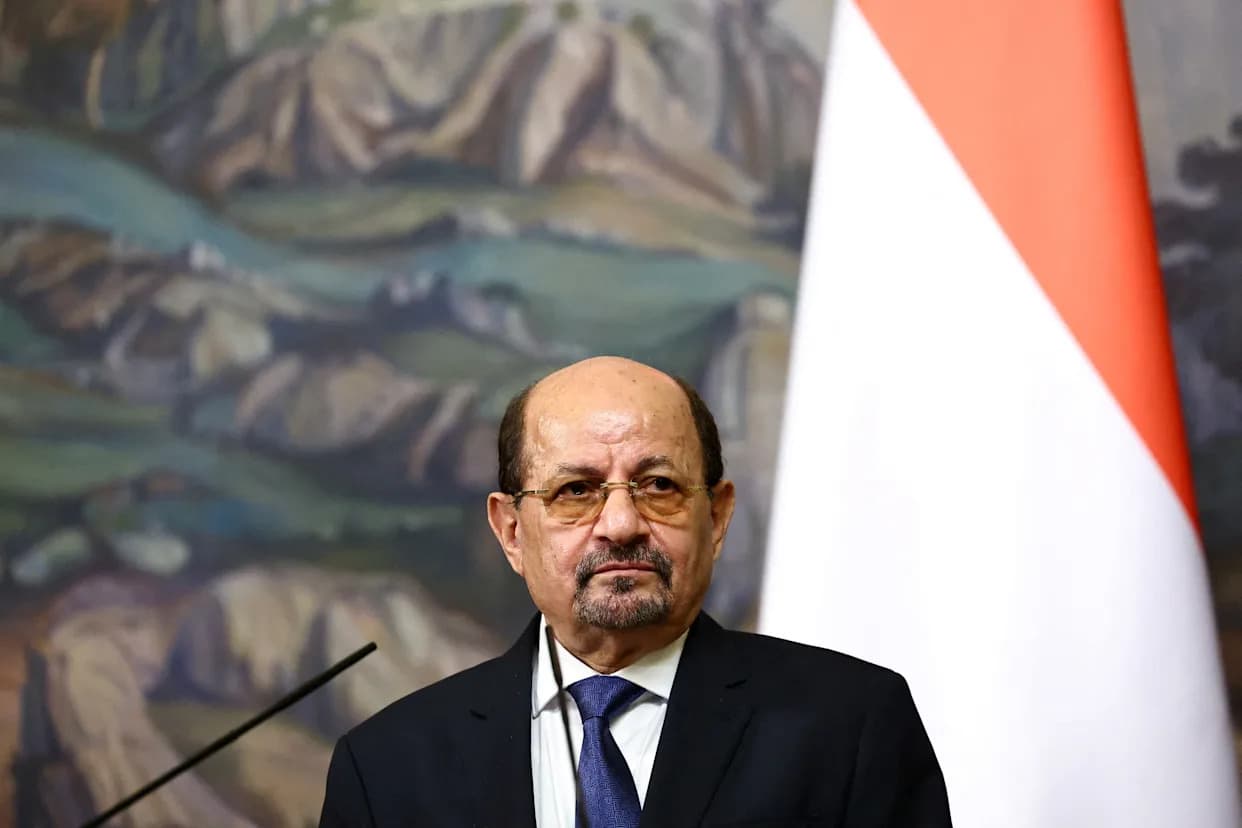
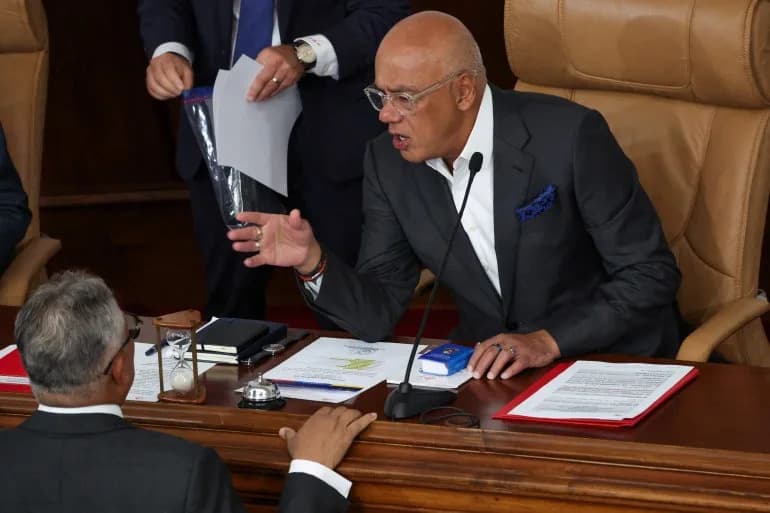
New Yemeni Prime Minister Shaya Mohsen al-Zindani [File: Evgenia Novozhenina/Reuters]
Yemen's Saudi-backed Presidential Leadership Council has issued a decree forming a new national government and confirming Shaya Mohsen al-Zindani as prime minister. According to the state-run Saba news agency, al-Zindani will continue to hold the foreign minister portfolio.
Last month the council accepted the resignation of former Prime Minister Salem bin Breik and tasked al-Zindani with forming a new cabinet. The newly announced cabinet has 34 members, including 10 ministers retained from the previous government and three women.
Key Appointments
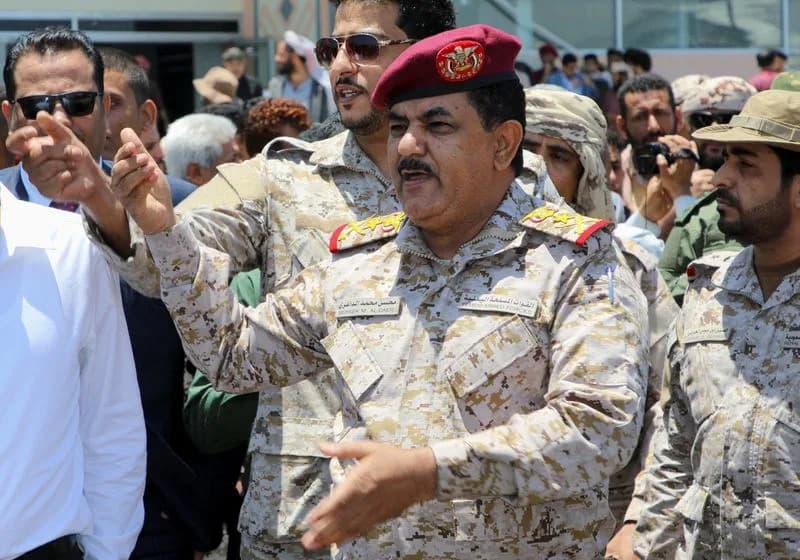
Among the prominent appointments, Marwan Faraj bin Ghanim was named minister of finance, Mohamed Abdullah Ali was confirmed as oil minister, and Taher Ali al-Uqaili was appointed defence minister, the presidential decree states.
Political Context
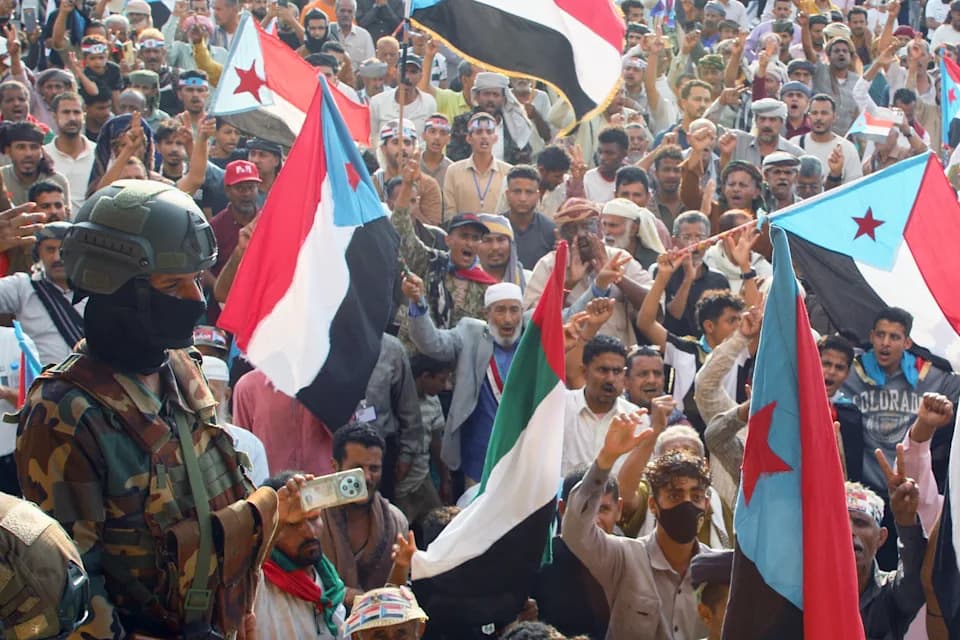
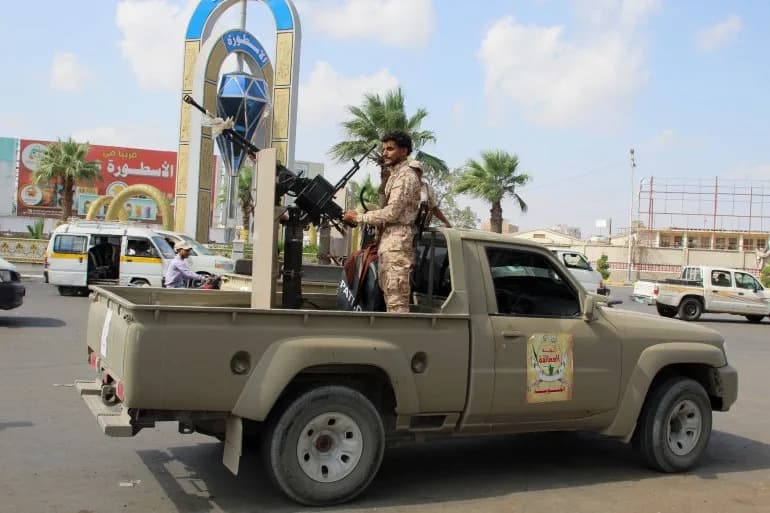
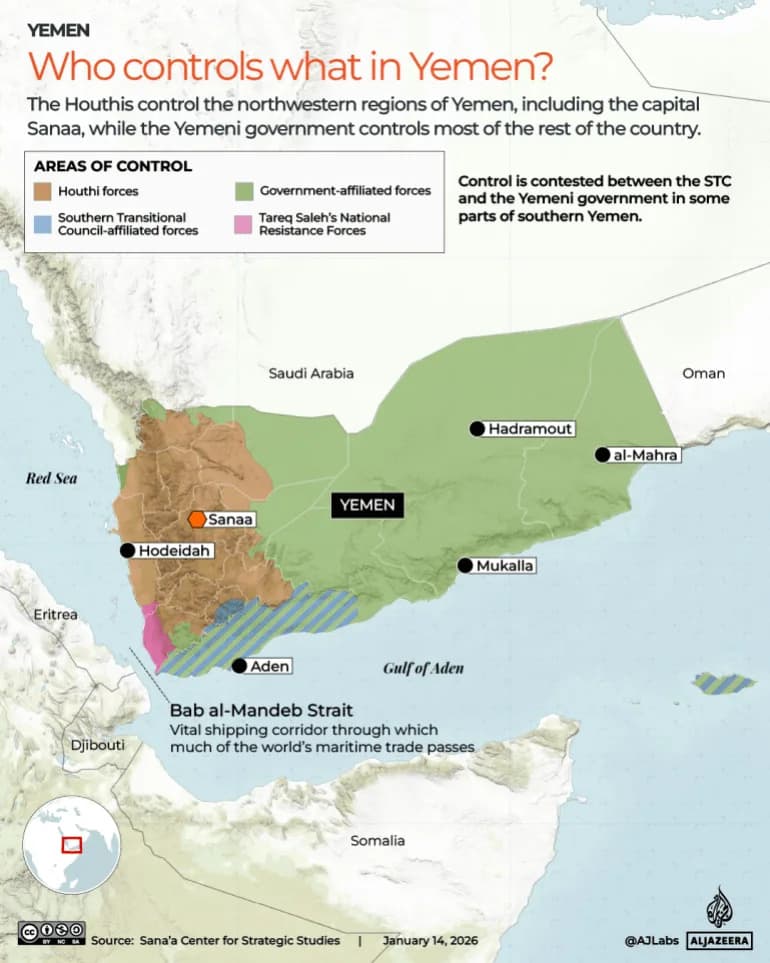
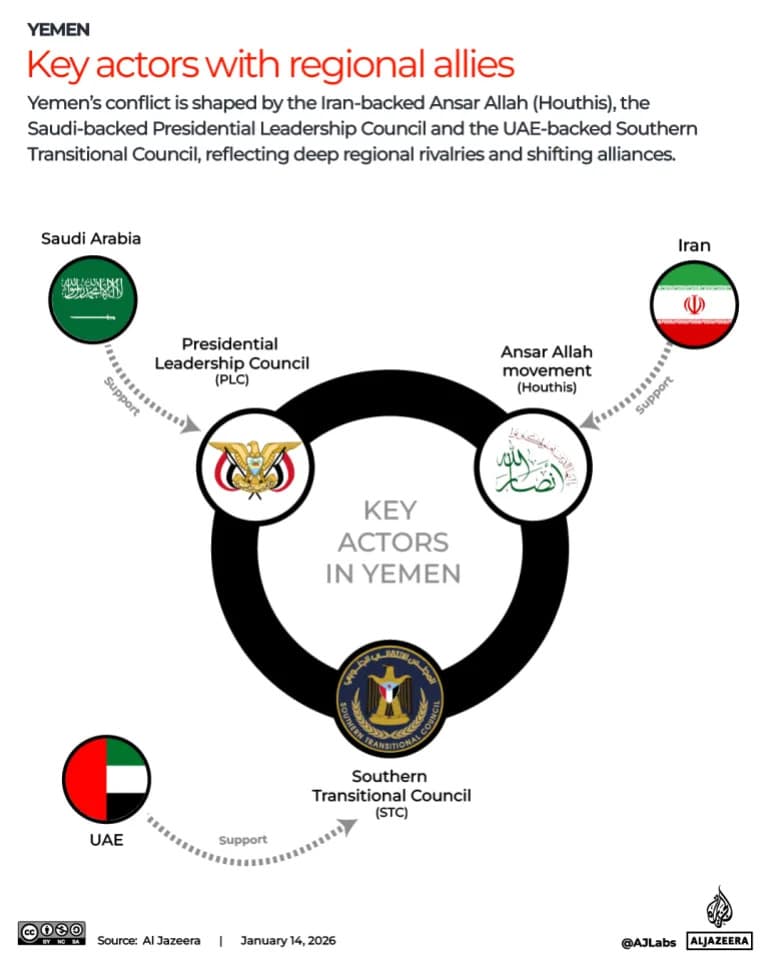
The government formation follows months of consultations in Riyadh aimed at easing tensions between the internationally recognised Yemeni government and the main southern separatist group, the Southern Transitional Council (STC), which announced its dissolution on January 9. In December the STC — which Saudi officials say is backed by the United Arab Emirates — seized territory across southern and eastern Yemen and advanced close to the Saudi border; Saudi-backed forces have since largely retaken those areas.
Relations between Saudi Arabia and the UAE have also shown strains recently, spanning geopolitical differences and disagreements over oil output, despite their previous cooperation in a coalition confronting the Iran-backed Houthis in Yemen's civil war.
United Nations Special Envoy for Yemen Hans Grundberg warned that recent developments, particularly in the south, show how quickly stability can unravel without a credible, inclusive political process.
Addressing the UN Security Council, Ramesh Rajasingham, Director of the Humanitarian Sector at the UN aid coordination office, said humanitarian needs in Yemen are rising while access has become more restricted amid funding shortfalls. He warned that more than 18 million Yemenis — roughly half the population — will face acute food insecurity in February and that tens of thousands could slip into catastrophic hunger.
Humanitarian agencies say immediate, sustained funding and unimpeded access are essential to prevent further deterioration of conditions and to preserve the limited gains made by relief efforts.
Help us improve.