House lawmakers reviewed three bills to expand VA benefits: H.R. 5339 would extend PACT Act-style coverage to Pentagon personnel present in the weeks after Sept. 11, 2001; H.R. 4469 (the PRESUME Act) would eliminate a VA requirement that veterans document radiation dose levels; and H.R. 1685 would grant DIC to surviving spouses of veterans who die from ALS. Supporters say the measures would help thousands currently excluded from existing programs, while the VA raised concerns about broad condition lists, evidentiary rules and funding. Subcommittee leaders pledged to work on offsets and revisions so the bills can move forward.
Congress Considers Bills to Expand VA Benefits for Pentagon 9/11 Exposures, Radiation Cases and Surviving Spouses
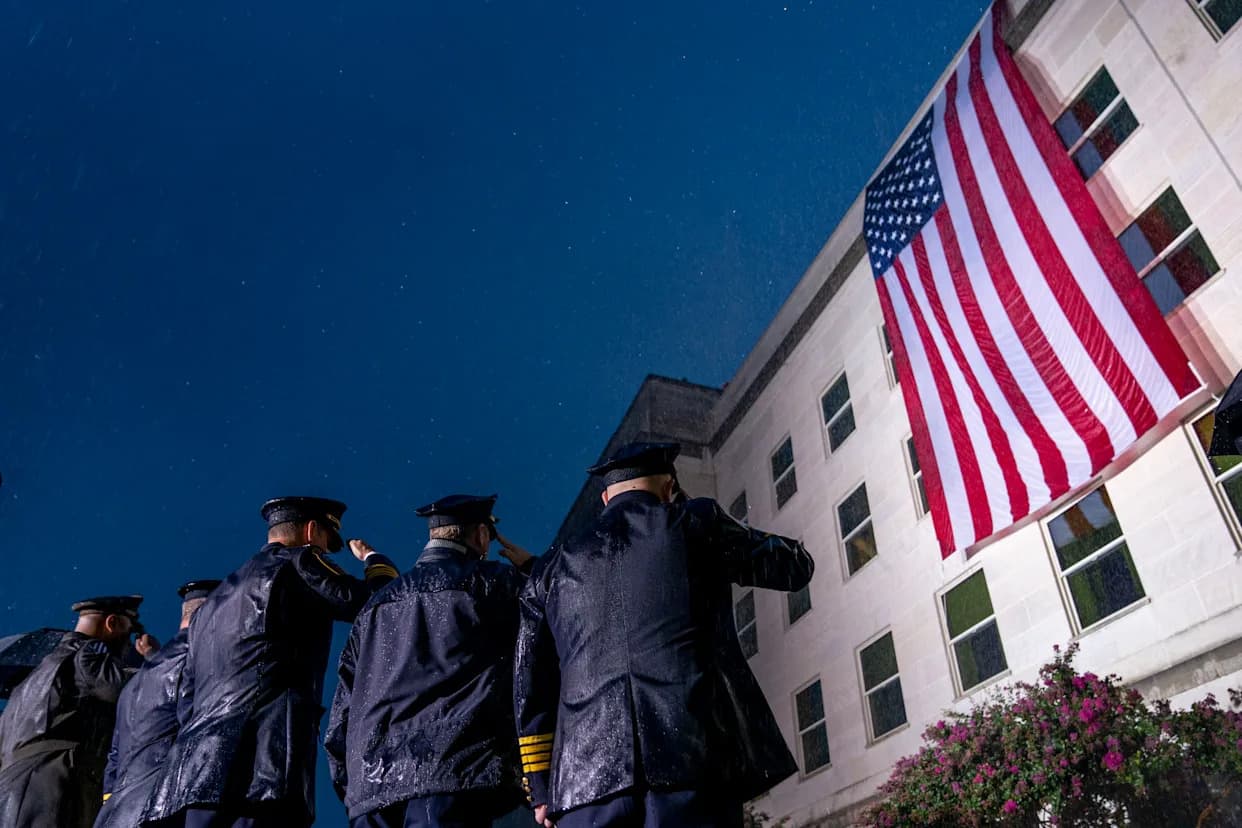
First responders salute as a U.S. flag is unfurled at the Pentagon in Washington, Sept. 11, 2022. (Andrew Harnik/AP)(Andrew Harnik)
Congressional lawmakers reviewed three bills that would expand Department of Veterans Affairs (VA) benefits for service members affected by hazardous exposures at the Pentagon after Sept. 11, 2001, for veterans exposed to radiation without formal dose records, and for spouses of veterans who die from service-connected conditions such as ALS.
Overview
The House Veterans Affairs Subcommittee on Disability Assistance and Memorial Affairs met to consider legislation aimed at closing gaps in current VA programs. Proponents say the measures would extend care and compensation to veterans and families who now fall outside existing authorities, while the VA raised concerns about scope, evidence standards and funding.
The Bills Under Review
H.R. 5339 — Susan E. Lukas 9/11 Servicemembers Fairness Act: Would extend PACT Act-like coverage to service members who reported for duty at the Pentagon on Sept. 11, 2001 and through November 2001, when parts of the building were declared safe. Sponsors say this would create an expedited pathway to VA health care and disability compensation for conditions linked to toxic exposures during and after the crash of American Airlines Flight 77.
H.R. 4469 — PRESUME Act: Would prohibit the VA from requiring veterans to submit a documented radiation dose estimate to establish service connection for radiation-related illnesses. It is aimed primarily at Cold War "atomic veterans" who participated in classified testing and may lack government-accessible dose records.
H.R. 1685 — Justice for ALS Veterans Act: Would extend Dependency and Indemnity Compensation (DIC) to surviving spouses of veterans who die from amyotrophic lateral sclerosis (ALS). Sponsors note veterans are about twice as likely as the general population to develop ALS and often die within two to five years of diagnosis — short of the eight-year threshold many survivors face under current VA rules.
Veterans' Accounts and Lawmaker Support
Retired Air Force Lt. Col. Susan E. Lukas, who sponsors the Pentagon bill, said she suffers chronic respiratory problems and fibromyalgia she attributes to asbestos, dust and other material released when Flight 77 struck the building. Lukas recalled arriving at work on Sept. 12 and leaving visible footprints in the dust redistributed by the ventilation system.
Rep. Dina Titus (D-Nev.), sponsor of the PRESUME Act, argued that veterans should not have to produce government-controlled documents to prove exposures they were unaware of at the time. "When the government controls all the evidence, veterans shouldn’t bear the burden of proving the impossible," she said at the hearing.
Rep. Brian Fitzpatrick (R-Pa.), sponsor of the Justice for ALS Veterans Act, emphasized the urgency of closing a gap that leaves many spouses without DIC when ALS claims a veteran's life within a short period after diagnosis.
VA Response and Concerns
VA officials testified with mixed views. The department signaled conditional support for the ALS bill if a clear funding mechanism is identified. Jennifer Bover, Executive Director of the Veterans Benefits Administration, warned that the bill’s language proposing automatic DIC for other conditions with "high mortality rates" lacks a standardized definition and could be problematic.
The VA opposed the PRESUME Act in its current form, saying dose documentation is not always required to establish service connection: a veteran who can show participation in a radiation-risk activity and a diagnosed radiation-related illness may already qualify. James Smith, the VA’s deputy executive director for policy and procedures for the Compensation Service, said existing regulations can accommodate many atomic veterans.
Officials also expressed reservations about the Pentagon 9/11 bill, calling the list of covered conditions "too broad" and urging more research to identify which illnesses are plausibly linked to exposures in specific Pentagon spaces.
Next Steps
Subcommittee Chairman Rep. Morgan Luttrell (R-Texas) pledged to work with bill sponsors to identify offsets and address VA concerns so the measures could advance to the full House Veterans Affairs Committee. Sponsors estimate the Pentagon cohort affected by post-attack exposures could number roughly 10,000 service members who currently do not qualify for the World Trade Center Health Program or PACT Act protections.
Bottom line: The bills could open VA health care and compensation to thousands of veterans and families, but lawmakers and VA officials must resolve disagreements over scope, evidentiary standards and funding before the measures can advance.
Help us improve.