Buddhist monks from Laos, Myanmar, Thailand and Vietnam are walking 2,300 miles from Fort Worth to Washington, D.C., to promote peace and compassion. The roughly 20‑monk group has drawn thousands along an eight‑state route, collected 2.5 million Facebook followers and seen videos surpass 100 million views. Despite cold weather and a serious injury to one monk, the procession — led by Bhikkhu Pannakara — continues toward a planned arrival in Washington on February 10.
“We Just Need Something Positive”: Monks' 2,300‑Mile Peace Walk Unites Thousands Across the US
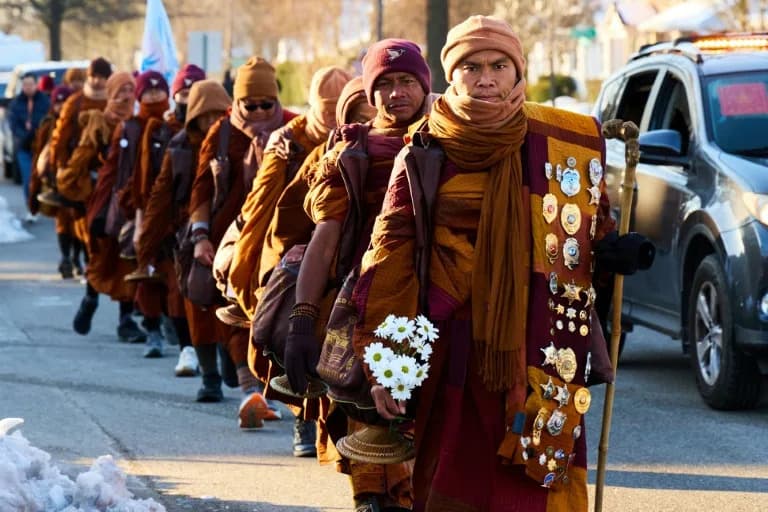
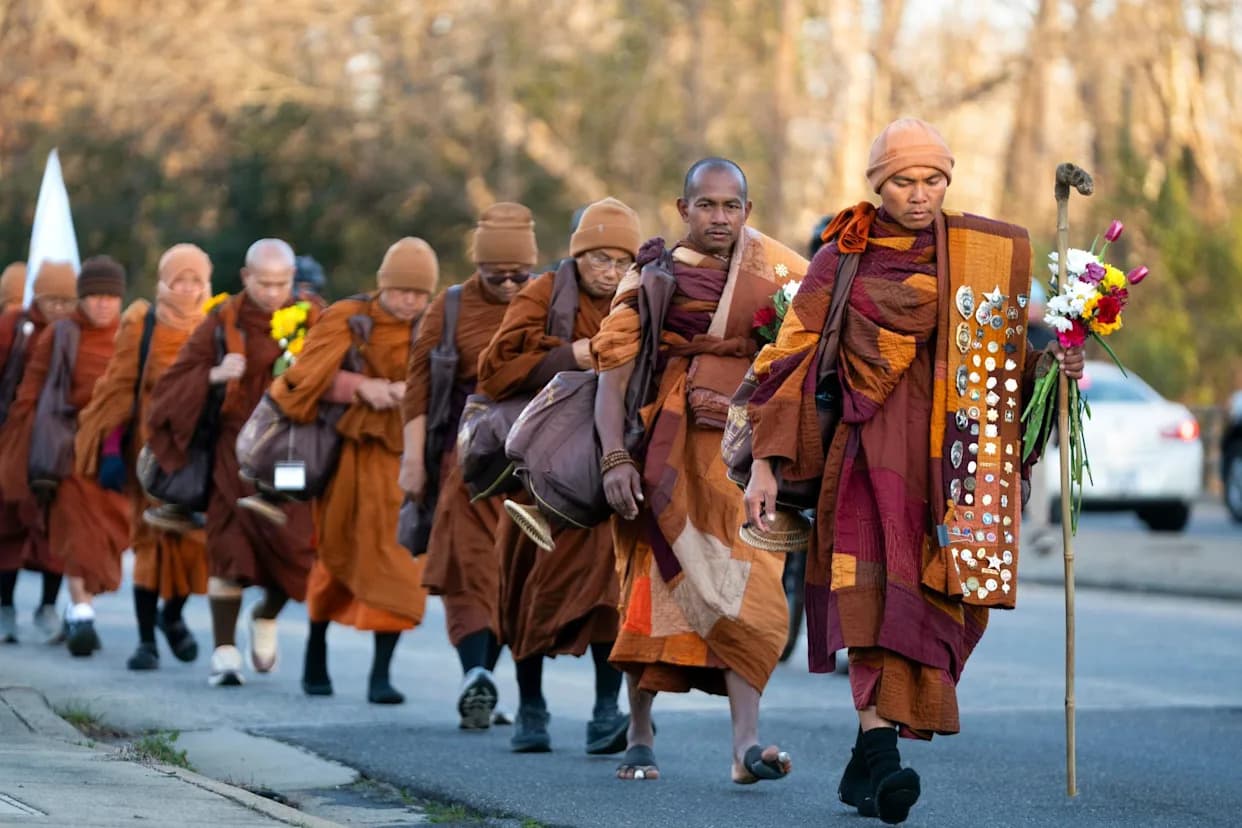
Led by Bhikkhu Pannakara, Buddhist monks promoting compassion and unity participate in a "Walk for Peace" which has taken them from Texas through eight states to Virginia and on to Washington (Aaron Mathes)(Aaron Mathes/AFP/AFP)
Buddhist monks walking from Fort Worth, Texas, to Washington, D.C., on a 2,300‑mile (3,700‑km) peace walk have become an unexpected national phenomenon, drawing thousands who line the route or join the procession for stretches of the journey.
The roughly 20‑member group has traversed eight states and pressed on through freezing temperatures and ice‑covered roads for more than 100 days, offering a message of unity, compassion, mindfulness and healing at a time of intense political division in the United States.
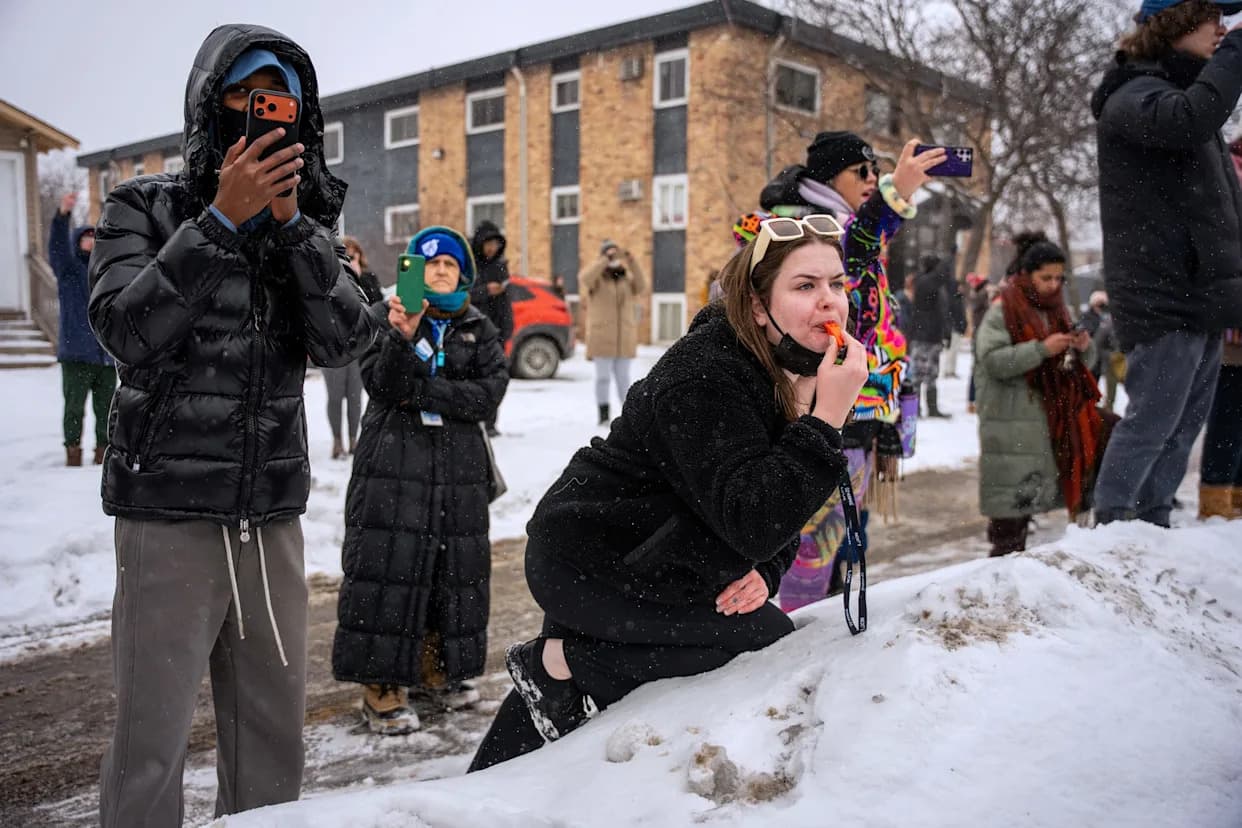
North of Richmond, Virginia, Louella Glessner waited on a mound of plowed snow with flowers in hand, hoping the robed walkers and their message might help mend America’s deep divisions. "I am a Christian, but this whole concept, I think it's great," the 62‑year‑old trust administrator told reporters ahead of the monks’ arrival at a local Buddhist temple where crowds gathered along the roadside and on the pagoda grounds.
"It's what the country needs. We need to have peace and we need to find commonality between all people."
Since setting out 101 days ago from a Buddhist center in Fort Worth, the walk has attracted unexpectedly large turnouts — an estimated 20,000 people greeted the group in Columbia, South Carolina, and roughly 10,000 filled a North Carolina baseball stadium to hear the lead monk speak. The mission’s social channels have exploded in popularity: the Facebook page now tops 2.5 million followers and videos of the walk have amassed more than 100 million views.
A beloved member of the mission has been Aloka, a former stray from India who has accompanied the monks and become a social media favorite. The walkers often stay overnight at churches, university campuses or other community spaces and have been welcomed by people from many faiths and backgrounds.
Leading the procession is Bhikkhu Pannakara, a Vietnamese monk whose saffron sash is now decorated with sheriff badges donated by counties that hosted the group and helped secure their route. In Virginia, onlookers knelt and offered fruit; police officers shook the monks' hands, and the monks presented blessing threads and small gifts to those who gathered.
Amid the peaceful scenes, the journey has not been without hardship. In a November traffic accident one monk was struck by a vehicle and later had a leg amputated; he reportedly rejoined the group in Georgia. The walkers themselves acknowledge that their march does not automatically create peace, but they say encounters along the way can awaken a quieter, inner peace in those who witness it.
"Our walking itself cannot create peace," the monks wrote in an early blog post. "But when someone encounters us... when our message touches something deep within them, when it awakens the peace that has always lived quietly in their own heart — something sacred begins to unfold."
The group is expected to arrive in Washington, D.C., on February 10. Plans include a visit to the Washington National Cathedral and a public meditation retreat the following day. Supporters say that even if the walk produces only modest change, its ability to bring people together and prompt reflection offers a rare, hopeful moment in a polarized moment in U.S. public life.
Help us improve.