Acting President Delcy Rodríguez announced a draft general amnesty that could free hundreds held on political charges, while the U.S. Embassy said all known American detainees in Venezuela have been released. The measure, to be fast-tracked by the ruling party-led National Assembly, would cover alleged political offenses from 1999 to the present but would exclude convictions for murder, drug trafficking, corruption and human rights abuses. Human rights groups and relatives welcomed the move but warned about a lack of transparency, the slow pace of releases and the potential for impunity. The announcement coincides with diplomatic engagement, including a visit by U.S. diplomat Laura Dogu and discussions about reopening a U.S. embassy.
Venezuela Proposes Broad Amnesty That Could Free Hundreds; U.S. Says All Known Americans Released
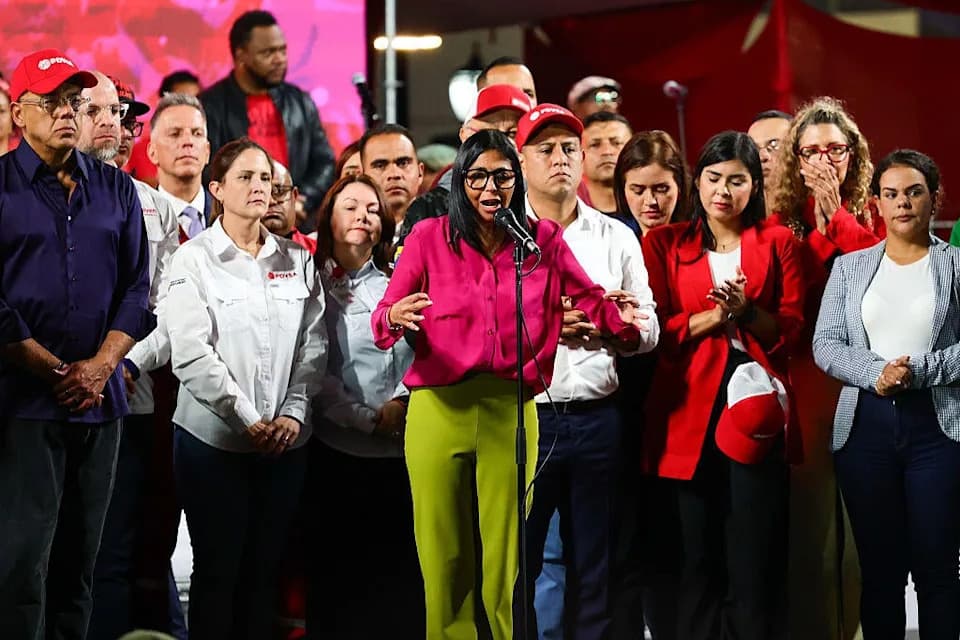
Acting Venezuelan President Delcy Rodriguez speaks at a rally after lawmakers approved a legislative initiative to strengthen the oil industry, opening the country's oil sector to privatization. Jan. 29, 2026. / Credit: Javier Campos/Picture Alliance via Getty Images(Marcos Salgado/Xinhua via Getty Images)
Acting President Delcy Rodríguez on Friday announced a draft general amnesty that could lead to the release of hundreds of people detained for political reasons, including opposition figures, journalists and human rights defenders.
Rodríguez said the ruling party-controlled National Assembly would fast-track the measure. In a pre-recorded televised address to justices, ministers, senior military officers and other officials, she said the law aims "to heal the wounds left by the political confrontation fueled by violence and extremism" and to "redirect justice and coexistence among Venezuelans."
U.S. Citizens Reportedly Freed
The announcement coincided with a statement from the U.S. Embassy in Venezuela saying that "all known U.S. citizens held in Venezuela" had been released. The embassy did not specify how many Americans were freed; Secretary of State Marco Rubio reposted the message on his X account. CBS News said it had contacted the State Department for clarification.
Earlier this month, a hostage advocate told CBS News that at least four Americans remained in custody. In July, 10 Americans were released in a prisoner exchange involving the U.S. and El Salvador; those releases were part of a swap for Venezuelans returned to El Salvador's CECOT detention center.
Scope, Exclusions and Unanswered Questions
Rodríguez said the proposed "general amnesty law" would cover the period of political violence "from 1999 to the present." She added that people convicted of murder, drug trafficking, corruption or human rights violations would be ineligible. The government did not publish the text of the bill on Friday, leaving the precise eligibility criteria and implementation timeline unclear.
Human rights groups and relatives welcomed the prospect of releases but warned about transparency, the slow pace of recent releases and the risk that an amnesty could become a blanket pardon. Alfredo Romero, president of the Venezuelan prison-rights group Foro Penal, said a general amnesty is welcome only if it is non-discriminatory, does not create impunity and helps dismantle the mechanisms of political persecution.
Prison Conditions and Helicoide
Rodríguez also announced the closure of Helicoide, a notorious Caracas detention complex long linked by independent monitors to torture and abuse. She said the site will be repurposed as a sports, social and cultural center for police and nearby communities. Critics noted she made the announcement in front of officials whom former detainees and rights groups have accused of authorizing abuses.
Relatives gathered outside Helicoide streamed Rodríguez's speech on their phones. Some wept and chanted "Freedom!" as they awaited news about loved ones. Johana Chirinos, the aunt of one detainee, said through tears: "God is good. God heard us."
Numbers and Political Context
Foro Penal estimates 711 people are detained across Venezuela for political activities; 183 of those have been sentenced. The organization has recorded 302 releases since an earlier Jan. 8 announcement promising broader releases, but rights groups have criticized what they call a "trickle" rather than a steady rollout.
The announcement comes amid diplomatic shifts: Washington has operated consular services for Venezuela out of Bogotá since closing its Caracas embassy in 2019, and U.S. officials have notified Congress about steps toward eventually reopening an embassy. Laura Dogu, the U.S. diplomat for Venezuela, traveled to Caracas to meet Venezuelan officials; Venezuela's foreign minister said the talks aim to map bilateral cooperation and resolve differences through diplomatic dialogue and international law.
"A general amnesty is welcome as long as its elements and conditions include all of civil society, without discrimination, that it does not become a cloak of impunity," said Alfredo Romero of Foro Penal.
Opposition leader María Corina Machado said the government's actions were driven by external pressure and highlighted the long detention terms faced by many political prisoners — from a month to more than two decades. As the bill moves forward, civil society groups and relatives say they will watch for the law's details and for transparent, timely implementation.
Help us improve.