The Washington Post sought court protection after FBI agents seized electronics from reporter Hannah Natanson’s Virginia home on Jan. 14 in a probe tied to Aurelio Perez-Lugones. U.S. Magistrate Judge William B. Porter ordered a temporary halt to searches and scheduled a merits hearing for early February. Nearly 500 reader comments criticized The Post for acting “too late,” faulting the paper and owner Jeff Bezos for perceived deference to political power and for failing to defend press freedoms more quickly.
WaPo Readers Slam Paper’s 'Too-Late' Response After DOJ Seized Reporter’s Devices — Judge Orders Temporary Halt
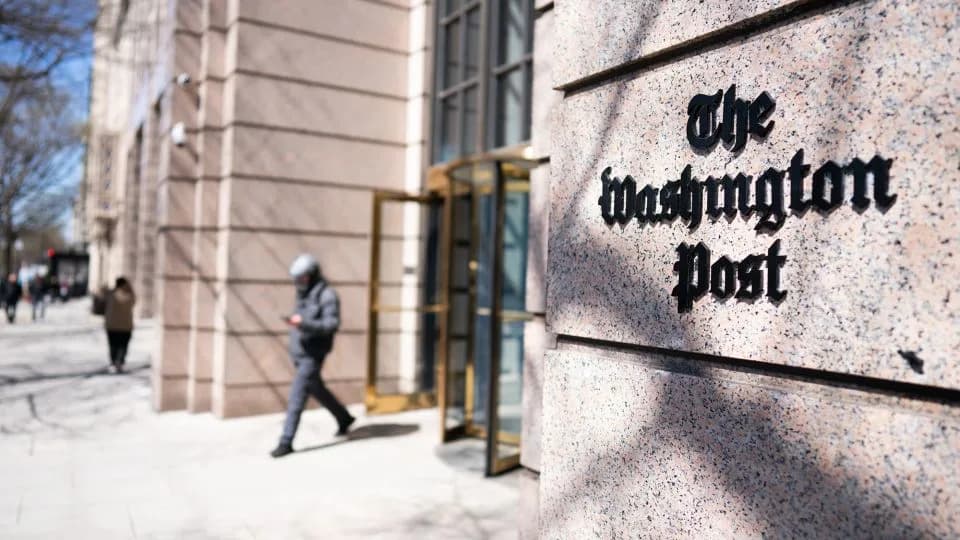
Washington Post building
The Washington Post won a temporary legal victory after its attorneys obtained a court order barring the government from searching electronic devices seized from Post reporter Hannah Natanson, but the newspaper faced sharp criticism from readers who said it acted too slowly and questioned its independence.
On Jan. 14, FBI agents executed a search warrant at Natanson’s Virginia home in a probe tied to Aurelio Perez-Lugones, a Maryland-based system administrator with Top-Secret clearance. Agents seized Natanson’s cellphone, a Garmin smartwatch and two laptops — one owned by The Washington Post and one personally belonging to the reporter.
On Wednesday, The Post filed a motion asking the court either to return the seized materials or to bar the government from examining them until the issue could be resolved in litigation. The filing called the search “extraordinary,” saying it raised First Amendment concerns and implicated federal protections for journalists.
U.S. Magistrate Judge William B. Porter granted a partial win for the newspaper, ordering that the government refrain from searching the devices while the case proceeds and scheduling a merits hearing for early February. Judge Porter said The Post and Natanson showed good cause to preserve the status quo until the court could hear full arguments.
The Post’s justice reporter Perry Stein covered the motion and the ruling. But the story’s comment thread was dominated by skepticism and criticism rather than praise: nearly 500 comments had been posted by the time this article was written, and many were from longtime readers.
Readers’ Backlash: Timing, Ownership and Independence
Readers voiced several recurring complaints: that The Post was slow to respond after the seizure, that owner Jeff Bezos had been publicly silent, and that the paper’s perceived deference to political power—especially toward former President Donald Trump—has weakened its credibility as a defender of press freedom. The Post’s AI-generated summary of the comments captured the dominant sentiment as one of “skepticism” and “disappointment.”
Sample reader reactions included pointed criticism of timing and leadership:
"Immediate emergency injunction should have been requested about 5 minutes after the seizure. This is way too late and almost performative at this point."
"Bezos’ silence is deafening."
"WaPo is pathetically late in coming to support their intrepid reporter. No surprise though, there are too many on the board who are Trump supplicants."
Other commenters urged stronger editorial leadership and stepped-up digital security practices for journalists, including better use of encryption to protect sources. Some invoked the paper’s Watergate legacy and urged a return to more aggressive accountability reporting.
What Happens Next
The temporary order prevents searches of Natanson’s devices while the court considers the legal arguments. The upcoming merits hearing will decide whether the government may review the seized electronics. For now, the devices remain in the government’s custody but are subject to a judicial stay on searches pending the hearing.
While many readers welcomed the court’s temporary protection, the prevailing tone in the comments was disappointment that The Post had not acted faster or more forcefully to shield its reporter and the newsroom’s materials.
Help us improve.