Progressive Democrats are pushing to impeach President Trump over alleged abuses, but the article argues that immediate impeachment would be politically risky. It recommends speaking out and documenting wrongdoing while prioritizing efforts to win the House or Senate and protect election integrity. Key Democrats support public accountability but counsel delaying a formal impeachment push until political conditions are more favorable.
They Have the Evidence — Why Democrats Should Delay Impeaching Trump
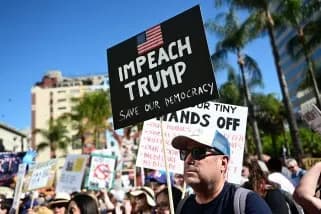
Democrats have the evidence to call for Trump’s impeachment. But that’s not what they should pursue.
Progressive Democrats escalated demands last week that party leaders open impeachment proceedings against President Donald Trump, pointing to a series of actions they describe as impeachable: an alleged unprovoked attack on Venezuela, the use of the Justice Department to target political opponents, and other abuses of presidential power.
ABC News quoted Kat Abughazaleh, an Illinois congressional candidate, urging Democratic leaders to "grow a f—ing spine," and calling impeachment "just another tool in the accountability machine." Those calls reflect a broader frustration among activists and some lawmakers over what they see as persistent threats to constitutional norms.
Why Impeachment Is Legally Plausible — But Politically Risky
There is no question that many legal scholars and critics believe the president has engaged in conduct that meets the standards for impeachment. But the existence of impeachable conduct does not by itself make immediate impeachment the most effective or prudent strategy.
Pursuing impeachment now risks becoming a political distraction that could energize the Republican base, divert resources from competitive midterm races, and leave efforts to secure fair elections and reclaim congressional majorities hamstrung. Even if a removal effort succeeded and resulted in a successor the critics dislike, it would not, by itself, remedy deeper institutional or civic challenges facing the country.
Speak Out — But Prioritize Strategy
Not pursuing a formal impeachment inquiry today should not mean silence. Democrats should continue to document abuses, communicate why those actions are unacceptable, and hold the administration publicly accountable. Public denunciation and investigations can help prevent normalization of abuses while preserving political capital for the most consequential fights.
Several prominent Democrats have offered versions of this approach. Rep. Maxine Waters acknowledged that impeachment may be warranted but questioned its feasibility under current political conditions. Sen. Chris Murphy said the president may have committed more impeachable acts in a hypothetical second term than in his first, yet advised waiting until after the 2026 elections.
Moves From Within the Party
Not all Democrats agree. Rep. Shri Thanedar introduced seven articles of impeachment in April, alleging violations from obstruction of justice to encroachments on Congress’s appropriations power, but his resolution attracted only one co-sponsor. Rep. Al Green later introduced a separate resolution accusing the president of abusing presidential power and inciting violence; when Green attempted to force a floor vote, nearly two dozen Democrats voted against the motion and 47 recorded "present." These votes underscored limited appetite in the caucus for a sweeping impeachment push at this moment.
Practical Constraints
Practical politics matter. Any impeachment inquiry launched now would almost certainly be shaped or obstructed by a Republican-controlled House Judiciary Committee, reducing chances of a successful or decisive outcome. That reality strengthens the argument for strategic restraint: safeguarding the possibility of effective action later by focusing today on winning the House and/or Senate and protecting election integrity.
In short: The president may have committed impeachable offenses, but prudence and strategy suggest Democrats should speak out and preserve evidence while prioritizing electoral strategies that can actually check presidential power.
As Alexander Hamilton advised, sometimes it is preferable to "incur the negative inconveniences of delay" rather than suffer the "positive mischiefs of injudicious expedients." That counsel — balancing principle with political calculation — is the article's central takeaway.
Help us improve.