Meteorologists warn a stretched polar vortex — amplified by warmer Arctic waters and record-low sea ice — will drive a major winter storm across much of the United States starting Friday. The event could bring prolonged subzero temperatures, heavy snow and widespread freezing rain. About 230 million people may see temperatures at or below 20°F, and roughly 150 million could be affected by snow or ice. Officials urge preparation for possible power outages, tree damage and extended disruptions into early February.
Major Winter Blast Expected as Stretched Polar Vortex Meets Moisture, Fueled by Low Arctic Sea Ice
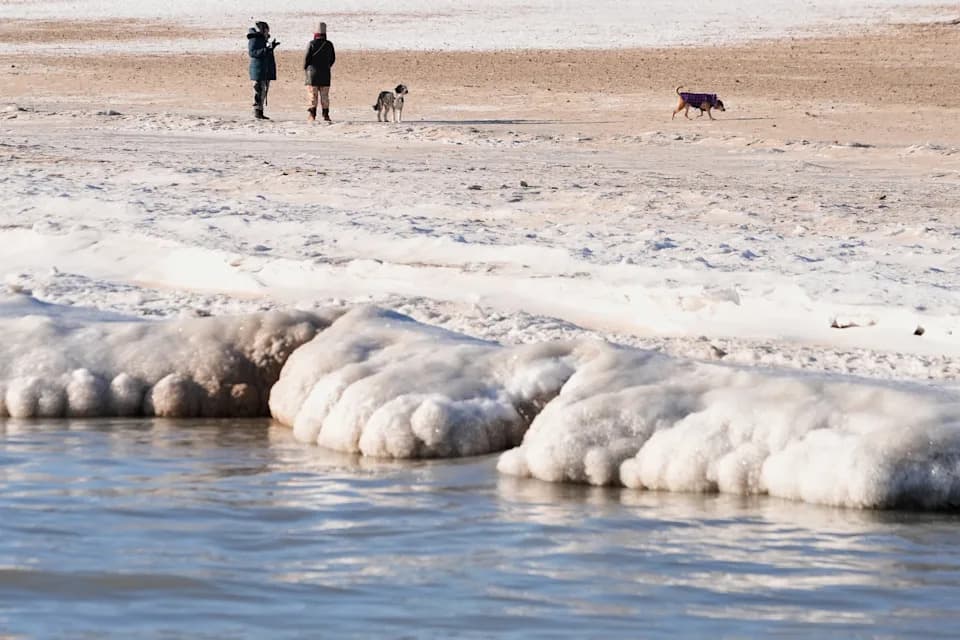
Ice forms along the Lake Michigan shore as People walk their dogs on a beach, Tuesday, Jan. 20, 2026, in Chicago. (AP Photo/Kiichiro Sato)(ASSOCIATED PRESS)
Warm Arctic waters and unusually low sea ice are helping to elongate the polar vortex, meteorologists say, setting the stage for a major winter storm across much of the United States beginning Friday. The system will bring prolonged subzero temperatures, heavy snowfall, and dangerous ice that could topple power lines and damage trees.
What To Expect
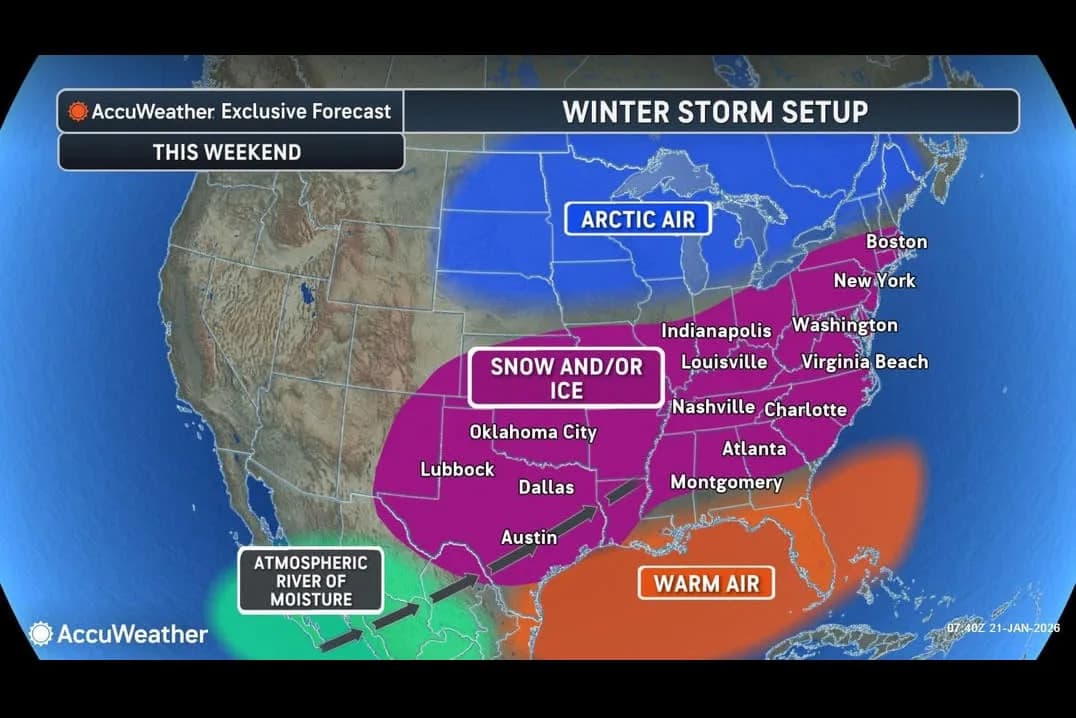
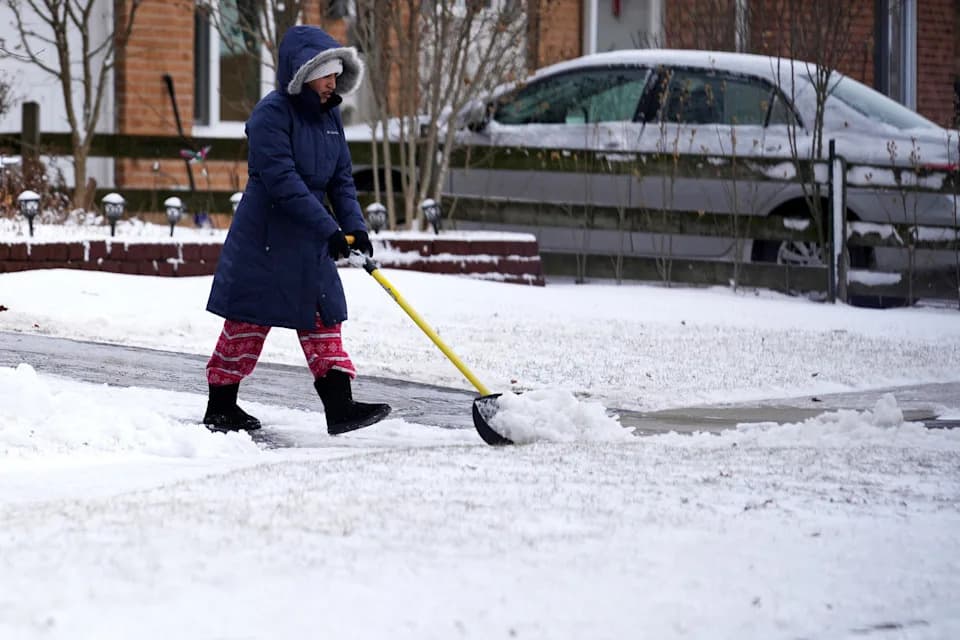
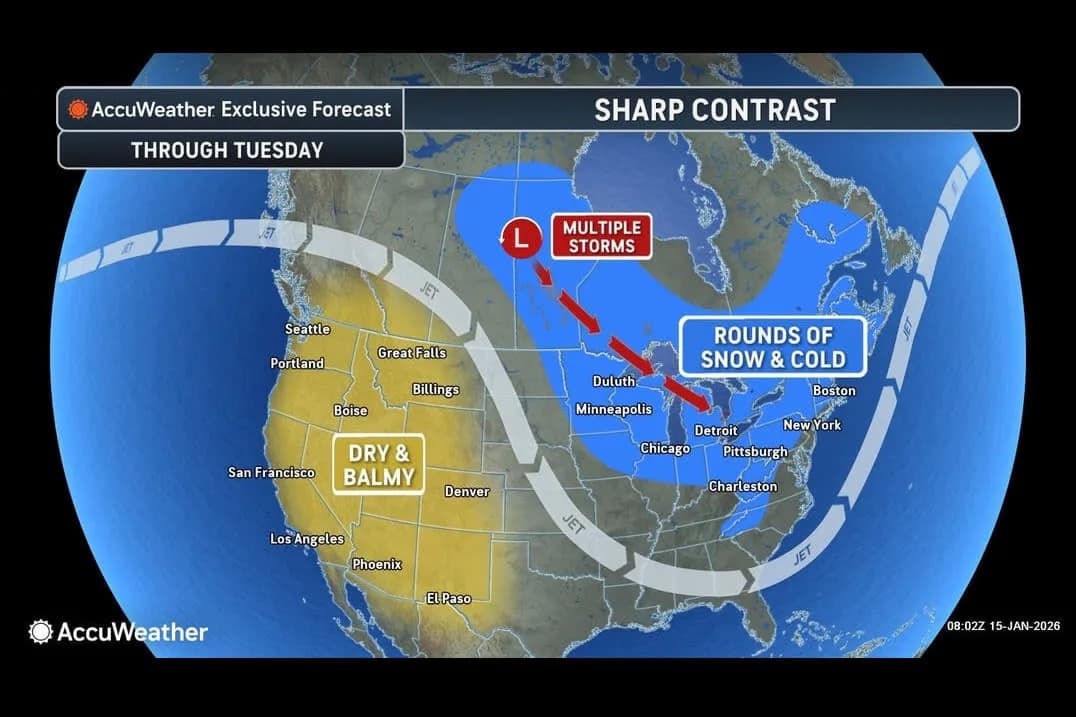
Forecast models show the storm stretching from New Mexico to New England and into parts of the Deep South. The National Weather Service estimates about 230 million people may see temperatures at or below 20°F (-7°C), and roughly 150 million could be affected by snow or ice, with many areas experiencing both. Meteorologists warn the cold and wintry conditions could persist through late January and into early February, meaning accumulated snow and ice will take a long time to melt.
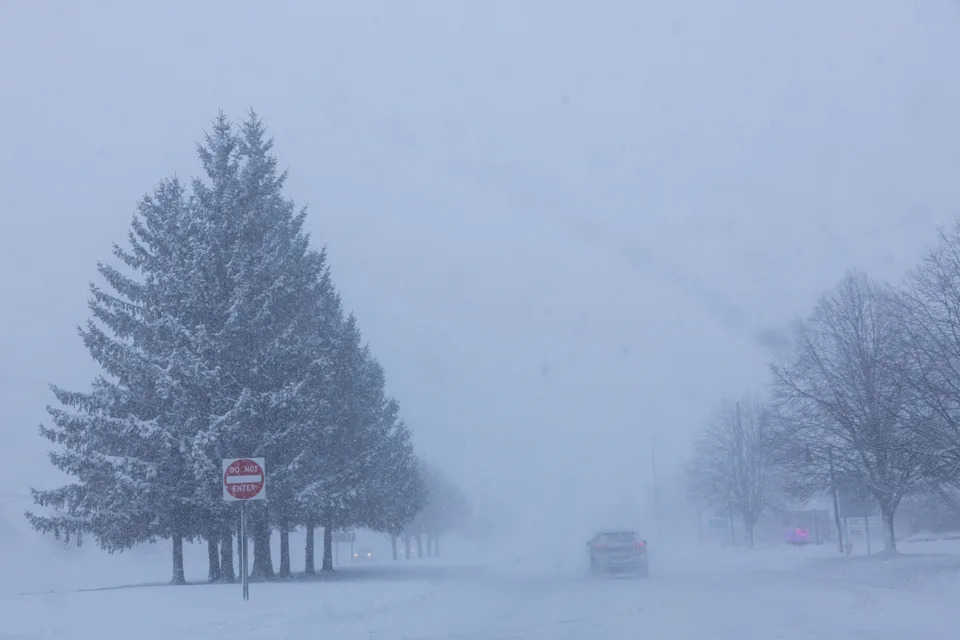
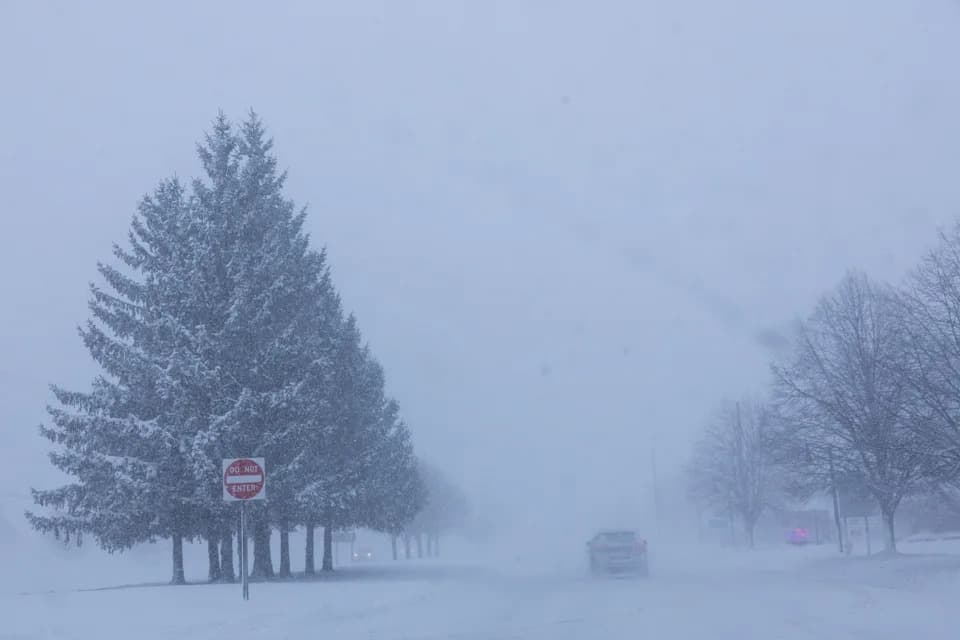
Vehicles are driven through whiteout conditions along Lake Michigan Drive during a winter storm warning in Ottawa County, Mich. on Monday, Jan. 19, 2026. (Joel Bissell/Kalamazoo Gazette via AP)(ASSOCIATED PRESS)
“I think people are underestimating just how bad it’s going to be,” said former NOAA chief scientist Ryan Maue, now a private meteorologist.
How the Polar Vortex Is Stretching
The polar vortex is a large area of cold air that typically stays over northern Canada and Alaska. This time, a strong upper-atmosphere wave — linked to a relatively ice-free region of the Arctic and heavy snow across Siberia — is elongating the vortex and pushing Arctic air southward into the continental U.S. That cold air will collide with moisture streaming off the Pacific near California and from the Gulf of Mexico, producing widespread snow and dangerous freezing rain.
Arctic Links
Scientists point to a warming Arctic and reduced sea ice — particularly in the Barents and Kara seas — as factors that help create the wave patterns which can stretch the polar vortex. Judah Cohen, an MIT research scientist, and others have documented an increase in stretched vortex events in recent years and link those events to severe winter outbreaks in the central and eastern U.S. Arctic sea ice extent is currently at a record low for this time of year, according to the National Snow and Ice Data Center.

A large wave from Lake Michigan sends ice balls into the air as it crashes into the South Pierhead Outer Light at Grand Haven State Park in Grand Haven, Mich., Monday, Jan. 19, 2026. (Joel Bissell/Kalamazoo Gazette via AP)(ASSOCIATED PRESS)
Regions Most At Risk
Meteorologists expect the center of the stretched vortex to be near Duluth, Minnesota, by Friday morning, ushering in "long-lasting brutal cold." Temperatures in parts of the North and Midwest could plunge to roughly -25°F to -30°F (-32°C to -34°C). The average low across the contiguous U.S. could dip to about 11°F–12°F (-12°C to -11°C) for several days.
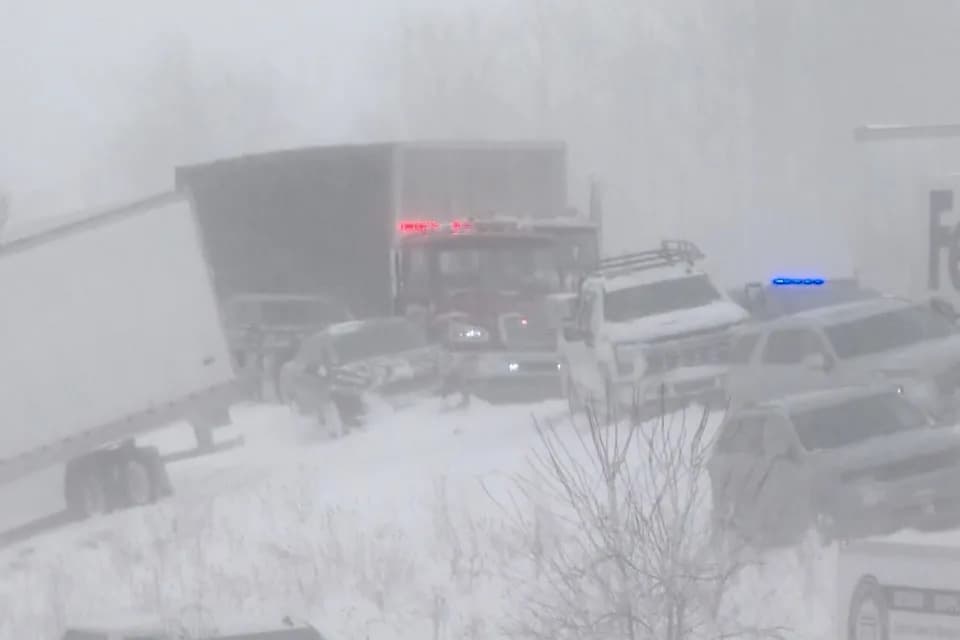
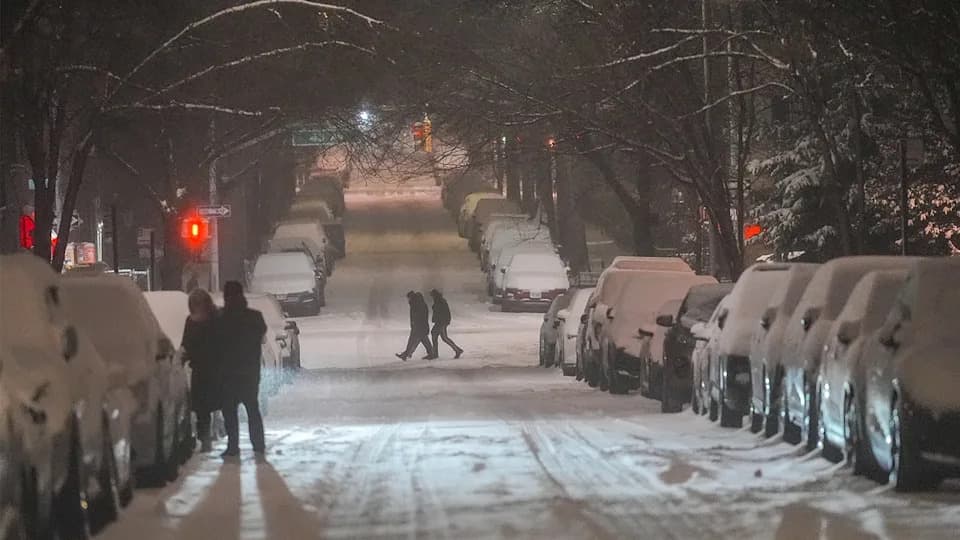
Freezing rain and ice accumulation pose a particular threat from the southern Plains through the mid-South and into the Carolinas, raising the risk of significant power outages and tree damage. Other areas at risk for heavy snowfall include the Ozarks, the Tennessee and Ohio valleys, the central Appalachians, the mid-Atlantic and parts of the Northeast. In the mid-Atlantic, including the Washington, D.C., region, forecasters say there is a chance of multiple large snow events within the next two weeks.

Storm clouds that had brought brief snow flurries begin to clear, Tuesday, Jan. 20, 2026, over Portland, Maine. (AP Photo/Robert F. Bukaty)(ASSOCIATED PRESS)
“We’re looking at the potential for impactful ice accumulation — the kind that could cause widespread power outages and significant tree damage,” said Zack Taylor of the National Weather Service’s Weather Prediction Center.
Preparation and Outlook
Officials urge residents in affected areas to prepare now: secure generators, check heating systems, stock emergency supplies, and be ready for prolonged outages or travel disruptions. Stay tuned to local National Weather Service updates for watches and warnings as forecasts refine storm tracks and precipitation types.
The Associated Press’ climate and environmental coverage receives financial support from multiple private foundations. AP is solely responsible for all content. Find AP’s standards for working with philanthropies, a list of supporters and funded coverage areas at AP.org.
Help us improve.