George Conway’s run in NY‑12 highlights a gap in Democratic strategy. While Conway’s anti‑Trump stance is credible and consequential, his long record of conservative legal positions raises questions about whether opposition to Trump alone provides voters with a substantive agenda. Democrats must decide whether to keep elevating elite Never‑Trump figures or to champion a clear, material policy platform that addresses everyday needs.
George Conway’s NY-12 Bid Shows Anti‑Trumpism Isn’t A Substitute For A Democratic Agenda
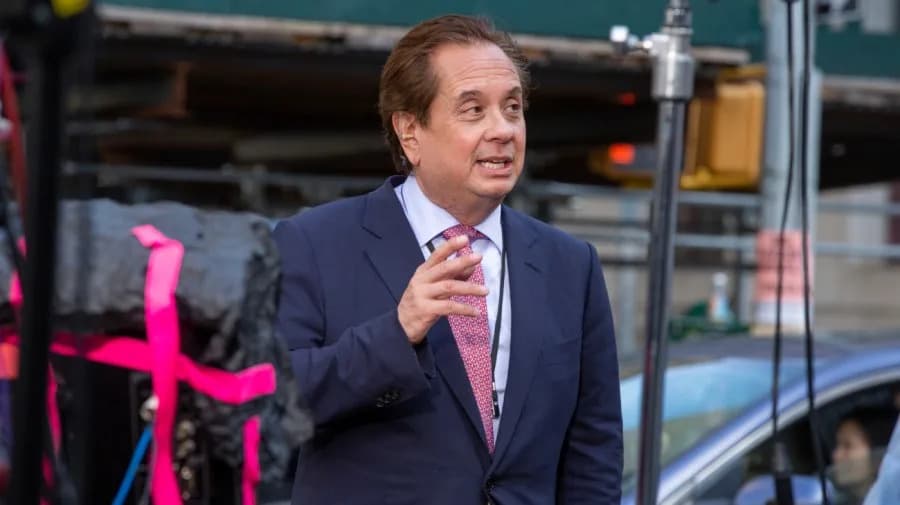
George Conway’s decision to run for Congress as a Democrat in New York’s 12th District exposes a political reality Democrats have largely avoided for years: opposing Donald Trump, while important, is not itself a comprehensive political platform.
Anti‑Trump Credentials But A Conservative Record
Conway’s anti‑Trump bona fides are clear. He co‑founded the Lincoln Project, became a prominent voice in anti‑Trump media, and has spent years denouncing Trump for corruption, authoritarian tendencies, and attacks on the rule of law. Those critiques matter—and they helped form a broad, cross‑ideological front against threats to democratic norms.
But Conway has not disavowed the conservative legal project that produced many of the policies and institutions Trump leveraged. For most of his career he championed conservative priorities: deregulation, skepticism of labor protections, limits on administrative governance, expansive executive power when politically convenient, and a judiciary designed to constrain redistribution and social policymaking. He emerged from the same Federalist Society ecosystem that reshaped the courts—courts that now play a decisive role in American governance. That record does not vanish because he broke with Trump.
Personal Breaks, Institutional Continuities
Conway’s opposition to Trump is sincere and, in part, personal: Trump publicly mocked him and strained family ties. His critique is driven by institutional outrage and personal rupture—but not necessarily by a fundamental reassessment of the economic and legal distribution of power he long defended. He has also not fully explained why he once contemplated a senior role at the Department of Justice during Trump’s first term.
The Limits Of Never‑Trump Republicanism
The central limitation of the Never‑Trump Republican cohort is this: they remain Republicans. Their objections to Trump are often about breaches of elite norms—how power is wielded and the erosion of professional standards—rather than a rejection of the underlying conservative policy project. That partial critique can be politically useful, but it is incomplete.
Democrats benefited from Never‑Trump voices in 2020 and those figures continue to highlight genuine dangers to constitutional governance. Figures like Liz Cheney and Adam Kinzinger played consequential roles in exposing those threats. The problem arises when Democratic strategists and voters start treating Never‑Trumpism as a substitute for a distinct Democratic policy platform instead of as a limited tactical alliance.
Why Conway’s Candidacy Matters
Conway is not running in a competitive swing district to persuade conservative voters or to build a cross‑partisan coalition; he launched in one of the nation’s safest Democratic districts and entered a Democratic primary despite a lifetime of conservative positions. In his 2 minute 23 second launch video, he devoted roughly three seconds to the “basic economic needs of all New Yorkers” and spent the rest attacking Trump. That choice underscores the risk: elevating anti‑Trump elites can crowd out discussion of concrete economic and social policies that matter to voters.
Many high‑profile former Republicans have parlayed their anti‑Trump stance into celebrity and influence. Miles Taylor, the former anonymous New York Times op‑ed author and Never‑Trumper, praised Conway’s candidacy as “a no‑brainer,” writing, “there is no one in this race who will stick it harder to Trump than George.” But praise for attacking Trump is not the same as offering a program to address housing, wages, healthcare, climate resilience, and other day‑to‑day concerns of constituents.
A Clear Choice For Democrats
Democrats face a simple but urgent choice: continue to elevate elite defectors whose primary credential is opposition to a single figure, or double down on articulate, material policy agendas that respond to voters’ economic and social needs. The 2024 cycle showed the limits of relying on status and anti‑Trump credibility alone; the more successful Democratic campaigns in 2025 were those that emphasized concrete policy commitments.
Kaivan Shroff was a 2024 Democratic National Convention presidential delegate and worked as a digital organizer on Hillary Clinton’s 2016 campaign. He is an attorney and senior adviser to the Institute for Education, a Washington nonprofit.
Copyright 2026 Nexstar Media, Inc. All rights reserved. This material may not be published, broadcast, rewritten, or redistributed.
Help us improve.