
The United States’ focus on Greenland is driven by two linked forces: a more unilateral U.S. foreign-policy stance under President Trump and an Arctic transformed by climate change. Melting sea ice and Greenland’s shrinking ice sheet—estimated at about 30 million tons of ice melting per hour during peak periods (NSIDC)—are revealing oil, gas and critical minerals. While Washington frames interest as a national-security issue, Greenland is an autonomous Danish territory with existing U.S. military access and ongoing international agreements over its resources.
Why the U.S. Is Eyeing Greenland: Politics, Climate and Strategic Resources

These two things are behind the U.S. interest in Greenland
Two central forces explain growing U.S. interest in Greenland: political leadership that favors unilateral action, and a rapidly changing Arctic made accessible by climate change. Together they sharpen strategic competition over territory and resources formerly locked under ice.
Political Driver: A More Assertive U.S. Stance
The most immediate reason for renewed American attention is political. Under President Donald Trump the U.S. has shown a greater willingness to pursue bold, unilateral moves in foreign policy. Administration officials have framed Greenland as a matter of national security, arguing that control or close cooperation over the island could help deter rivals in the Arctic. White House spokespeople have described Greenland as a U.S. security priority.
Environmental Driver: The Arctic Is Opening
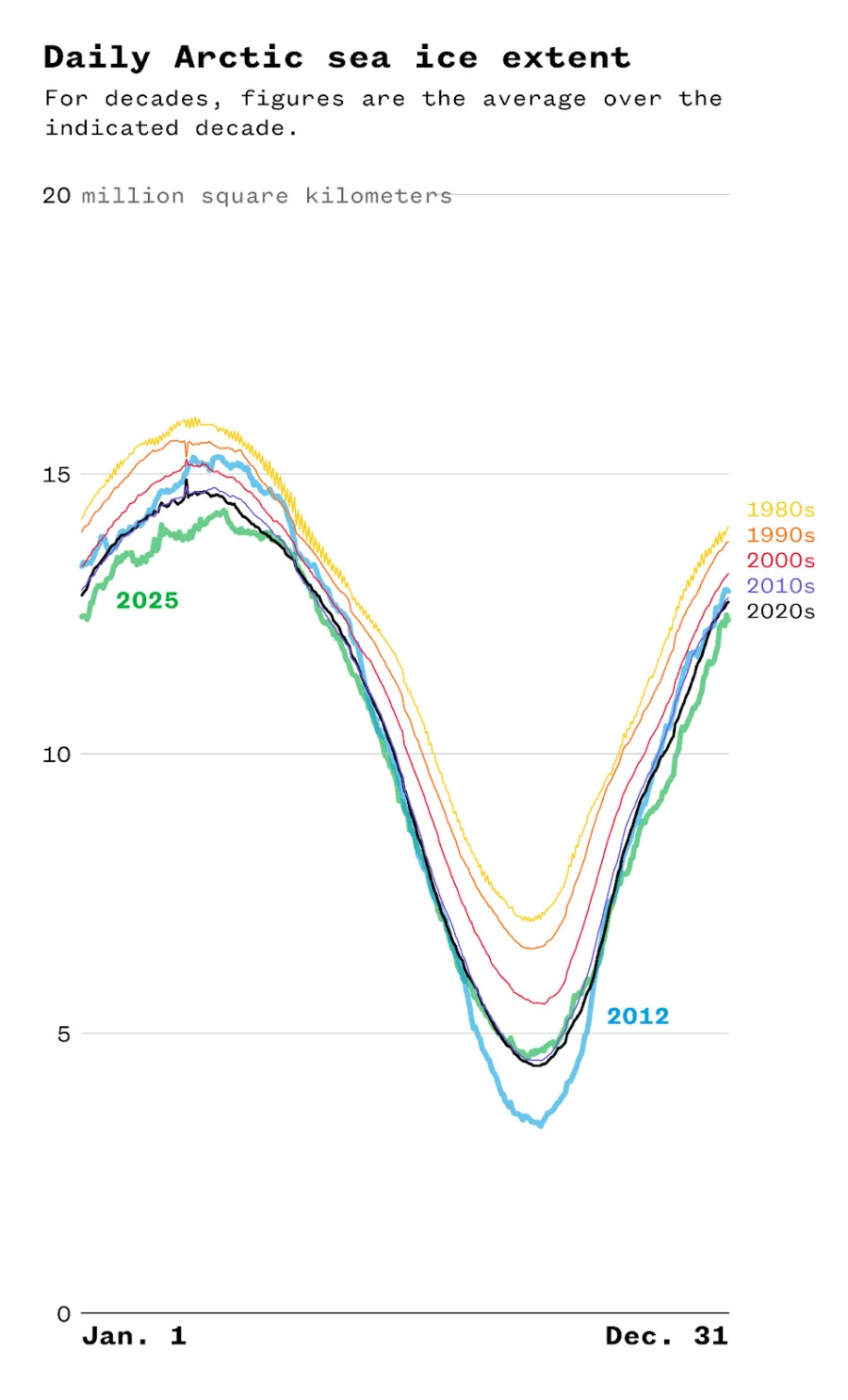
The second, and equally powerful, driver is climate change. Arctic temperatures are rising faster than the global average, shrinking both seasonal sea ice and the massive Greenland ice sheet. That trend has strategic consequences: new shipping routes, easier access for exploration, and the potential to extract resources that were previously unreachable.
Expert Warning
“The Arctic is receding,” Major General Francis G. Mahon told a November 2012 strategic roundtable. He warned planners that a newly accessible northern coast would create fresh security challenges, including disputes over fishing and mineral rights.
Evidence of Change
Satellite records show a steady decline in summer sea ice extent decade by decade since the 1980s. According to the National Snow and Ice Data Center (NSIDC), the lowest early-January Arctic sea-ice extent on record occurred in 2025. Greenland’s ice sheet is also melting at an accelerating pace: NSIDC estimates indicate that roughly 30 million tons of ice melt every hour during peak melt periods, exposing terrain and potential deposits.
Resources Under the Ice
What lies beneath Greenland’s ice remains partly uncertain, but research and prospecting point to significant deposits of oil, natural gas and critical minerals, including rare-earth elements and metals such as nickel, cobalt, copper, gold and zinc. As Columbia University’s Lamont-Doherty Earth Observatory noted, melting ice is revealing land that has been inaccessible for thousands of years.
Practical Constraints and Legal Context
Despite its resource potential, Greenland faces major logistical hurdles: limited infrastructure, harsh weather, and high extraction costs. Some of these barriers may ease as the climate warms, but extraction will still be technologically and economically challenging.
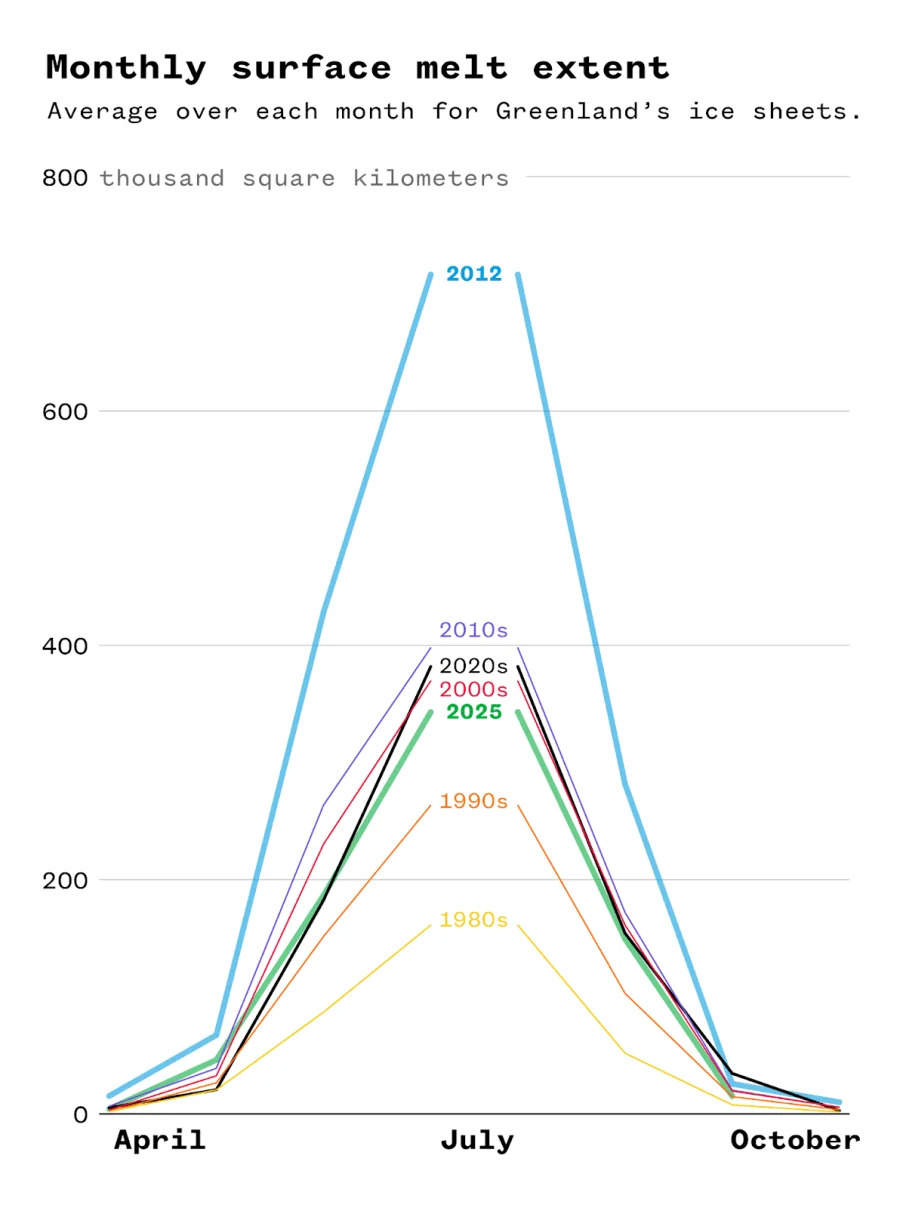
Politically and legally, Greenland is an autonomous territory within the Kingdom of Denmark. Denmark is a NATO ally of the United States, and a 1951 defense agreement already grants broad U.S. access to Greenlandic facilities. Denmark’s prime minister has warned that any U.S. move to acquire Greenland could strain NATO relations.
International Competition
Greenland’s resources are already the subject of international interest and arrangements involving the European Union and other partners. Control of or privileged access to Greenland would not only be a bilateral matter between the U.S. and Denmark; it would have broader geopolitical and environmental implications.
What This Means
U.S. interest in Greenland is not solely about territory—it is shaped by the intersection of political will and environmental change. A warming Arctic makes strategic and economic questions more urgent, while political calculations determine how those questions are pursued. Any policy toward Greenland will need to balance security aims, the rights and autonomy of Greenlanders, environmental risks, and the diplomatic consequences for NATO and other partners.
Help us improve.


