
The Rwanda‑backed M23 held a symbolic funeral in Goma for 22 people killed in a Jan. 2 drone strike in Masisi, North Kivu. M23 blames FARDC and allied forces and says all victims were civilians, but at least one independent researcher disputes that account and suggests some of the dead may have been combatants. Masisi General Hospital reported 47 wounded and 14 still hospitalized. The incident comes amid ongoing negotiations and a broader conflict that has displaced millions.
M23 Holds Symbolic Funeral in Goma After Jan. 2 Drone Strike; Civilian Toll Disputed

The families of victims mourn at the funeral service for civilians killed in a drone strike in Goma, Democratic Republic of Congo, Thursday, Jan. 8, 2026. (AP Photo/Moses Sawasawa)(ASSOCIATED PRESS)
GOMA, Democratic Republic of Congo — The Rwanda‑backed M23 rebel movement staged a symbolic burial in Goma on Thursday for 22 people who died in a drone strike in Masisi territory on Jan. 2, an event that has drawn conflicting accounts over who was targeted and whether the victims were civilians.
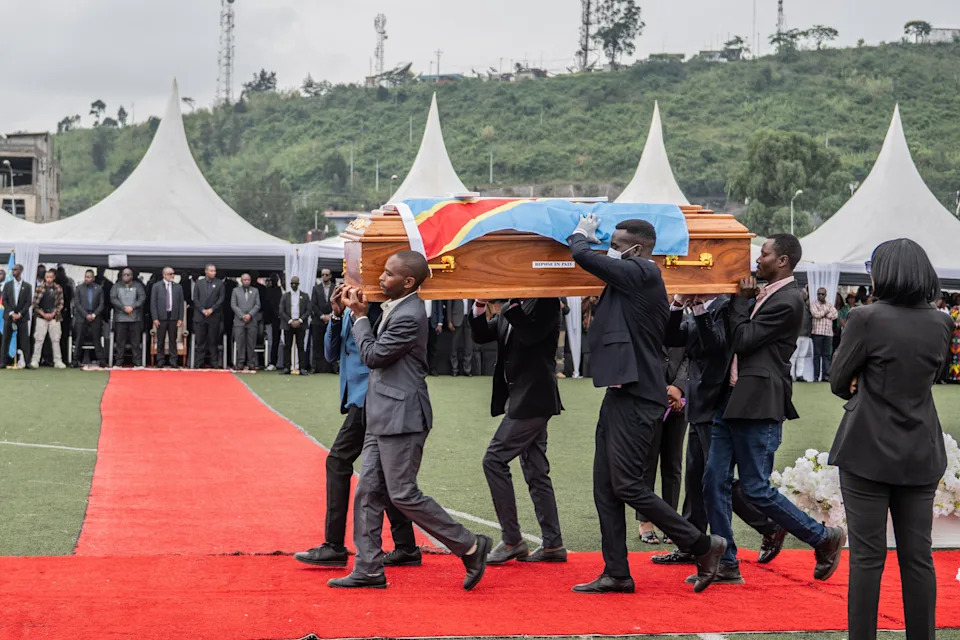
People carry the coffin of a victim of a drone strike in Goma, Democratic Republic of Congo, Thursday Jan. 8, 2026. (AP Photo/Moses Sawasawa)(ASSOCIATED PRESS)
What Happened
M23 says the attacks — carried out with so‑called "kamikaze" drones — hit several localities in Masisi and were launched by the Armed Forces of the Democratic Republic of Congo (FARDC) and allied forces. The rebel group maintains that all 22 victims were civilians. The FARDC has not publicly responded to the accusation.
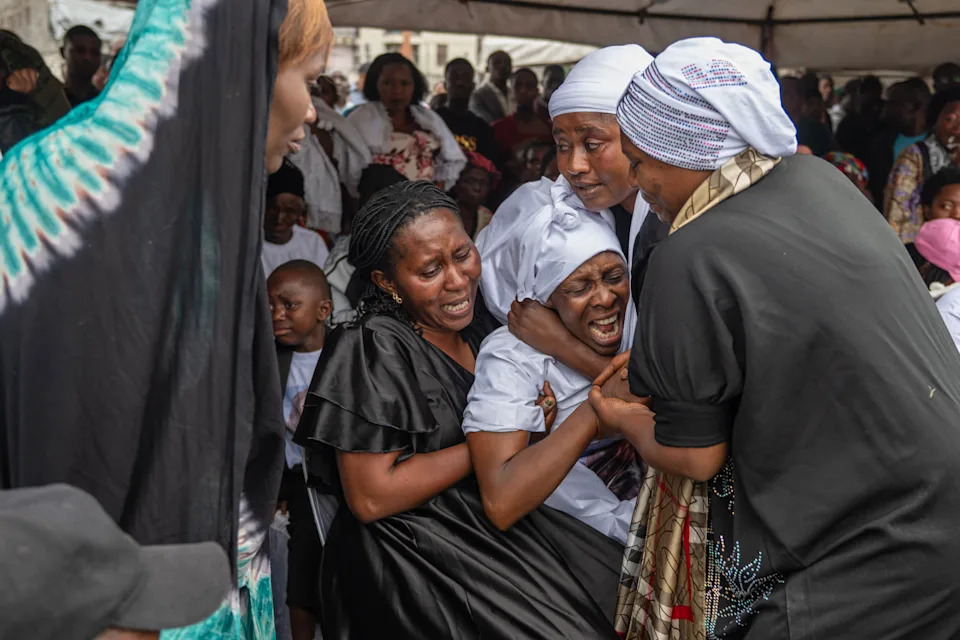
The families of victims mourn at the funeral service for civilians killed in a drone strike in Goma, Democratic Republic of Congo, Thursday, Jan. 8, 2026. (AP Photo/Moses Sawasawa)(ASSOCIATED PRESS)
Claims and Counterclaims
At the ceremony, M23 officials and family members presented coffins and accused government forces and their allies of responsibility. Patrick Muyaya, spokesperson for the Congolese government, denounced the ceremony on X as "the height of indecency and inhumanity," and blamed Rwanda and M23 for atrocities in the region.
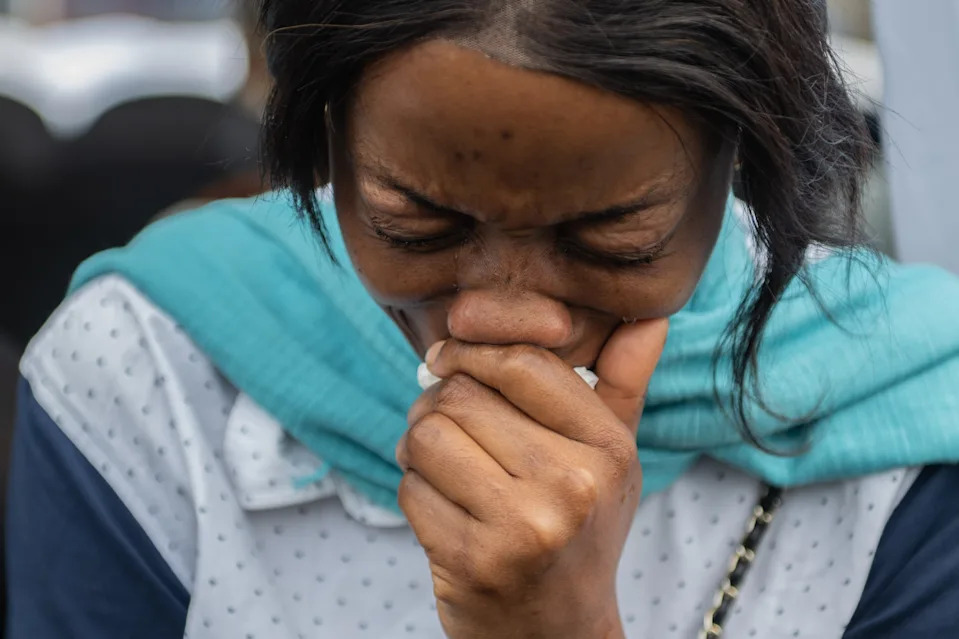
A woman mourns at the symbolic funeral service for civilians killed in a drone strike in Goma, Democratic Republic of Congo, Thursday, Jan. 8, 2026. (AP Photo/ Moses Sawasawa)(ASSOCIATED PRESS)
"The mass graves, the bodies abandoned by the roadside, the villages emptied of their inhabitants. No ceremony, no staged event, no fabricated narrative can erase the reality of these crimes, nor absolve the father #Rwanda and the #M23 who planned, ordered, and executed them." — Patrick Muyaya, Congolese government spokesperson
Independent observers have questioned aspects of M23's account. Stewart Muhindo, a researcher at the Kinshasa‑based Ebuteli research centre, said the figure of 22 civilian victims "is greatly exaggerated," suggesting some coffins may contain combatants killed in fighting and that civilian fatalities could be lower according to local sources.
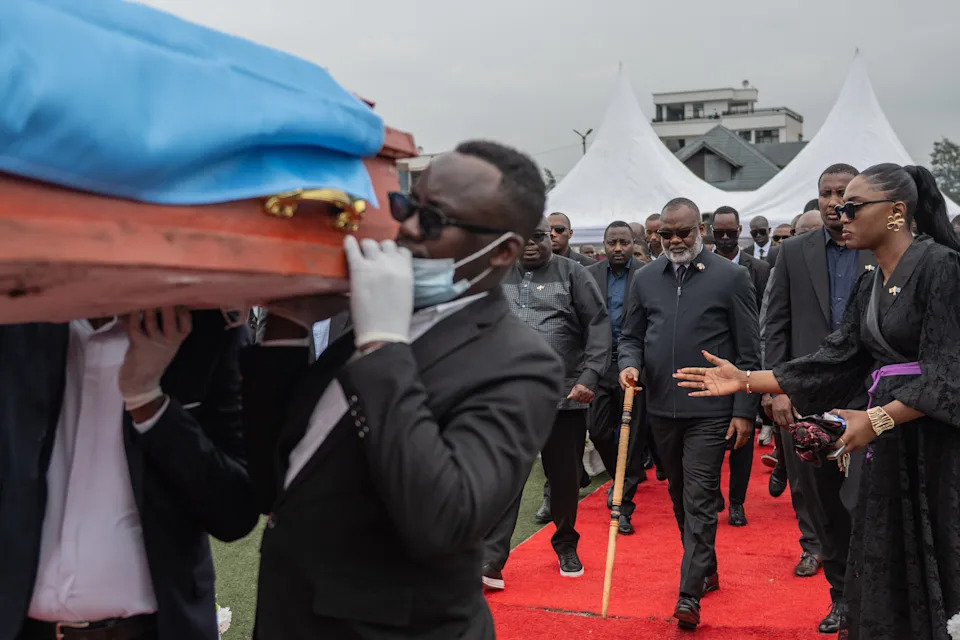
Corneille Nanga, coordinator of the AFC/M23, center, attends the funeral service for civilians killed in a drone strike in Goma, Democratic Republic of Congo, Thursday, Jan. 8, 2026. (AP Photo/Moses Sawasawa)(ASSOCIATED PRESS)
Casualties and Medical Response
Théophile Kubuya Hangi, medical director of Masisi General Hospital, told the AP the hospital received 47 wounded from the blasts and that 22 died from their injuries; 14 remained hospitalized and receiving care. M23 said an additional three people were buried where they died and that dozens were injured overall.
Officials noted that bodies transferred to Goma were those from locations reachable by road; in more remote or insecure localities, victims were reportedly buried on site.
At the Ceremony
The ceremony took place at Unity Stadium in Goma and was attended by M23 administration officials, religious representatives and hundreds of relatives. Grieving family members approached the coffins but declined media interviews. Erasto Musanga, whom M23 has named governor of North Kivu, accused President Félix Tshisekedi of responsibility for the violence and threatened to pursue justice through M23’s own judicial structures.
Wider Context
The episode comes amid ongoing negotiations between M23 and the Congolese government and broader regional tensions. UN, U.S. and Congolese experts have accused Rwanda of backing M23; the U.N. estimates the rebel force has grown to roughly 6,500 fighters. More than 100 armed groups contest control of mineral‑rich eastern Congo, a conflict that the U.N. refugee agency says has displaced more than 7 million people.
Despite a U.S.‑brokered agreement between Kinshasa and Kigali and continuing talks with rebels, fighting persists across eastern Congo and continues to produce repeated civilian and military casualties.
Help us improve.


