The DRC government has dismissed M23’s promise to leave Uvira as a staged "distraction," accusing the group of seeking to shield Rwanda from U.S. measures. M23 says it will withdraw only if its security conditions — including deployment of a neutral force — are met. The militia’s seizure of Uvira last week has undermined a recent U.S.-brokered peace deal; locals report a tentative return to markets even as fighting continues across North and South Kivu.
DRC Calls M23’s Pledge To Leave Uvira A ‘Distraction’ — Fighters Still Hold Town

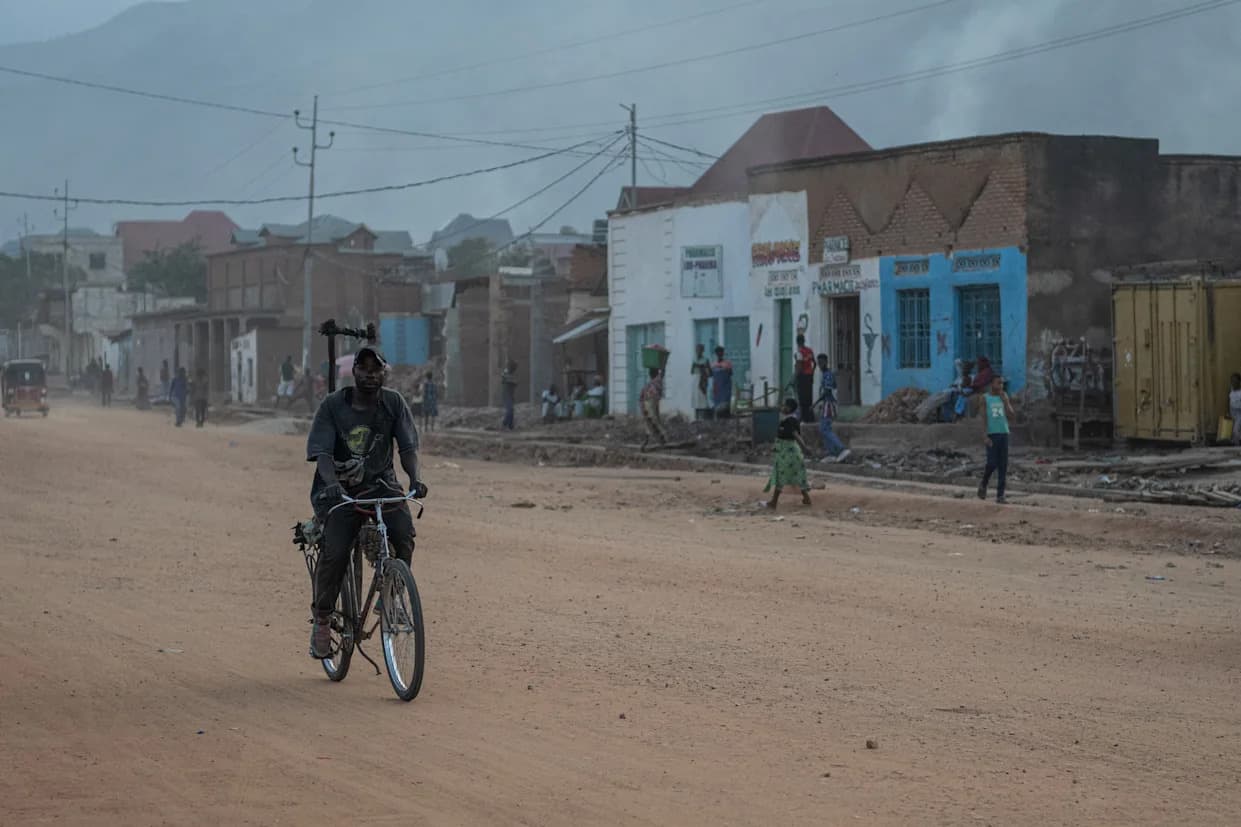
Congolese civilians walk at Maendeleo market as calm returns after clashes between members of the Alliance Fleuve Congo (AFC) and the M23 Movement, who took control of Uvira from the Armed Forces of the Democratic Republic of the Congo (FARDC), in Uvira on the shores of Lake Tanganyika, South Kivu province, Democratic Republic of the Congo, December 15, 2025 [Reuters]
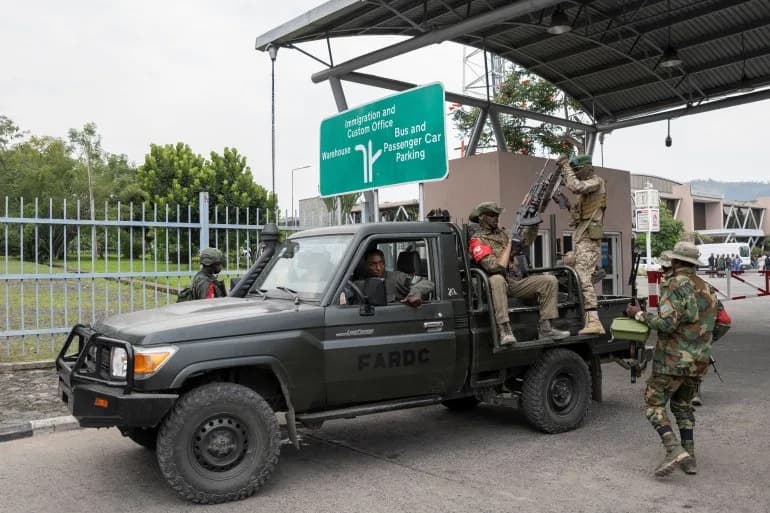
The Democratic Republic of Congo (DRC) government has dismissed the M23 rebel group's pledge to withdraw from the strategic town of Uvira as a deliberate "distraction", after the militia seized the town last week and remained visible around government offices and main roads.
Government spokesman Patrick Muyaya told Reuters the announcement — presented as a response to a request from U.S. mediators — was "a non-event, a diversion, a distraction." He accused the group of trying to deflect action against Rwanda:
"The son, M23, offers itself in sacrifice before the US mediator to protect the father, Rwanda."
The Rwanda-backed militia captured Uvira in South Kivu province near the border with Burundi and Lake Tanganyika, jeopardising a fragile, U.S.-brokered peace agreement between Kinshasa and Kigali signed days earlier. Washington has warned of consequences: U.S. Senator Marco Rubio described the seizure as "a clear violation" of the deal and said the United States would "take action to ensure promises made to the president are kept." (Rwanda denies backing M23.)
Earlier this week, Corneille Nangaa, leader of the Alliance Fleuve Congo coalition that includes M23, said fighters would withdraw from the border-area town as a "unilateral trust-building measure" at the request of U.S. mediators. Despite that pledge, M23 fighters remained present on Wednesday and said conditions must be met before any pullout.
M23 spokesman Willy Ngoma told Reuters:
"We are ready to leave, but our conditions have to be reviewed."The group insists that a neutral security force be deployed to Uvira to prevent a security vacuum that, it says, has previously led to renewed violence after withdrawals.
Jean Jacques Purusi, governor of South Kivu province, told Reuters M23 fighters "do not want to leave." Reporting from Uvira, Al Jazeera correspondent Alain Uaykani said a fragile sense of normality was returning after days of intense fighting: markets reopening and traffic slowly resuming, even as many residents remain wary.
Local resident Feza Mariam told reporters: "We don't know anything about the political process that they're talking about. The only thing we need is peace." Another resident, Eliza Mapendo, said commerce was restarting but warned the calm was fragile: "They could attack without any reason and take your business away."
DRC army spokesman Sylvain Ekenge told Reuters that fighting continues daily across the conflict-hit east, where M23 made rapid advances earlier this year. "There isn't a day without fighting in North Kivu and South Kivu," he said.
Why It Matters
The standoff in Uvira undermines recent diplomatic efforts to stabilise relations between Kinshasa and Kigali and raises the risk of wider regional escalation. The insistence by M23 on a neutral security force highlights the challenges of implementing withdrawals where trust and local security guarantees are weak.
Help us improve.