State Senate Majority Leader Andrea Stewart‑Cusins endorsed the "New York for All" bill, pushing to expand sanctuary protections and end 287(g) agreements that deputize local officers to work with ICE. Gov. Kathy Hochul opposes limits on cooperation in felony cases, creating political tension as she seeks re‑election. Supporters say the measure would protect immigrant communities across New York’s 19 million residents, while Republicans and potential federal pushback pose major obstacles.
Top NY Democrat Endorses 'New York for All' Sanctuary Bill, Setting Up Election-Year Clash
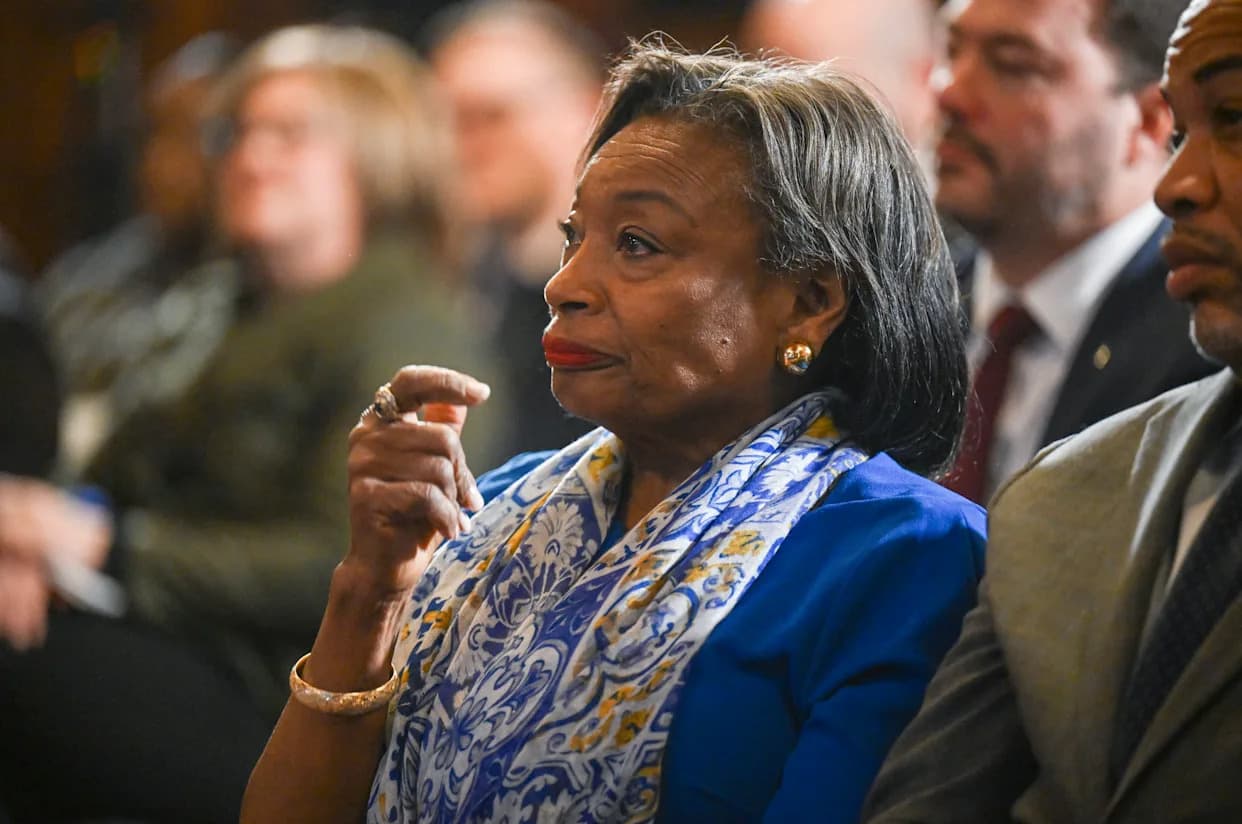
ALBANY, New York — State Senate Majority Leader Andrea Stewart-Cousins on Wednesday publicly endorsed the long‑debated "New York for All" proposal, a measure designed to expand sanctuary protections by limiting local cooperation with federal immigration authorities. Her backing ensures the issue will command attention in Albany during a high‑stakes election year.
Stewart‑Cusins raised the bill while laying out the Democratic majority's agenda for the session, emphasizing the party's commitment to voting rights and civil equality. "One of our central focuses is standing up for communities that are being targeted and marginalized, which includes protecting our immigrant brothers and sisters by advancing the goals of New York for All," she said.
The measure, first introduced six years ago, would curb local and state law enforcement and agencies from sharing certain information or partnering with Immigration and Customs Enforcement (ICE). It would also seek to end 287(g) agreements that deputize local officers to perform immigration enforcement functions. The bill has never passed either house of the Legislature.
"We will stand firm in defense of voting rights and equal rights," Stewart‑Cusins said, highlighting immigrant protections as a priority.
Gov. Kathy Hochul has expressed opposition to limits on cooperation with ICE in cases involving convicted felons. After the 2024 election she stated, "Someone breaks the law, I'll be the first one to call up ICE and say, 'Get them out of here.' I don't want them here. I don't want anybody terrorizing my citizens." That stance places Hochul in a politically vulnerable spot as she seeks a second full term, squeezed between progressive calls for sanctuary measures and Republican critiques on public safety.
Lt. Gov. Antonio Delgado welcomed Stewart‑Cusins' endorsement and urged more aggressive action, noting that an increasing number of counties have signed 287(g) pacts with ICE. "New York for All would do away with those agreements," he said, and he has previously urged Gov. Hochul to call a special session to force a vote.
The bill's passage would likely trigger swift pushback from the federal government and be a major campaign talking point for Republicans. After New York enacted a narrower 2019 law restricting DMV data sharing with immigration authorities, the federal government briefly suspended access to expedited border‑crossing programs before relenting. During the prior administration the federal government pursued legal action against state limits; most recently, federal suits over similar restrictions were decided in favor of the state.
Republican critics contend sanctuary policies harm public safety. State Sen. George Borrello described such measures as "bad policy" that undermine safety, while Bruce Blakeman, the Nassau County executive and likely GOP gubernatorial nominee, has promoted local partnerships with immigration authorities — steps that would be restricted under New York for All.
Advocates, including Murad Awawdeh of the New York Immigration Coalition, argue that the state must act to protect immigrant communities across New York's 19 million residents and that election-year politics should not prevent the Legislature from moving forward.
What Comes Next
Even with the Senate's expressed support, passage is uncertain. Advocates see the Assembly's Democratic majority as a larger hurdle, and even if lawmakers approve the bill, Gov. Hochul would not be required to sign or veto it until December — after the election. A Senate vote, however, would create momentum and make sanctuary protections a leading political issue as the legislative session reaches its spring adjournment.
Whether the legislation ultimately becomes law will depend on negotiations within the Democratic coalition, potential federal responses, and how aggressively both parties make the subject part of their campaigns over the coming months.
Help us improve.