Associated Press reporting suggests Russia may be developing an anti‑satellite tactic that would scatter thousands of small pellets into the orbits used by Starlink, which has launched more than 8,000 satellites. Scientists warn the unsteerable fragments could cause indiscriminate collisions, creating long‑lasting orbital debris and threatening Russian, commercial, and civilian spacecraft alike. Such a campaign could also disrupt internet service for countries that rely on Starlink, including Ukraine and Lebanon. Whether the plan will be implemented is unclear, but experts say the idea would dangerously worsen Earth's already strained orbital environment.
Russia May Deploy 'Pellet' Anti‑Satellite Weapon That Could Rain Debris on Starlink
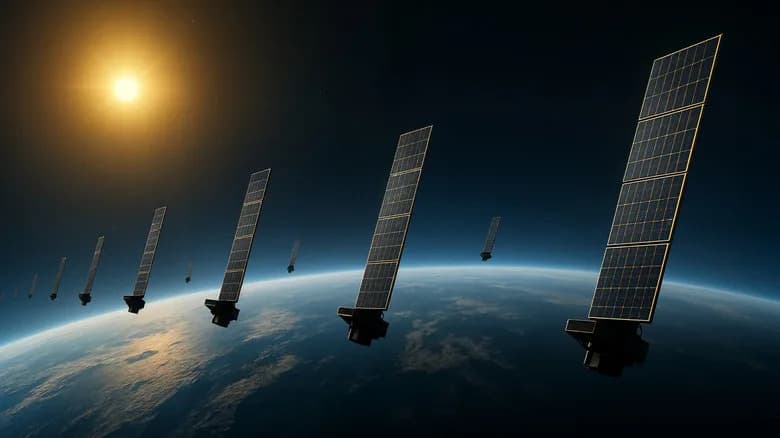
Illustration of Starlink satellites in orbit with the sun in the background - xnk/Shutterstock
New reporting by the Associated Press warns that Russian developers may be exploring an anti‑satellite concept that would disperse thousands of small pellets into orbital paths used by Elon Musk's Starlink constellation. Starlink—now composed of more than 8,000 satellites—provides broadband connectivity in conflict zones such as Ukraine and to other countries including Lebanon, making the network a strategic target.
How the tactic would work: The idea reportedly under discussion is to release swarms of tiny, uncontrolled fragments into the same low Earth orbits where many Starlink satellites operate. Those pellets would not be steerable and could collide with functioning spacecraft, creating more debris and triggering a cascade of further collisions.
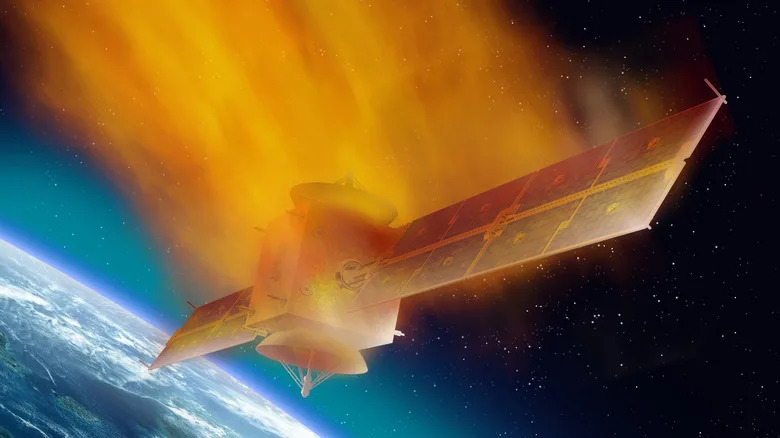
Concept art of a satellite burning up as it falls from orbit to Earth - Paulfleet/Getty Images
Why scientists are alarmed
Researchers warn this approach could dramatically worsen the existing orbital debris problem—sometimes described as the Kessler syndrome—where collisions produce more fragments that, in turn, increase the risk of additional impacts. Because debris travels at orbital velocities, even small fragments can disable or destroy satellites, and the hazard is indiscriminate: Russian, commercial and civilian spacecraft could all be affected.
The long‑term consequences could include damage to communications infrastructure, elevated risk for future space missions, and more satellites breaking apart and eventually reentering the atmosphere. While many defunct satellites naturally deorbit over time, fragments from sudden collisions can remain in orbit for years or decades depending on altitude.
Geopolitical and civilian implications
Beyond military objectives, disrupting Starlink could curtail internet access for countries that rely on the service, raising humanitarian and diplomatic concerns. The AP report does not confirm an active deployment; it describes plans and concepts under discussion. Whether Moscow will pursue the tactic remains uncertain, but the mere prospect has alarmed space safety experts and advocates for clearer rules of conduct in orbit.
Bottom line: Introducing uncontrolled pellets into busy orbits would be a reckless, indiscriminate act with potential to harm many operators and to make low Earth orbit more hazardous for years to come.
Help us improve.