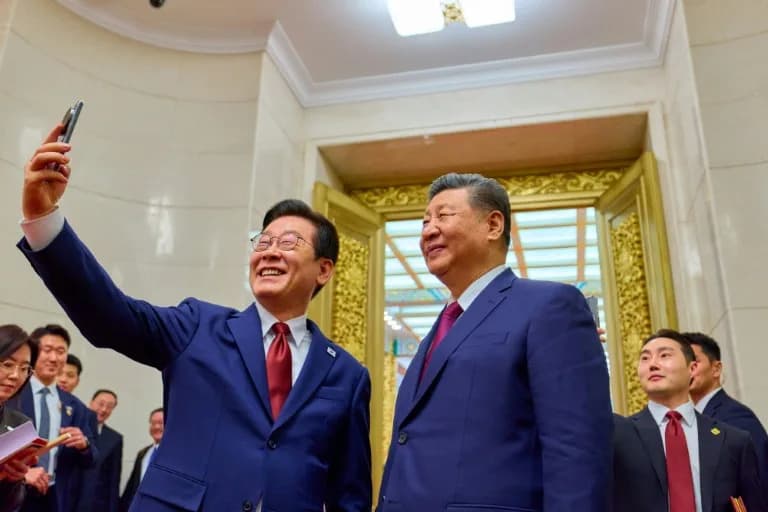
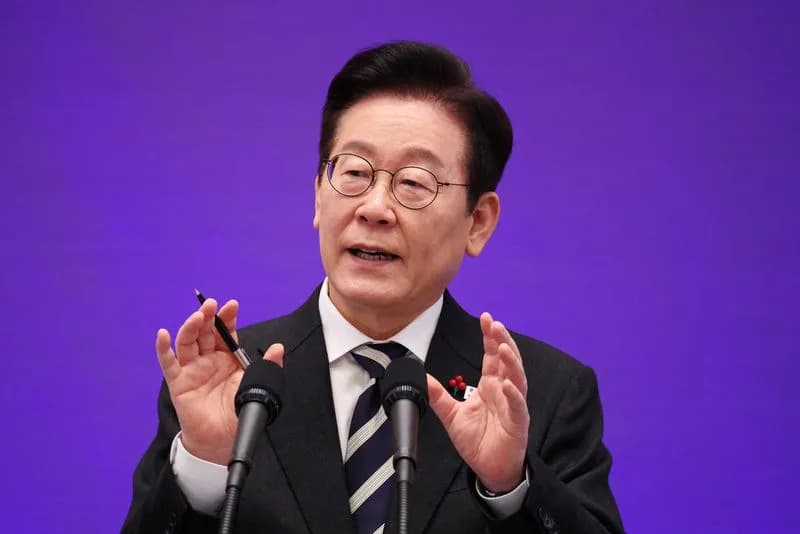
Xi Jinping and South Korea’s Lee Jae Myung met in Beijing during Lee’s first visit since taking office, pledging deeper economic ties and cooperation to preserve regional stability. The trip was clouded by North Korea’s recent ballistic missile launches, including claims of hypersonic tests that outside experts question. Both leaders agreed to explore ways to reduce tensions on the Korean Peninsula and witnessed the signing of 15 cooperation agreements across technology, trade and environmental sectors.
China and South Korea Pledge Stronger Ties as Regional Tensions Rise
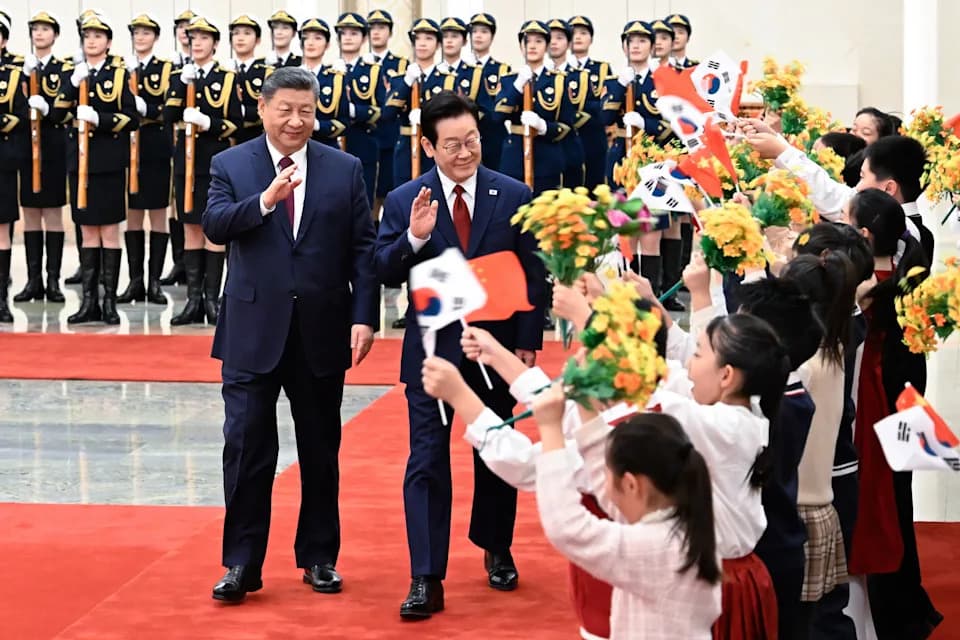
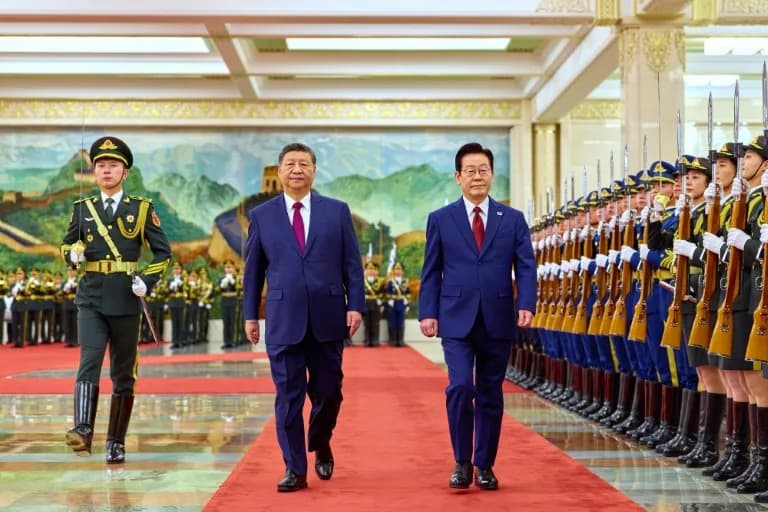
In this photo released by Xinhua News Agency, visiting South Korean President Lee Jae Myung, center, and Chinese President Xi Jinping is welcomed by children waving both countries national flags and flowers after inspecting a guard of honor during a welcoming ceremony at the Great Hall of the People, in Beijing, Monday, Jan. 5, 2026. (Shen Hong/Xinhua via AP)(ASSOCIATED PRESS)
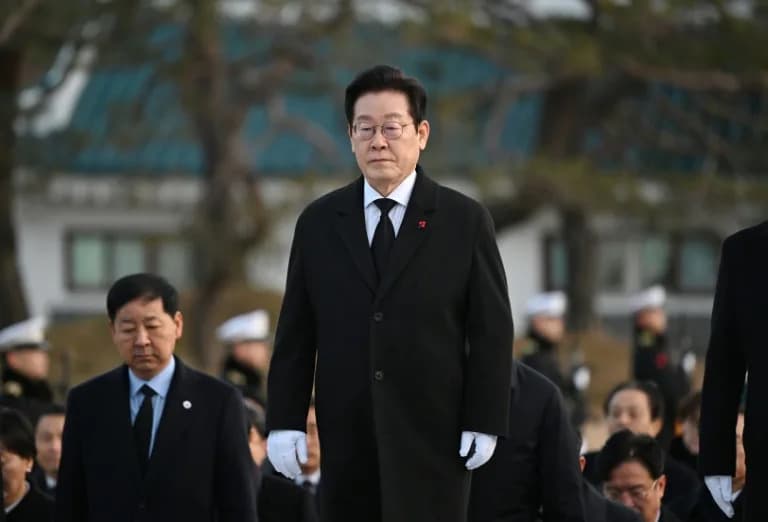
BEIJING — Chinese President Xi Jinping and South Korean President Lee Jae Myung pledged on Monday to deepen economic cooperation and work together to preserve regional stability during Lee’s four-day visit to Beijing — his first trip to China since taking office in June. The visit was overshadowed by renewed tensions on the Korean Peninsula after North Korea fired multiple ballistic missiles just hours before Lee’s arrival.
Meeting at the Great Hall of the People, Xi emphasized the two countries’ "important responsibilities in maintaining regional peace and promoting global development," according to a state-run CCTV readout. Lee described the visit as an effort to "open a new chapter in the development of Korea-China relations" during what he called "changing times."
Cooperation and Stability
Both leaders agreed to pursue practical steps to boost trade and to continue exploring creative ways to ease tensions on the Korean Peninsula. South Korea’s national security adviser, Wi Sung-lac, said the two sides confirmed China’s intention to play "a constructive role" in promoting peace.
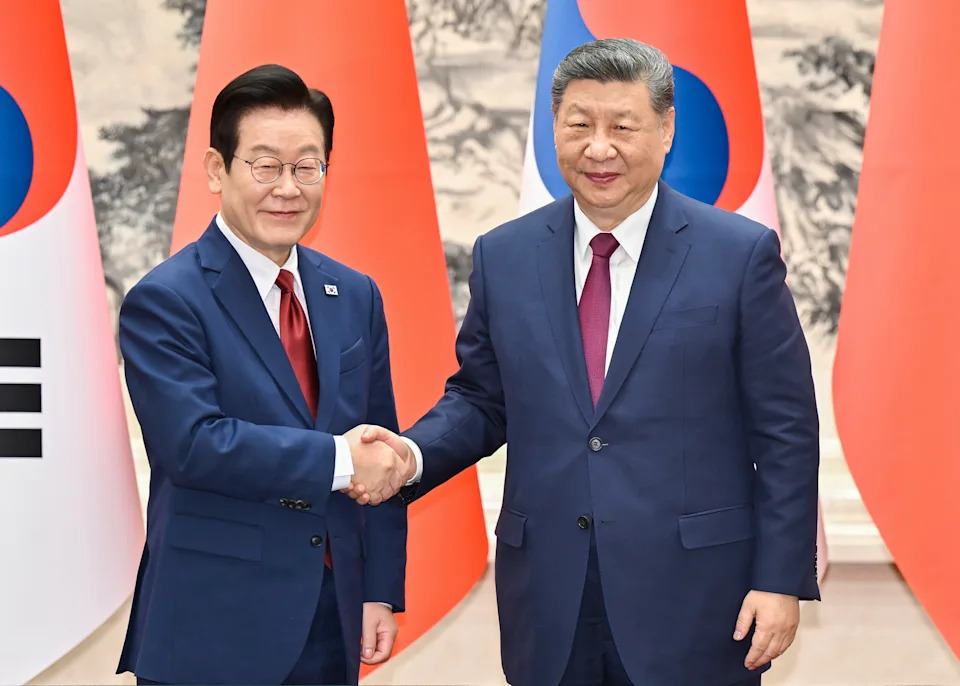
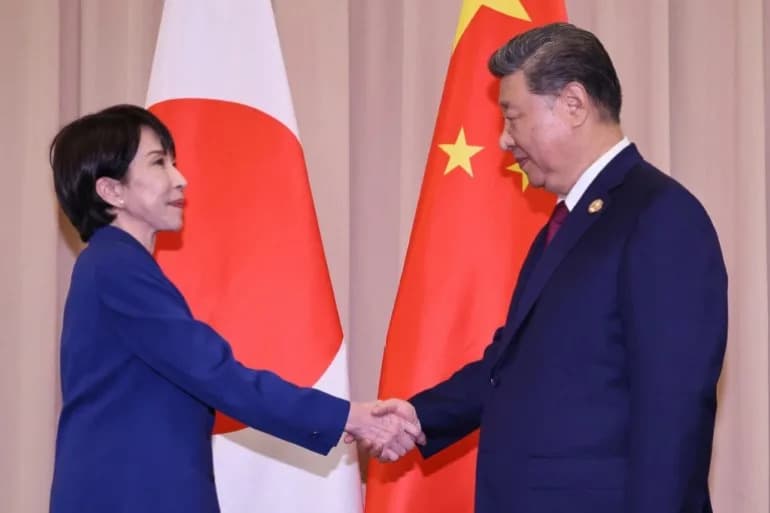
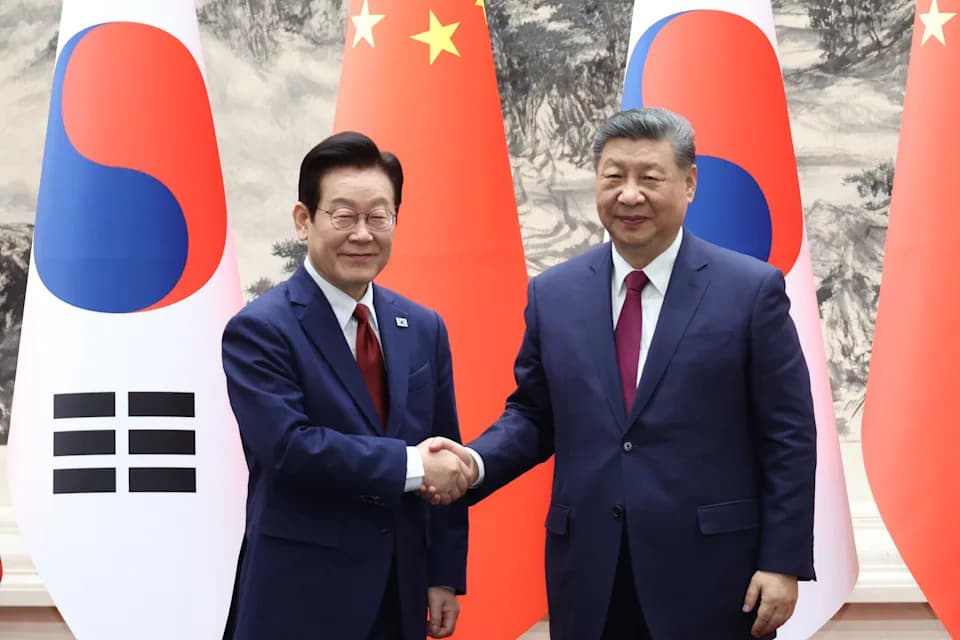
In this photo released by Xinhua News Agency, visiting South Korean President Lee Jae Myung, left, shakes hands with Chinese President Xi Jinping prior to their bilateral meeting at the Great Hall of the People, in Beijing, Monday, Jan. 5, 2026. (Yue Yuewei/Xinhua via AP)(ASSOCIATED PRESS)
North Korea’s Missile Tests
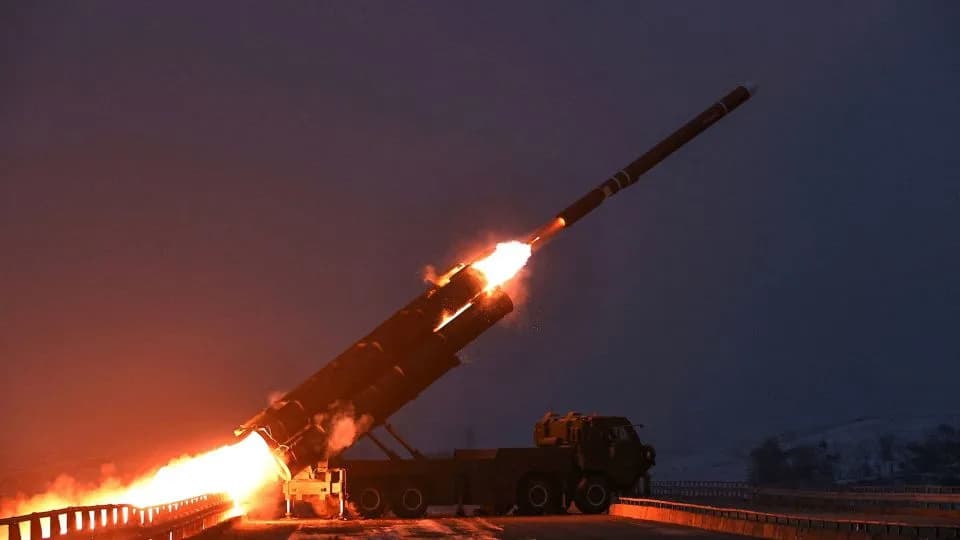
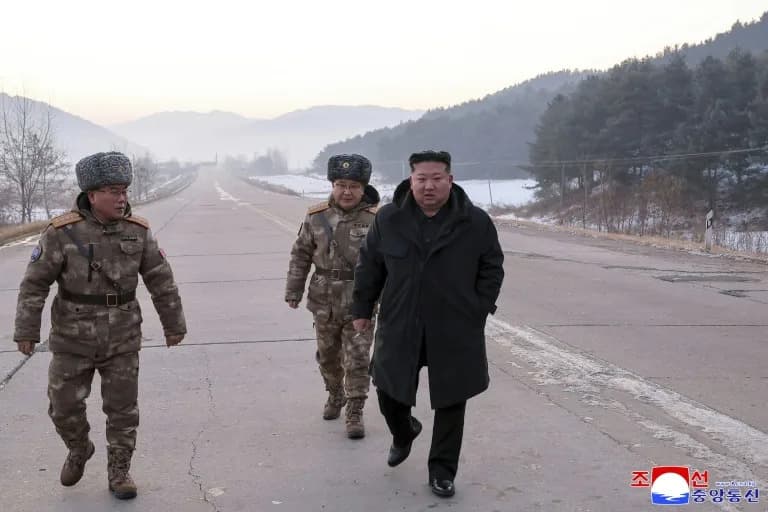
Hours before Lee arrived, North Korea launched several ballistic missiles into the sea and claimed some were hypersonic — a type of weapon that travels at more than five times the speed of sound and is difficult to detect and intercept. Outside analysts remain skeptical that Pyongyang has fully operational hypersonic capability.
Geopolitical Context
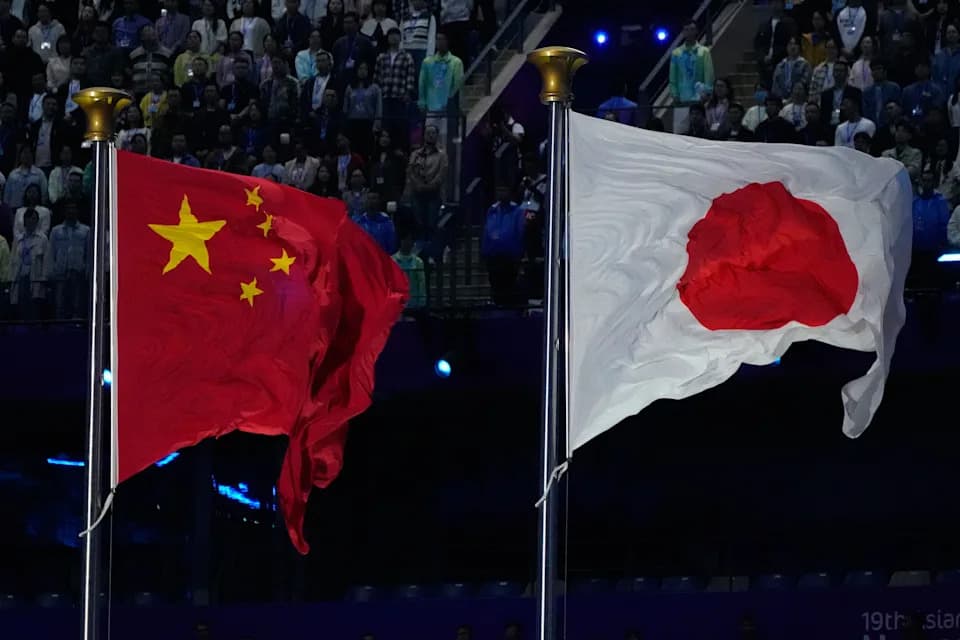
The visit comes as Beijing seeks to shore up regional support amid rising tensions with Japan. Recent comments by Japan’s new leader suggesting Tokyo could intervene in the event of a Chinese attack on Taiwan prompted large-scale Chinese military drills around the island. During his talks with Lee, Xi invoked historical grievances with Japan and urged China and South Korea to "join hands to defend the fruits of victory in World War II and safeguard peace and stability in northeast Asia."
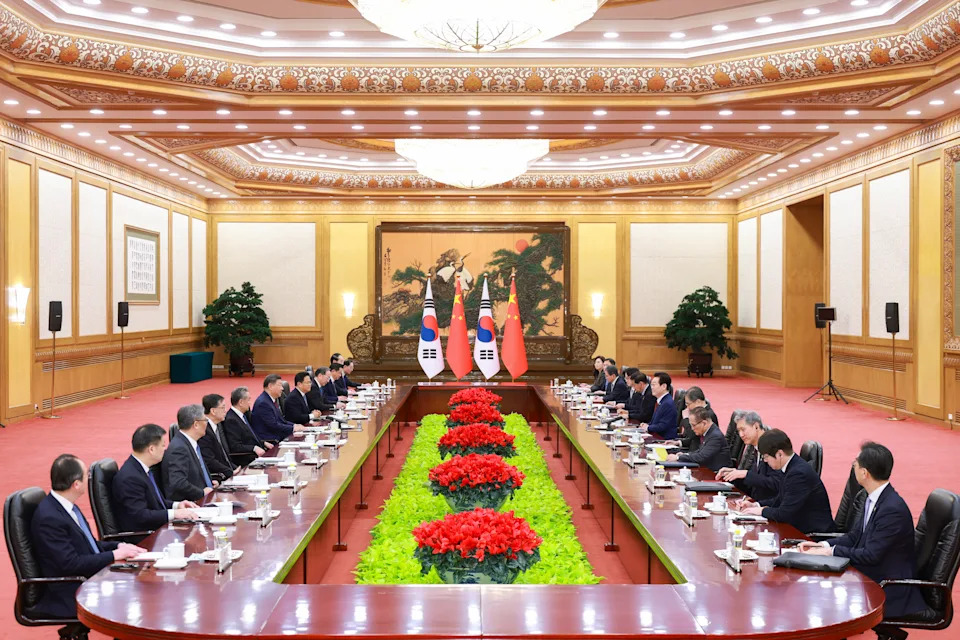
In this photo released by Xinhua News Agency, Chinese President Xi Jinping, sixth left, talks to South Korean President Lee Jae Myung, sixth right, during the bilateral meeting at the Great Hall of the People, in Beijing, Monday, Jan. 5, 2026. (Liu Bin/Xinhua via AP)(ASSOCIATED PRESS)
Lee stressed that South Korea’s security cooperation with the United States need not push Seoul into confrontation with China. In an interview with CCTV before departing, he said his trip aims to "minimize or eliminate past misunderstandings or contradictions and elevate South Korea-China relations to a new stage."
Trade and Economic Deals
China and South Korea already maintain close economic ties, with bilateral trade reaching about $273 billion in 2024. During the Beijing talks, Xi and Lee witnessed the signing of 15 cooperation agreements spanning technology, trade, transportation and environmental protection, CCTV reported.
Earlier, Lee attended a business forum in Beijing that included executives from Samsung, Hyundai, LG and Alibaba Group. At that event, Lee and Chinese Vice Premier He Lifeng presided over deals covering consumer goods, agriculture, biotechnology and entertainment.
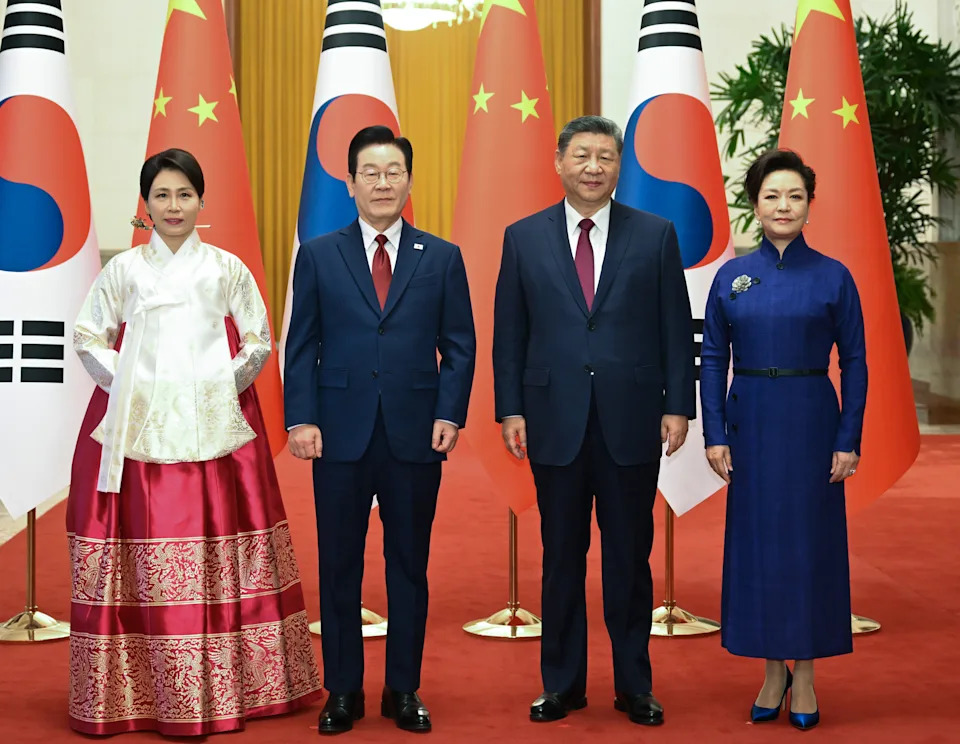
In this photo released by Xinhua News Agency, visiting South Korean President Lee Jae Myung, center left, and his wife Kim Hea Kyung, left, stand with Chinese President Xi Jinping, center right, and his wife Peng Liyuan, right, as they pose for a photo shoot at the Great Hall of the People, in Beijing, Monday, Jan. 5, 2026. (Xie Huanchi/Xinhua via AP)(ASSOCIATED PRESS)
Allies and International Reactions
China remains a key economic partner of North Korea and has in recent years, along with Russia, resisted some international efforts to tighten U.N. sanctions on Pyongyang. The missile launches followed Pyongyang’s public condemnation of a reported U.S. operation in Venezuela that the North Korean state media said included the removal of President Nicolás Maduro — an action both Pyongyang and Beijing denounced as violations of sovereignty.
This visit underlines Seoul’s attempt to balance ties between Washington, Tokyo and Beijing while seeking practical cooperation and risk reduction in a volatile regional environment.
Hyung-jin Kim contributed from Seoul.
Help us improve.