When federal funding for more than 1,500 public media outlets was cut last July, stations like WYSO in Yellow Springs, Ohio, launched emergency drives to cover steep shortfalls. A wave of "rage-giving" produced record donations and roughly 120,000 new donors, while foundations pledged emergency grants — but these contributions still fall far short of a more than $535 million federal gap. Industry data show a 61% rise in donor growth and a near doubling of donors under 45, yet experts warn the initial surge may fade without sustained support.
‘Rage-Giving’ Bolsters Rural Public Radio After Federal Cuts — Can Donations Fill a $535M Gap?
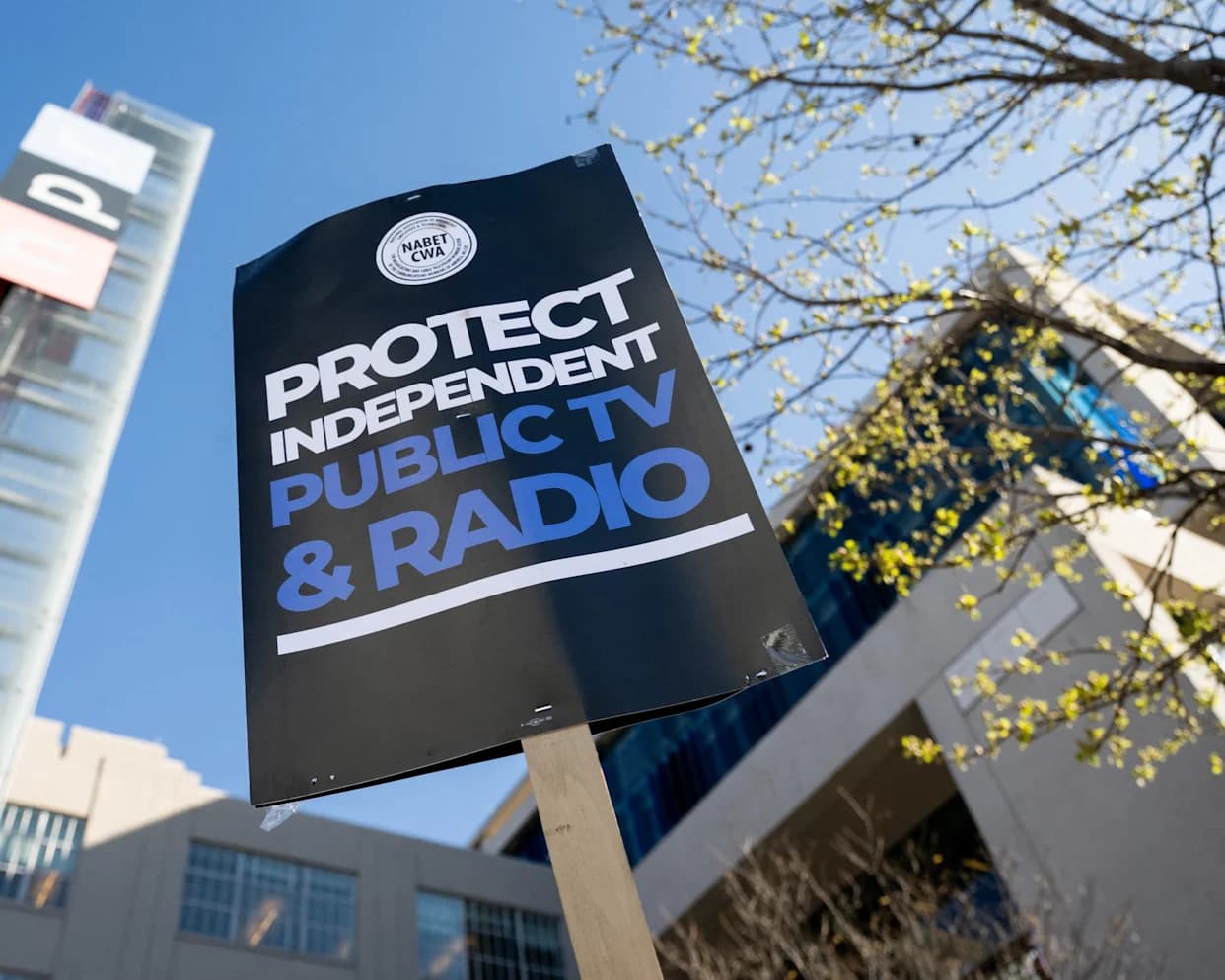
People participate in a rally to call on Congress to protect funding for US public broadcasters outside the NPR headquarters in Washington DC, on 26 March 2025.Photograph: Saul Loeb/AFP/Getty Images
When Congress voted last July to cut federal funding for more than 1,500 public media outlets, many local stations scrambled to stay afloat. In Yellow Springs, Ohio, WYSO’s general manager Luke Dennis launched an emergency fundraising drive after the Corporation for Public Broadcasting (CPB) funding was rescinded — a move that left the station facing roughly a $600,000 shortfall for the current and coming financial year.
Immediate Local Response
Almost immediately, listeners rallied. WYSO — which serves 14 urban and rural counties in southwestern Ohio — recorded its largest single-day donation total in late July and added more new members in 2025 than in any previous year. “For many people, it pushed them off the fence about whether their gift mattered,” Dennis says.
“What bothered me most wasn’t that the federal dollars disappeared — I thought that likely under the current administration — but that we were given no runway to prepare. That was very panic-inducing.” — Luke Dennis, WYSO
Rage-Giving: A National Pattern
The pullback in federal support appears to have prompted a nationwide wave of grassroots contributions — dubbed “rage-giving.” By July, about 120,000 new donors had given an estimated $20 million to public radio and TV stations, and total donations were roughly $70 million higher than in the previous 12 months. An industry analysis by Current, covering 50 public media organizations, found a 61% increase in donor growth between August 2024 and August 2025, and the share of donors aged 45 or younger nearly doubled to 24%.
Philanthropy and Emergency Funds
Foundations and philanthropic groups have supplemented grassroots support. In August more than half a dozen foundations pledged a combined $36.5 million in immediate relief; about $26.5 million of that was allocated to the Public Media Bridge Fund, an effort aiming to raise $100 million over two years to support the most at-risk stations.
Hard Numbers — And Hard Choices
Despite the surge in donations and foundation pledges, these inflows fall well short of the cuts. The rescissions that began last July represent more than $535 million in lost federal support. The effects are already tangible in smaller markets: Prairie Public in Fargo, North Dakota, announced 12 job losses — nearly one-fifth of its staff — and KYUK in Bethel, Alaska, eliminated six full-time positions after losing federal support that previously covered roughly 70% of its operating budget.
NPR’s leadership announced an $8 million program in September to help local stations with NPR licensing costs, but that assistance covers only a small portion of the nationwide shortfall.
What Comes Next?
Experts warn that while the initial burst of donations has been meaningful, it may not be sustainable. “Every time public radio finds itself under attack, donors respond,” says Scott Finn of the University of Vermont’s Center for Community News. “That’s good — but it’s not enough. Those initial bursts of generosity tend to fade after the immediate threat passes.” Stations in low-population and rural regions are particularly vulnerable to long-term service reductions unless sustained revenue is secured.
Some elected officials have shown concern: Representative Mike Turner, whose district includes part of WYSO’s broadcast area, voted against the Rescissions Act of 2025 that cut CPB funding. Still, station managers like Dennis worry about the future. “I’m concerned in two years, when people have forgotten how angry they were about the subsidy being pulled. What will happen then?” he says. “But we’re planning for that too.”
Bottom Line
Grassroots anger translated into meaningful, immediate support for local public media in 2025, giving many stations crucial breathing room. However, philanthropic relief and one-time donations currently fall short of replacing more than $535 million in federal funding, and station leaders face difficult decisions about sustaining local news, programming and cultural services — especially in rural communities.
Help us improve.