The Working Families Party says 2026 is the right moment to push toward a durable third-party presence after major 2024–25 gains, including helping elect Zohran Mamdani in NYC and ending New Jersey’s party-favoring ballot "line." Active in 18 states and on the ballot in New York, Connecticut and Oregon, the party endorsed 700+ candidates last November and reports 600,000+ members. It plans to ramp up primary challenges, recruit state legislative candidates and expand cultural organizing to turn local momentum into broader political power in 2026.
Working Families Says 2026 Is Its Moment To Build A Lasting Third Party After Big Wins
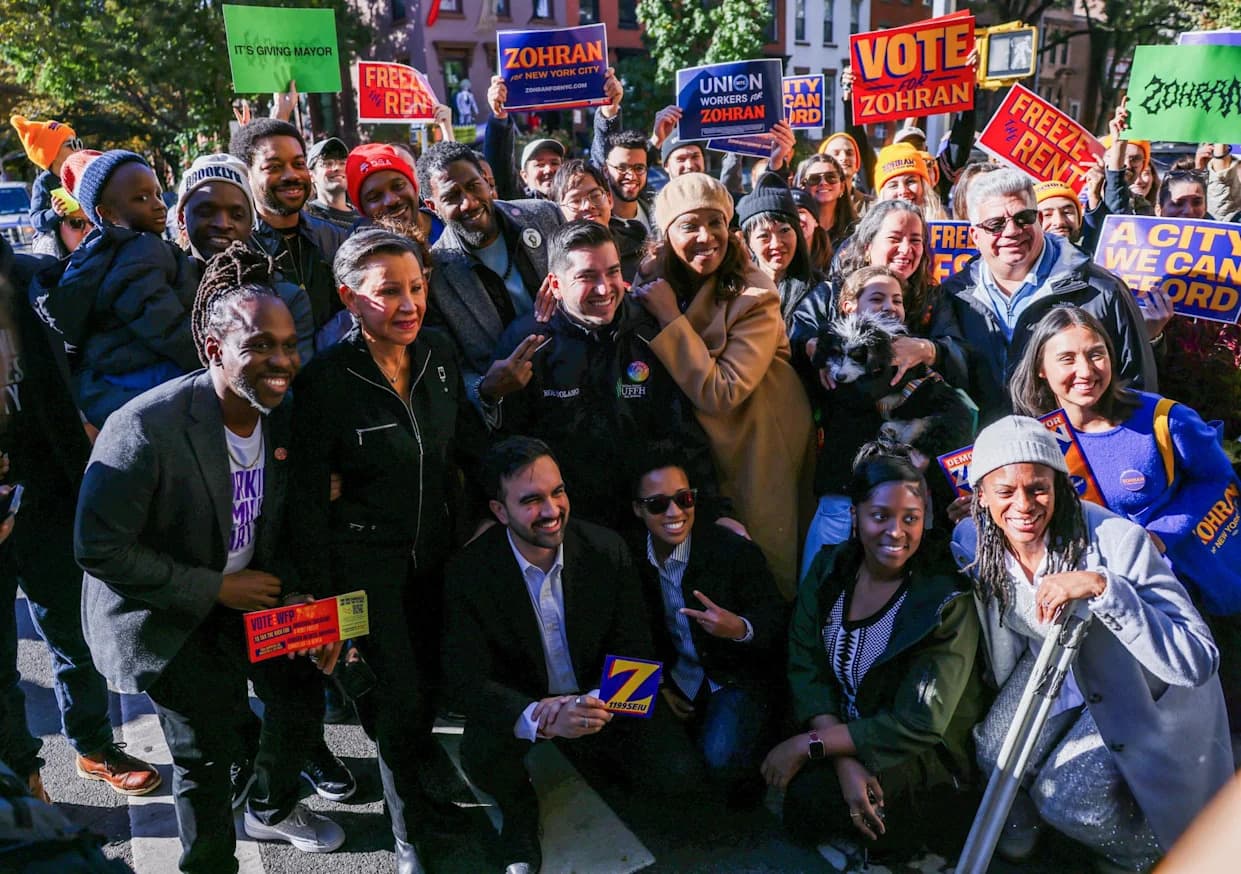
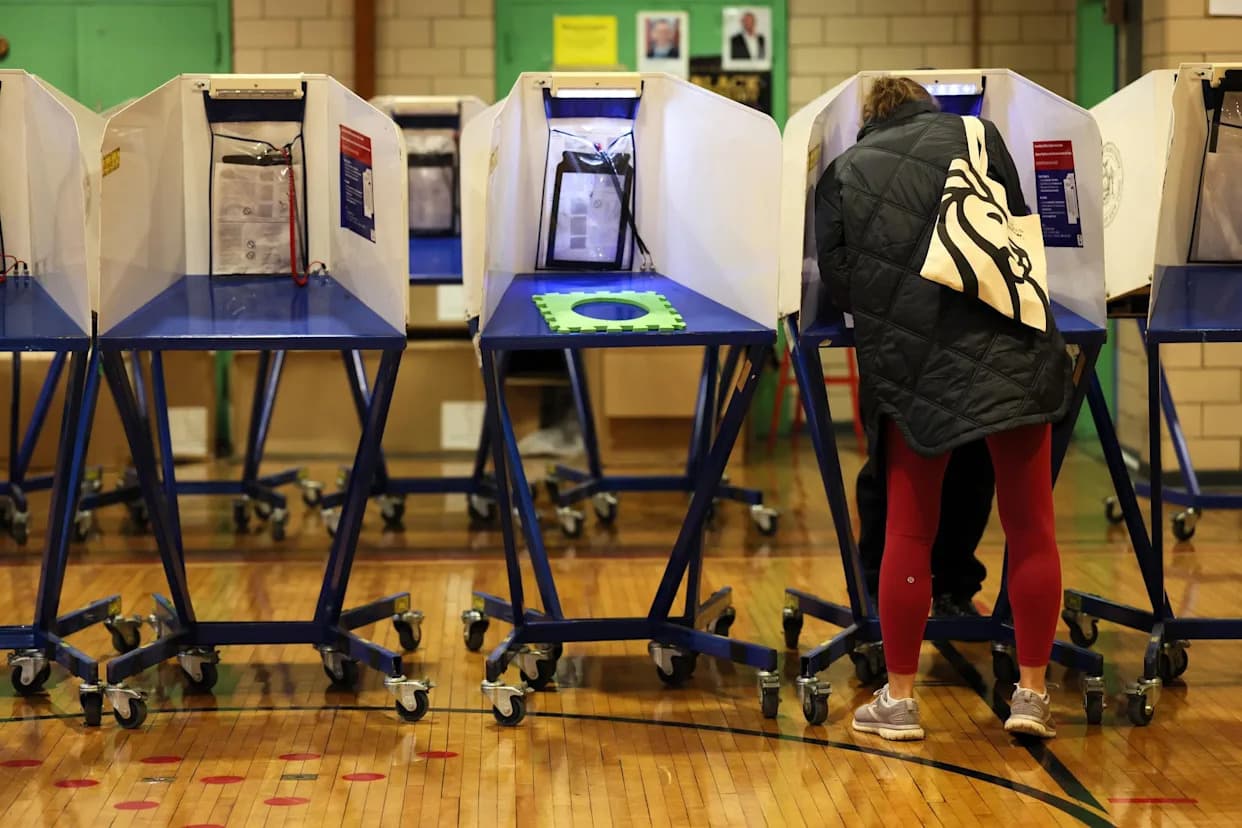
Maurice Mitchell, national director of the Working Families party, with Zohran Mamdani and voters in Brooklyn, New York, on 4 November 2025.Photograph: Kylie Cooper/Reuters
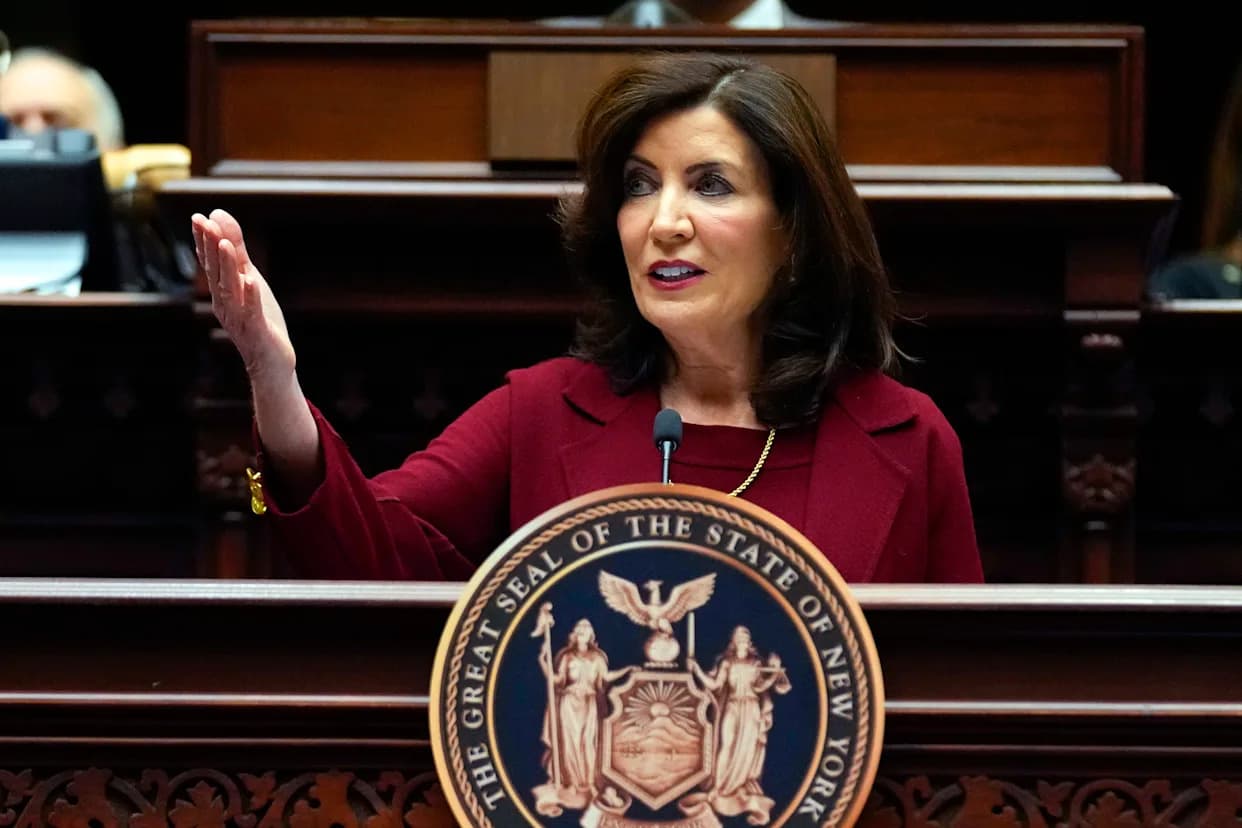
The Working Families Party says the moment has arrived to push for a sustained third-party presence in U.S. politics after a year of high-profile wins and expanding grassroots reach, its national director said.
Big Wins and Growing Reach
Founded in 1998, the party helped elect Zohran Mamdani as New York City mayor, played a leading role in abolishing New Jersey’s controversial ballot "line" in 2024, and saw endorsees win races in places ranging from Dayton, Ohio, to Buffalo, New York. In Jersey City, a Working Families–endorsed candidate, James Solomon, won the mayoralty while many party-aligned candidates captured city council and other local offices.
Preparing For 2026
Looking to 2026, the party plans to intensify its presence in primary contests, recruit aggressively for state legislatures, and run primary challengers to incumbents where it sees an opening. The party has already announced primary challengers in three congressional districts — Nida Allam (North Carolina), Mai Vang (California) and Brad Lander (New York) — and has launched targeted recruitment drives, including a campaign for candidates opposed to new data centers.
Organization, Scale And Strategy
Working Families is active in 18 states and appears directly on the ballot in New York, Connecticut and Oregon. Last November it endorsed more than 700 candidates (most in Democratic primaries); the party reports more than 600,000 members and over 100 staffers. Its strategy blends traditional electoral organizing with cultural outreach: strategy director Nelini Stamp has run events such as "Real Housewives of Politics" and Dungeons & Dragons nights to build relationships where people already gather.
Opportunities And Obstacles
Leaders say part of their momentum comes from voter dissatisfaction with the major parties and a hunger for alternatives that prioritize affordability, worker protections and democratic reform. At the same time, the party faces pushback and tactical interference: Republican operatives have run candidates on the Working Families ballot line to siphon votes, and structural barriers in U.S. election law make third-party growth difficult.
"For 26 years, we've been building this argument," national director Maurice Mitchell said. "And the argument has met the moment."
Mitchell and other leaders frame their work as both practical and cultural: they aim to win races while also building a multiracial movement that centers working-class priorities and reshapes political identity over time.
Help us improve.