Democrats are quietly organizing for a 2028 primary that currently lacks a clear frontrunner. Key names include Gavin Newsom, Kamala Harris, Pete Buttigieg and J.B. Pritzker, with rising figures such as Alexandria Ocasio-Cortez and Ruben Gallego also positioning nationally. The 2026 midterms will be a critical proving ground: candidates who help flip seats or demonstrate electability in battlegrounds like Pennsylvania and Arizona will gain momentum toward potential early 2027 declarations. Expect a competitive field of roughly six to ten serious contenders as the race firms up.
How Democrats Are Positioning For 2028: Contenders, Strategy And What To Watch

Top row, from left: California Gov. Gavin Newsom, former Transportation Secretary Pete Buttigieg, Illinois Gov. JB Pritzker, and former Vice President Kamala Harris. Bottom row, from left: Pennsylvania Gov. Josh Shapiro, Rep. Alexandria Ocasio-Cortez, Sen. Ruben Gallego and Sen. Mark Kelly. - Reuters/Getty Images/AP
As the 2028 presidential cycle begins to take shape, Democratic operatives, elected officials and potential candidates are quietly testing messages, building networks and watching the 2026 midterms as a proving ground. With President Donald Trump likely barred from the ballot in 2028, Democrats see opportunity — but they also face a wide-open primary with no single clear frontrunner and tough choices about which voters to win back and which candidate can best energize turnout.

California Gov. Gavin Newsom arrives at a rally in Houston, Texas, on November 8, 2025. - Brandon Bell/Getty Images
State Of The Race
CNN senior reporter Edward-Isaac Dovere says the party is in a less existential mode than it was earlier, buoyed by several 2025 wins and polling that suggests some erosion of Trump’s support. That calmer environment has allowed multiple Democrats to position themselves for a possible 2028 run, though formal campaign announcements are still likely to be rare until early 2027, depending on the outcome of the 2026 midterms.
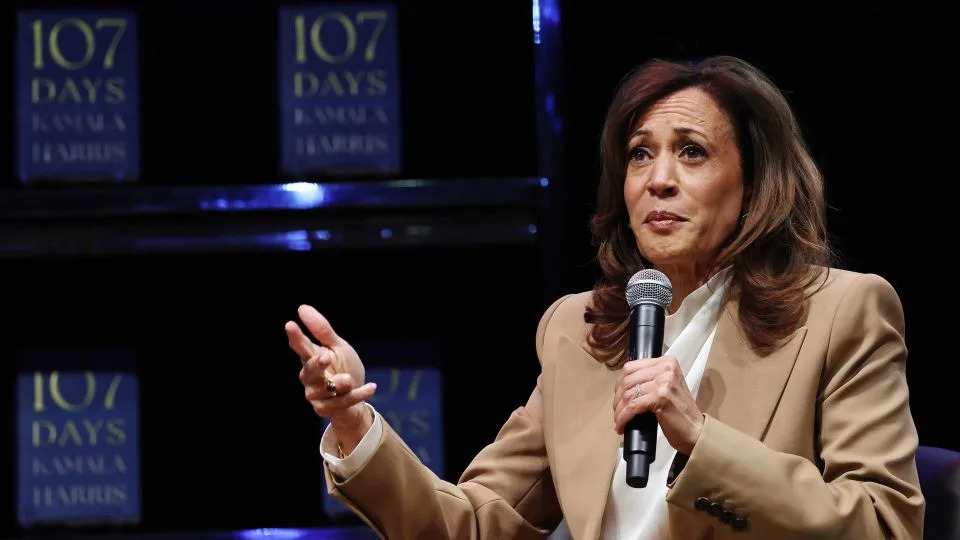
Former Vice President Kamala Harris speaks at the Wiltern Theatre in Los Angeles on September 29, 2025. - Mario Tama/Getty Images
Top-Tier Contenders
Gavin Newsom: The California governor is often named first. Term-limited at the end of next year, Newsom has spent 2025 engaging aggressively with Trump-era conflicts and high-profile culture fights, boosting his national profile. He has a forthcoming memoir and a robust media and social strategy that many Democrats find appealing.
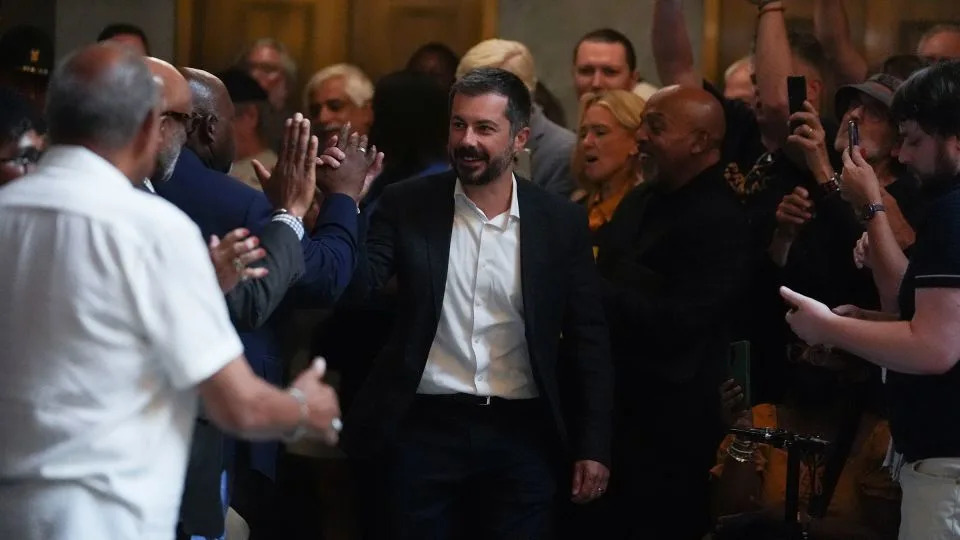
Former Transportation Secretary Pete Buttigieg makes his way through the crowd before speaking at a rally at the Statehouse in Indianapolis, on September 18, 2025. - Michael Conroy/AP
Kamala Harris: The vice president remains in the conversation after a brisk book tour and her decision not to run for California governor. Harris’s national visibility and continued engagement keep her relevant, though whether a third presidential bid would gain traction is uncertain.
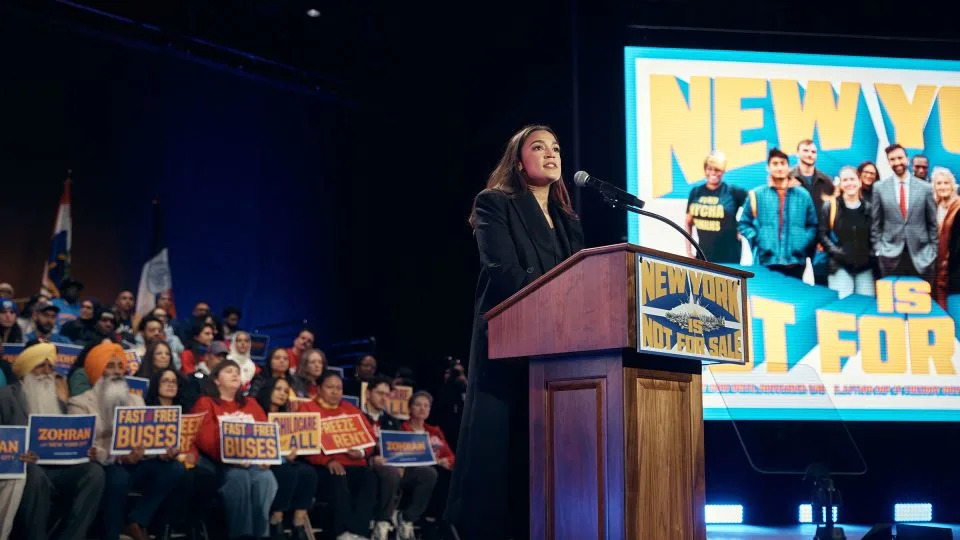
Rep. Alexandria Ocasio-Cortez speaks during an election rally in support of Zohran Mamdani in the Queens borough of New York on October 26, 2025. - Andres Kudacki/Getty Images
Pete Buttigieg: The former transportation secretary and ex-mayor retains strong communication skills and a reputation for thoughtful messaging. Dovere notes Buttigieg’s challenge is the lack of an institutional platform or office that keeps him continuously in the spotlight.

Pennsylvania Gov. Josh Shapiro speaks during a campaign event for Kamala Harris in Pittsburgh on October 10, 2024. - Jeff Swensen/Getty Images
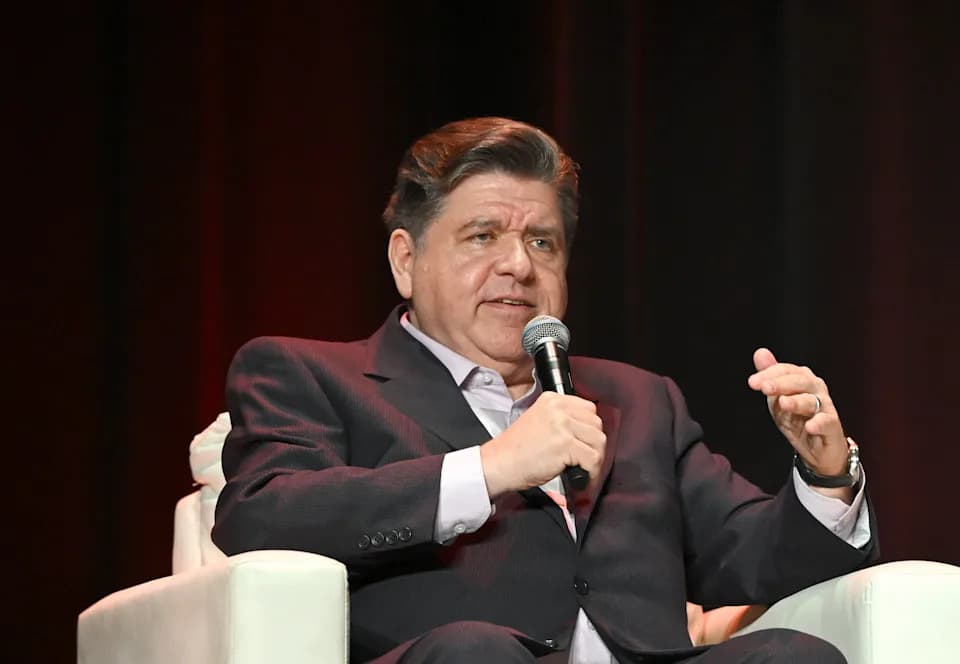
J.B. Pritzker: Illinois’s governor has been vocal in opposing Trump’s tactics and has worked with other governors in 2025. His policy record, rhetorical posture and personal resources would make him a well-funded contender should he run.
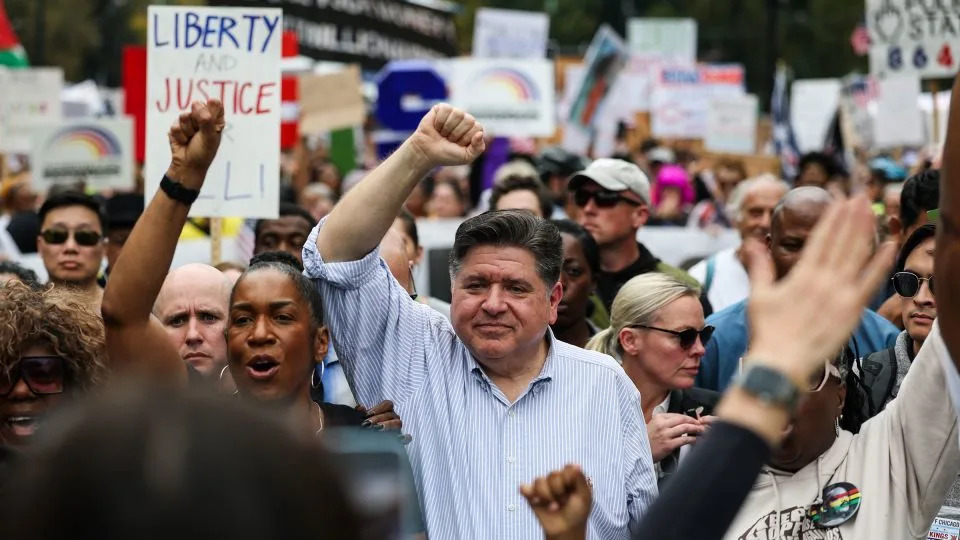
Illinois Gov. JB Pritzker joins the demonstrators during a "No Kings" protest in Chicago on October 18, 2025. - Joe Raedle/Getty Images
Progressive Wing And Rising Stars
Bernie Sanders, now in his mid-80s, appears unlikely to run again, leaving a gap for the progressive mantle. Alexandria Ocasio-Cortez is often mentioned as a potential heir to that energy; constitutionally old enough and politically influential, she could either launch a presidential bid or remain a dominant figure in Senate politics.
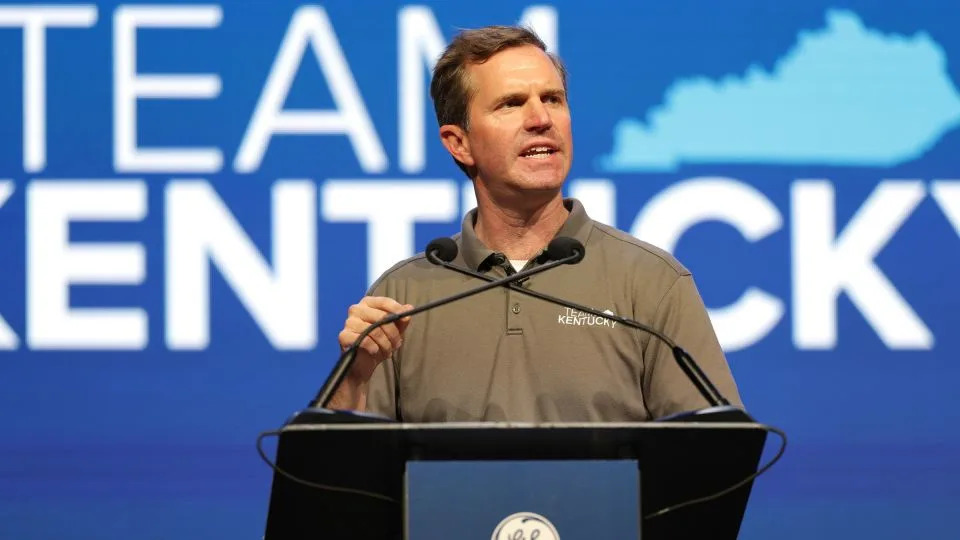
Kentucky Gov. Andy Beshear speaks on August 13, 2025. - Michael Hickey/Getty Images for GE Appliances, a Haier company
Other progressive and younger figures, like Ro Khanna, remain part of the broader conversation but lack the celebrity lift of some peers.
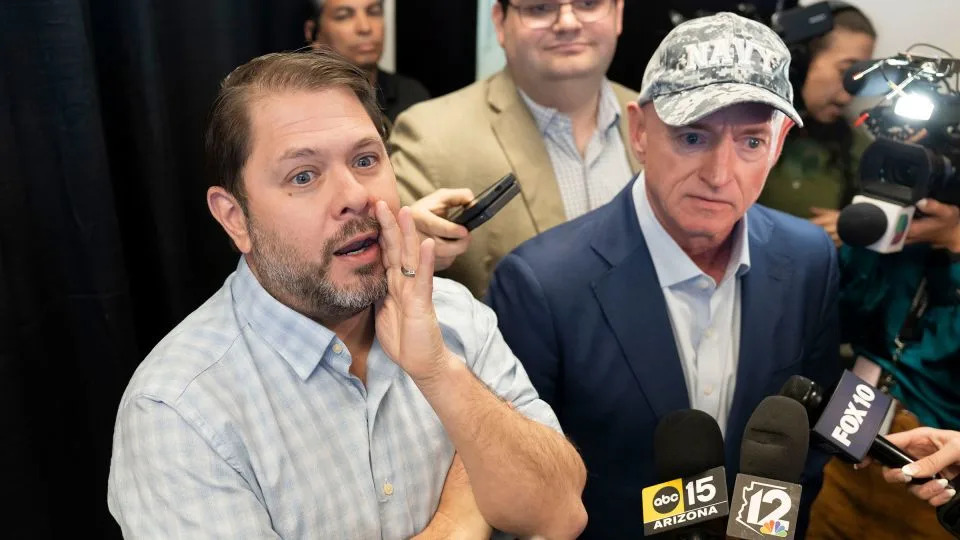
Sen. Ruben Gallego and Sen. Mark Kelly take questions from press after a town hall at NOAH Cholla Health Center in Scottsdale, Arizona, on March 17, 2025. - Rebecca Noble/Getty Images
Moderates And Electability Tests
Moderate voters and non-college-educated White voters remain a key coalition to win back for Democrats. Josh Shapiro, Pennsylvania’s governor, is frequently cited as a test case: his record-setting popular vote in 2022 gives him credibility in a battleground state Democrats must hold to win nationally. How Shapiro performs in his 2026 reelection bid will be watched closely.
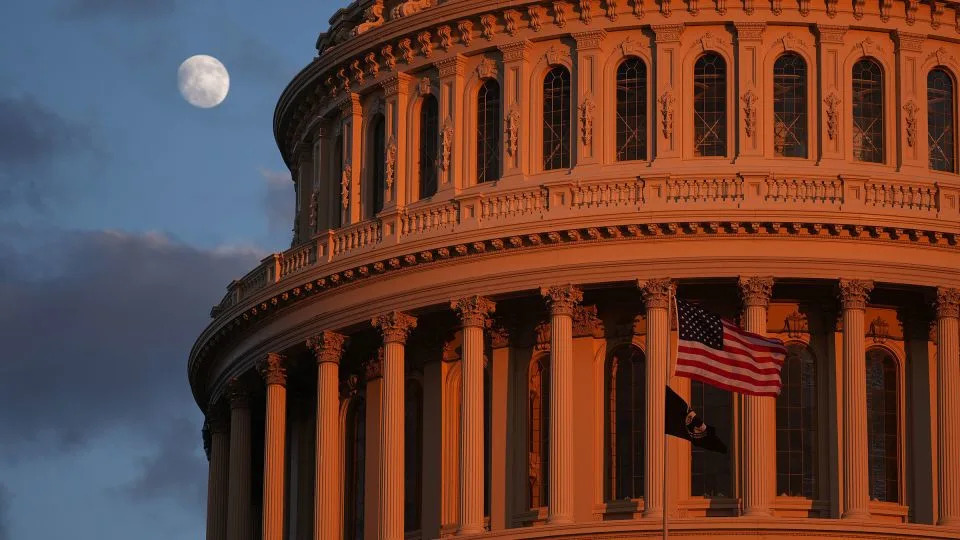
The moon is visible behind the US Capitol on December 2, 2025. - Andrew Harnik/Getty Images
Governors And Senators Positioning Nationally
Two-term Andy Beshear (Kentucky) is notable for winning statewide in a Republican-leaning state and for raising his national profile as chair of the Democratic Governors Association in 2026. In Arizona, senators Mark Kelly and Ruben Gallego are building different appeals — Kelly as an established national figure and Gallego as an organizer targeting Latino, younger and working-class voters.
Other senators like Chris Murphy and Cory Booker have also made early moves in primary states to test messages and name recognition.
The Role Of The 2026 Midterms
Dovere emphasizes the midterms will be a critical metric: they will provide a scoreboard for candidates who campaign for House and governor races, and a rehearsal space to sharpen messaging. Candidates who can claim credit for flipping seats or bolstering turnout will gain early electability credentials; conversely, poor midterm showings could slow or stall ambitions.
Field Size, Demographics And Uncertainties
Expect a competitive field but not the headline-grabbing 27-person field seen in 2019: Dovere judges six to ten serious contenders are most likely. The party also faces demographic and identity questions after recent cycles — including whether primary voters will more readily coalesce behind a woman, a person of color, or a gay candidate — and whether history or candidate readiness matters more than broad labels.
What To Watch Next
Key things to watch are 2026 election results, which potential candidates travel and build organizations in early primary states, who can demonstrate winning coalitions in battleground states (especially Pennsylvania and Arizona), and which figures can translate national visibility into durable political networks. Formal announcements may accelerate in early 2027 if the midterms give promising signals.
Bottom line: Democrats see opportunity in 2028 but no dominant heir apparent. The coming 18 months will refine who has the resources, message and electability to take on the White House.
Help us improve.