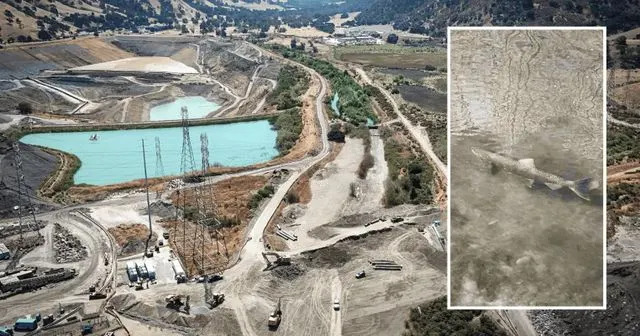
Chinook salmon have been observed in an upper stretch of Alameda Creek—San Francisco Bay's largest local tributary—for the first time since the 1950s, following a multi-year restoration that removed the final human-made barrier blocking their migration.
California Trout (CalTrout), working with Pacific Gas & Electric (PG&E) and local partners, completed construction to restore fish passage along the creek's mainstem, reopening more than 20 miles of upstream habitat and critical spawning areas that had been inaccessible for generations.
CalTrout.orgAlameda Creek in San Francisco, California
On Nov. 19, biologists from Sequoia Ecological Consulting documented two Chinook salmon, each between 12 and 24 inches long, just upstream of the former barrier site. According to CalTrout, available records indicate this is the first time salmon have voluntarily reached this part of the watershed since the 1950s—an important milestone for regional recovery efforts.
"We just wrapped up construction, and the fish are already finding their way home! It's incredibly gratifying to see these incredible species reclaim crucial habitat that they have been locked out of for decades," said Claire Buchanan, CalTrout's Central California regional director.
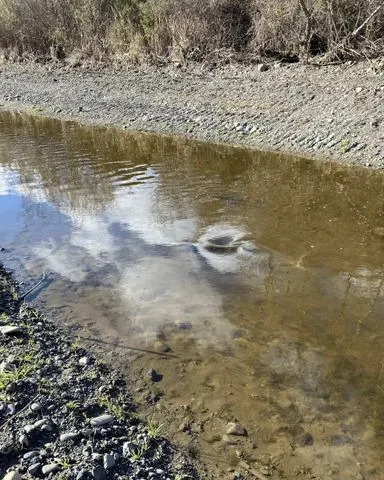
The obstruction was originally installed by PG&E to protect a gas pipeline in Sunol Valley: a concrete erosion-control mat extended into the creek and prevented fish passage except during very wet winters. As drought cycles intensified in California, agencies identified that structure as the last major impediment to fish migration in the watershed.
CalTrout.orgChinook salmon spotted in the upper Alameda Creek watershed
To restore natural passage, PG&E relocated the pipeline roughly 100 feet downstream and buried it about 20 feet beneath the creekbed. Crews removed the mat, regraded the channel, and replanted native vegetation to reestablish natural stream conditions and stability.
"We're so excited to play a part in the historic return of steelhead trout and Chinook salmon to Sunol Valley," said Kevin Armato, PG&E Vice President of Gas Construction. "Being good stewards of the environment is one of our priorities as a company, and witnessing that stewardship pay dividends in a local ecosystem is incredibly gratifying."
This achievement builds on more than two decades of restoration by the San Francisco Public Utilities Commission and regional partners, including removal of the Sunol and Niles dams in 2006 and installation of a fish ladder at the Alameda Creek Diversion Dam in 2018. Additional ladder and channel work completed in 2022 and 2023 helped reopen migration routes through Fremont and Niles Canyon.
"Because of these collective efforts, we are starting to see substantial increases in fish moving upstream and downstream within the watershed," said SFPUC General Manager Dennis Herrera. "This is a proud moment for all of us."
Local conservation and technical partners—including the Alameda Creek Alliance, Applied River Sciences, Sequoia Ecological Consulting and others—contributed decades of advocacy, planning and field work to achieve the reconnection of this historic migration corridor.
While the recent sightings show promising early signs of recovery, scientists emphasize that continued monitoring, habitat stewardship and adaptive management will be essential to support sustained returns of Chinook salmon and steelhead in the face of ongoing drought and climate change.