Restoration work after the 2019 Notre‑Dame fire uncovered roughly 100 unrecorded burials, including two 2022 lead coffins at the transept crossing. Forensic analysis dated one anonymous occupant to the 16th century and diagnosed chronic tuberculous meningitis; skeletal markers indicated lifelong horsemanship, earning the remains the nickname "The Horseman." INRAP researchers now propose these remains are a strong candidate for Renaissance poet Joachim du Bellay (d. 1560), though isotope evidence suggesting a Paris/Lyon upbringing complicates a definitive identification. The conclusion is presented as the best-supported hypothesis rather than absolute proof.
Lead Coffin Found Under Notre-Dame Likely Holds Renaissance Poet Joachim du Bellay, Researchers Say

Notre Dame’s ‘The Horseman’ Remains IdentifiedChristian Suhrbier - Getty Images
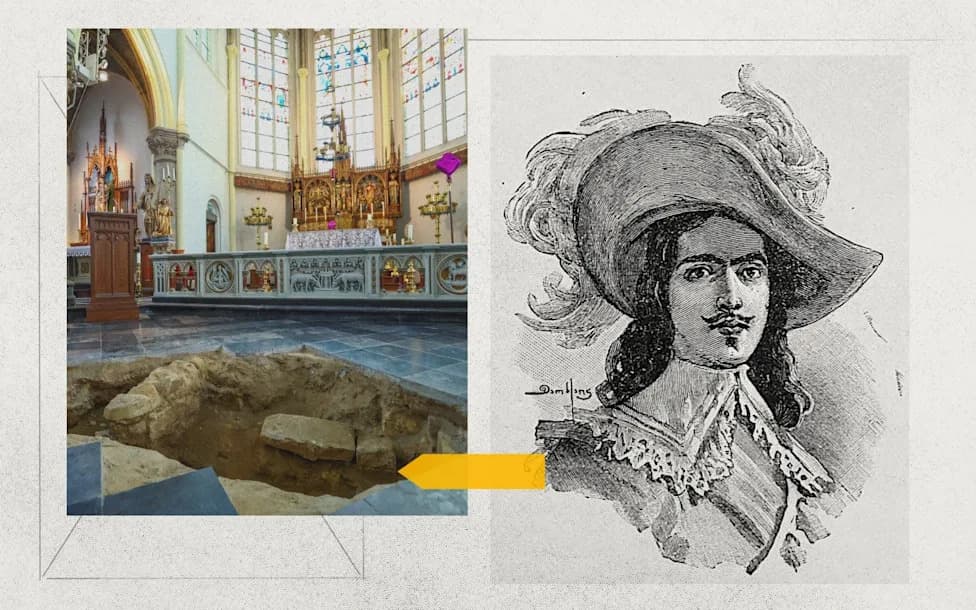
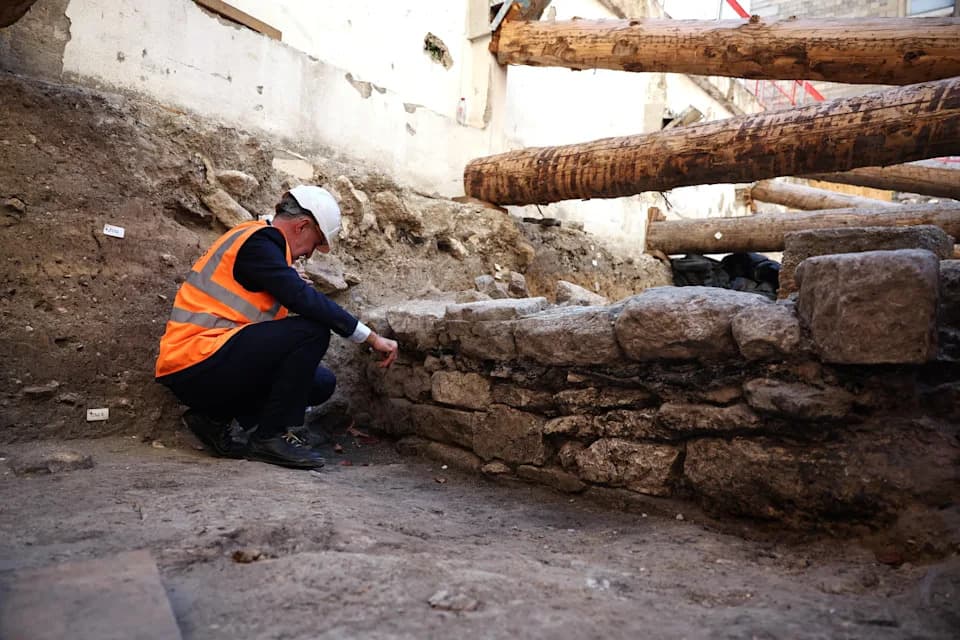
Restoration work after the April 2019 fire at Notre‑Dame Cathedral revealed about 100 previously unrecorded burials beneath the building. In April 2022, archaeologists discovered two unusual lead coffins at the transept crossing; one bore an inscription identifying priest Antoine de la Porte (d. 1710), while the other was anonymous and provoked intensive scientific study.
“The Horseman” and the Search for du Bellay
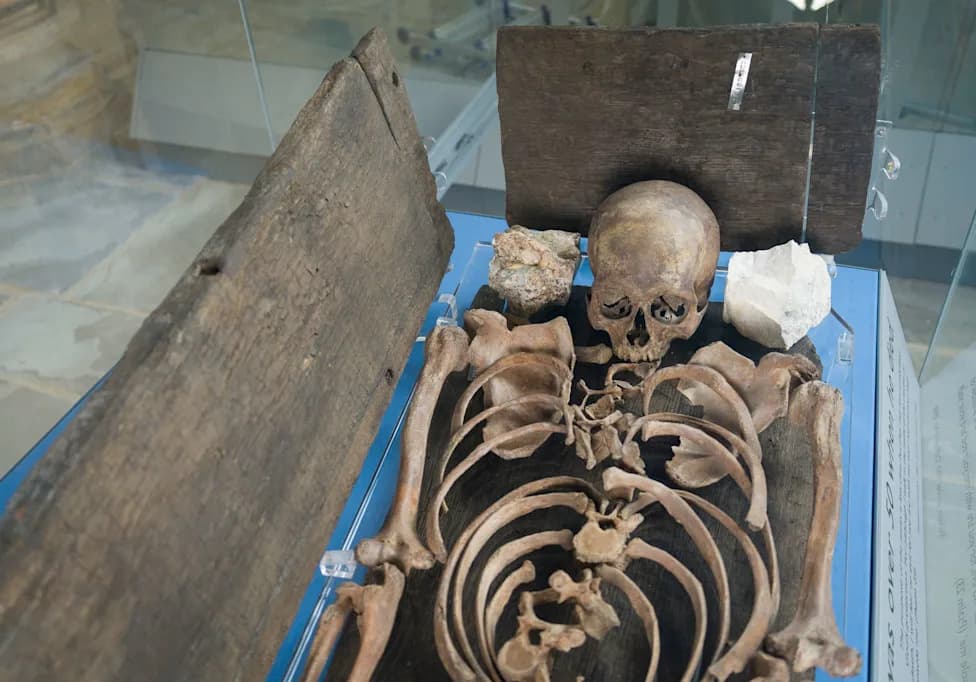
Researchers nicknamed the anonymous skeleton "The Horseman" because its bone morphology shows markers consistent with lifelong horsemanship. A multidisciplinary team led by the French National Institute for Preventive Archaeological Research (INRAP) and forensic specialists from Toulouse University Hospital dated the remains to the 16th century and concluded the individual likely died in his 30s of chronic tuberculous meningitis.
Those findings, together with the coffin’s prominent location in the transept crossing—a place reserved for high-status burials—led investigators to propose that the occupant could be the celebrated French Renaissance poet Joachim du Bellay, who died in 1560 and was believed to have been interred under Notre‑Dame.
“He matches all the criteria of the portrait,” said Eric Crubézy, a biological anthropology professor and research director at the French National Centre for Scientific Research, referring to horsemanship markers, the disease reflected in his bones and historical references in du Bellay’s poems.
Evidence, Doubts, and What Remains Unresolved
Notwithstanding the strong circumstantial case, some uncertainties remain. Isotopic analysis of the teeth and bones suggests the man likely grew up in Paris or Lyon, while historical records indicate du Bellay was born in Anjou and later moved to Paris. This geographic discrepancy—reported by INRAP archaeologist Christophe Besnier—prevents a fully conclusive identification.
INRAP president Dominique Garcia defended the cautious but confident interpretation: the convergence of age, pathology, skeletal markers of horsemanship and the prestigious burial location produces a robust statistical case even if absolute proof (for example, a direct DNA match to a known relative) is currently unavailable.
Researchers emphasize the identification should be read as the best-supported hypothesis based on osteological, isotopic and historical evidence rather than an incontrovertible fact. Further study may refine the picture, but logistical and scientific limits (degraded DNA, lack of comparative material) make definitive proof challenging.
Why it matters: If confirmed, the find would resolve a 300-year-old mystery about the final resting place of one of France’s notable Renaissance poets and illustrate how archaeology, forensics and history can converge to reframe our understanding of the past.
Help us improve.