
Storm Byron battered the Gaza Strip, killing at least 14 people, many of them children, and damaging makeshift shelters across the territory. Officials reported more than 4,300 distress calls and at least 12 collapses of buildings previously hit in earlier strikes. Roughly 850,000 people sheltering in about 761 sites are now at heightened risk from flooding, cold and structural collapse. Rescue teams — short of fuel and equipment — have urged urgent international access for shelter and winter supplies.
Storm Byron Kills At Least 14 In Gaza As Makeshift Shelters Collapse, Thousands At Risk

Heavy machinery operates as Palestinians gather on a pile of rubble amid a search for victims in a destroyed house that collapsed amid heavy rains, in Beit Lahiya, in the northern Gaza Strip, December 12, 2025 [Mahmoud Issa/Reuters]
Storm Byron swept across the Gaza Strip, killing at least 14 people — including several children — and injuring others as fierce winds, sustained rain and collapsing structures destroyed fragile shelters used by people displaced in prior fighting, Gaza’s Ministry of Interior and National Security said.
Deaths and Damage
The ministry reported that five people died overnight in Bir an-Naaja when a house sheltering displaced civilians collapsed. At dawn, two more people were killed after a wall fell onto tents in the Remal neighbourhood of Gaza City. Earlier, a structural collapse in Shati refugee camp claimed another life, and a newborn in al-Mawasi died after succumbing to freezing temperatures.
Medical teams described a worrying rise in exposure-related deaths. A source at al-Shifa Hospital told Al Jazeera Arabic that nine-year-old Hadeel al-Masri and baby Taim al-Khawaja died in shelters west of Gaza City and in Shati camp, respectively. In Khan Younis, eight-month-old Rahaf Abu Jazar died after rain flooded her family’s tent; relatives said the family had been sheltering in a roofless, bombed-out home after their house was destroyed by an air strike.
Humanitarian Impact
Officials warned that the storm threatens roughly 850,000 people sheltering in some 761 sites. Large stretches of shoreline have collapsed, placing tents pitched metres from the sea at greater risk. Rescue and civil defence teams reported more than 4,300 distress calls since the storm began and recorded at least 12 collapses of buildings previously struck in earlier attacks.
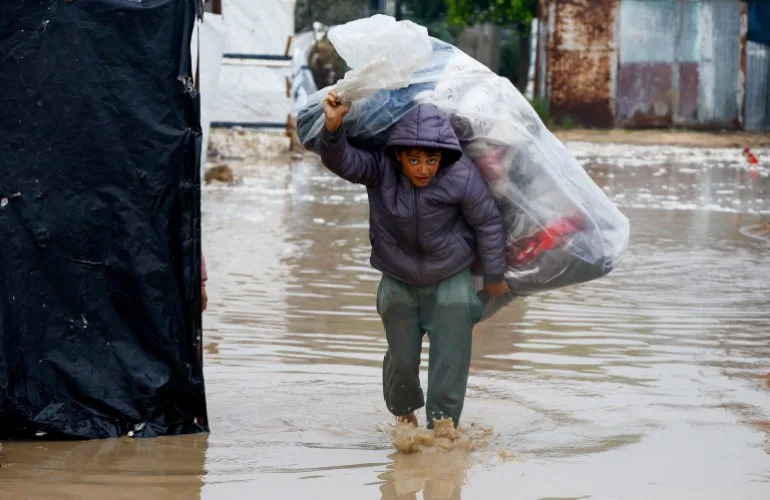
A displaced Palestinian boy carries belongings in a flooded tent camp on a rainy day in Nuseirat, central Gaza Strip, December 12, 2025 [Mahmoud Issa/Reuters]
Al Jazeera correspondents reported that flimsy tents and damaged buildings were turned into deadly traps by heavy rain and wind. "The tents are collapsing; the cold is unbearable. They have nowhere to go," one correspondent said, quoting displaced families who described a fresh wave of displacement after the flooding.
Rescue Operations and Appeals
Despite severe shortages of equipment and fuel, police and civil defence crews continued rescue operations, retrieving bodies and pulling survivors from rubble. The ministry urged international actors to pressure Israel to allow entry of critical aid and shelter materials, saying emergency teams were struggling to respond without supplies.
Official Statements
Hamas spokesperson Hazem Qassem described the storm-related deaths as a "continuation of the war of extermination," blaming Israel’s bombardment for creating the hazardous conditions. He urged urgent international action to halt what he called genocide and to provide adequate shelter materials, saying current aid shipments "do not protect against rainwater or the cold." The Ministry of Interior called the situation a "wake-up call" for the international community to meet its responsibilities.
“What is unfolding is devastating,” an Al Jazeera correspondent reported from southern Gaza. “It’s not just a storm; it’s a new wave of displacement even after the war has stopped.”
Authorities warned that further heavy rain, flooding and hail were expected to continue, leaving many families exposed and at risk until more durable shelter and winterisation supplies can be delivered.


